
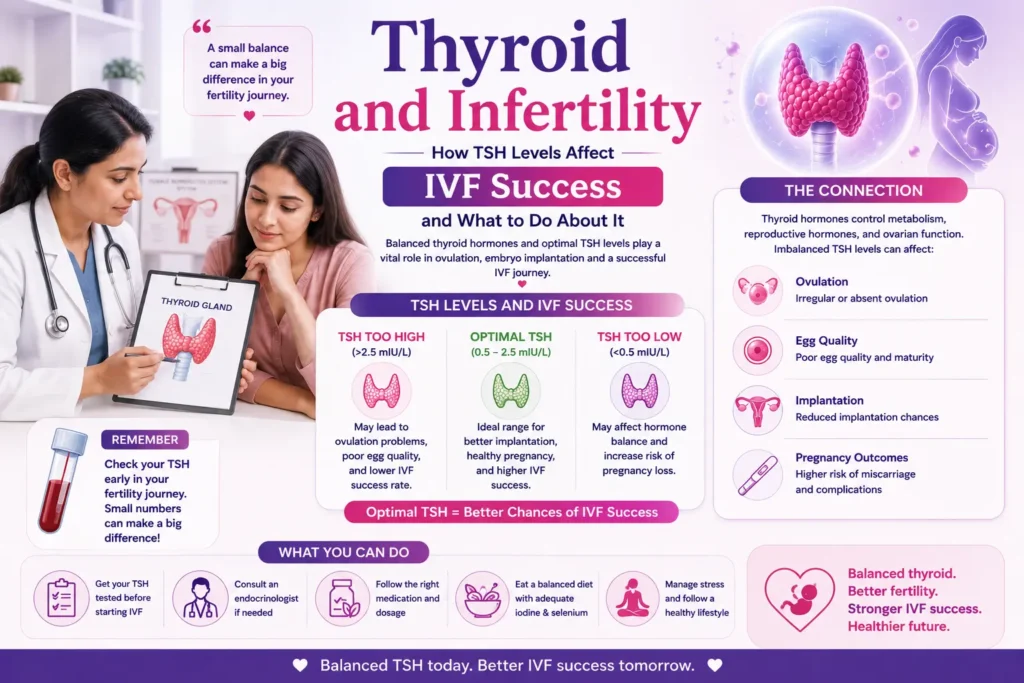
Thyroid and infertility in women are connected in ways that far too many couples discover only after months of unexplained fertility struggles. You have had your ovarian reserve tested. Your partner’s semen analysis is normal. Your uterus looks fine on the scan. And yet month after month, the result is the same. What most people — and even some clinicians — do not immediately consider is the small butterfly-shaped gland at the base of your neck.
The thyroid gland does not sound like a fertility organ. But it is one of the most powerful regulators of the hormonal environment in which reproduction depends — and even a mild imbalance, producing no obvious symptoms, can quietly disrupt ovulation, impair egg quality, reduce implantation rates, and increase miscarriage risk.
The frustrating reality is that thyroid dysfunction is among the most common endocrine disorders in Indian women — estimated to affect approximately 1 in 8 women — and it is frequently missed in standard gynaecological workups because it is not always tested.
Dr. Krupa A. Shah, founder of Ayuh Fertility Centre in Ahmedabad, includes thyroid evaluation as a mandatory part of every infertility workup — because she has seen, firsthand, how often this is the missing piece that changes everything.
This blog explains the thyroid-fertility connection clearly, honestly, and in language that makes the science accessible to everyone.
Author Bio
Dr. Krupa A. Shah MBBS · MS (Obstetrics & Gynaecology) · Infertility Specialist Founder, Ayuh Fertility Centre, Ahmedabad
19+ Years of Experience in reproductive medicine, obstetrics, and gynaecology.
Dr. Krupa Shah completed her MBBS from Baroda Medical College (2006) and her MS in Obstetrics & Gynaecology from B.J. Medical College, Ahmedabad (2010). After 12 years of experience at leading clinics in Chennai — including Apollo Hospital and Iswarya Fertility Centre — she completed an Advanced IVF Fellowship at Ludwig Maximilians University, Munich, Germany, one of Europe’s most prestigious reproductive medicine institutions.
She is a member of the Ahmedabad Obstetrics and Gynaecology Society (AOGS), the Indian Society of Assisted Reproduction (ISAR), and the Federation of Obstetric and Gynaecological Societies of India (FOGSI).
IVF laboratory is ART National Board Certified.
🩺 Medically Reviewed By
This article is medically reviewed by Dr. Krupa M. Shah, ensuring accurate and reliable fertility information.ecialist with 19+ years of experience — ensuring clinically accurate, evidence-based, and compassionate guidance on thyroid health and its impact on fertility and IVF.
What Is the Thyroid Gland and Why Is It Important?
The thyroid is a small, butterfly-shaped gland located at the front of the neck, just below the Adam’s apple. Despite its modest size, it is one of the body’s most powerful metabolic regulators — influencing nearly every organ system, including the reproductive system.
How the thyroid works: The thyroid produces two primary hormones — Thyroxine (T4) and Triiodothyronine (T3) — that regulate metabolism, energy production, body temperature, heart rate, and the functioning of virtually every cell. The pituitary gland controls thyroid output through TSH (Thyroid Stimulating Hormone) — a signalling hormone that tells the thyroid to produce more or less T3 and T4.
The feedback loop in simple terms:
- When T3/T4 levels fall → Pituitary produces more TSH → Thyroid produces more hormone
- When T3/T4 levels rise → Pituitary reduces TSH → Thyroid reduces output
A high TSH means the thyroid is underperforming (hypothyroidism — the pituitary is working harder to stimulate it). A low TSH means the thyroid is overperforming (hyperthyroidism — the pituitary is trying to suppress it).
Why this matters for reproduction: Thyroid hormones are not only metabolic regulators — they are active participants in the reproductive hormonal cascade. T3 receptors are present in the ovaries, endometrium, and early embryo. Thyroid hormones directly influence:
- Ovarian follicle development and egg maturation
- Estrogen and progesterone production and balance
- Endometrial preparation for implantation
- Early embryo development and survival
- Placental function in early pregnancy
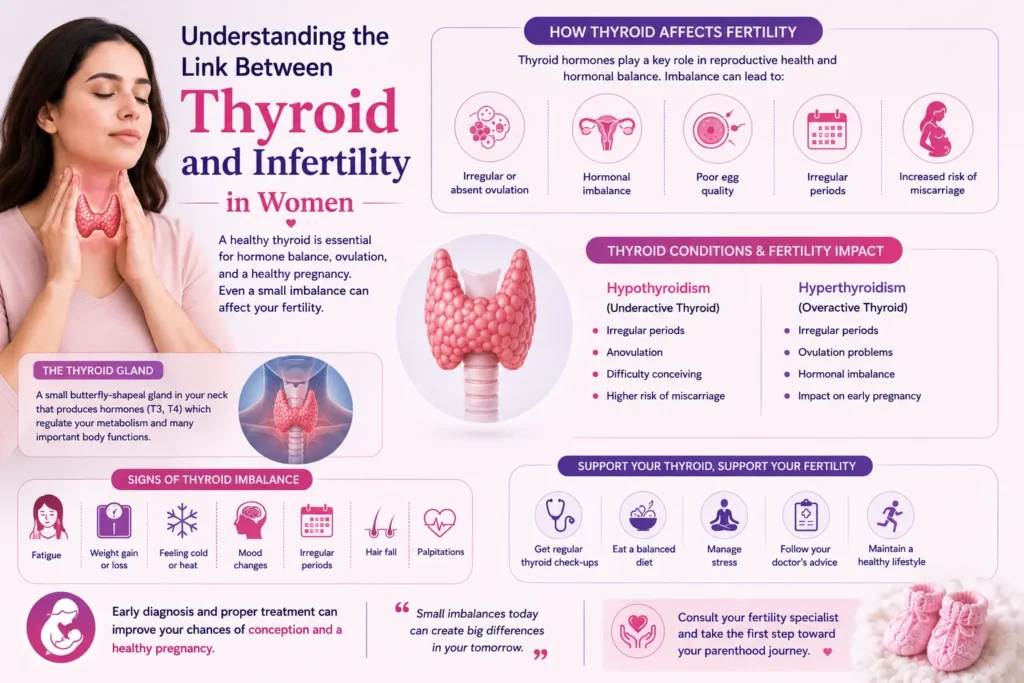
Understanding the Link Between Thyroid and Infertility in Women
Thyroid and infertility in women are connected through multiple biological pathways — and the connection is relevant even when thyroid dysfunction is mild and producing few or no classic symptoms.
Ovulation disruption: Thyroid hormones regulate the hypothalamic-pituitary-ovarian (HPO) axis — the hormonal command chain governing ovulation. Even subclinical thyroid dysfunction can disrupt LH and FSH secretion patterns, causing irregular or absent ovulation. A woman who is not ovulating regularly cannot conceive naturally — and may respond less predictably to IVF stimulation protocols.
Menstrual cycle irregularity: Hypothyroidism is associated with heavy, frequent periods (menorrhagia) or, at more severe levels, absent periods (amenorrhoea). Hyperthyroidism tends to cause lighter, less frequent periods. Both patterns indicate disrupted reproductive hormone signalling.
Hormonal imbalance — the prolactin connection: Hypothyroidism increases TRH (Thyrotropin-Releasing Hormone) production — and TRH stimulates prolactin secretion. Elevated prolactin (hyperprolactinaemia) inhibits ovulation by suppressing LH and FSH. This creates a secondary hormonal disruption that compounds the direct effects of low thyroid function. Prolactin levels are routinely checked alongside thyroid function in Ayuh’s infertility evaluation.
Egg development and quality: T3 receptors in the follicular fluid surrounding developing eggs suggest a direct role for thyroid hormones in egg maturation. Low thyroid function is associated with reduced oocyte quality — affecting fertilisation rates in IVF cycles.
Implantation challenges: Thyroid hormones influence endometrial receptivity — the ability of the uterine lining to receive and support an embryo. Suboptimal thyroid function alters the expression of implantation markers in the endometrium, potentially explaining why some couples with good embryo quality still experience recurrent implantation failure.
Early pregnancy support: In the first trimester, the developing foetus depends entirely on maternal thyroid hormones for neurological development until its own thyroid becomes functional (around week 12). Inadequate maternal thyroid function during this window has developmental implications — making thyroid optimisation before and during early pregnancy genuinely critical.
Can Hypothyroidism Cause Infertility?
Hypothyroidism — underactive thyroid — is the most common thyroid disorder among Indian women of reproductive age. And yes, it can cause infertility through several mechanisms.
What hypothyroidism means: The thyroid is not producing enough T3 and T4. TSH rises as the pituitary works harder to stimulate the underperforming gland. Even when TSH is only mildly elevated — a condition called subclinical hypothyroidism — the effects on fertility can be significant.
Common symptoms of hypothyroidism:
- Fatigue and low energy despite adequate sleep
- Weight gain not explained by diet
- Cold intolerance
- Dry skin, hair thinning or loss
- Constipation
- Brain fog, poor concentration
- Heavy, irregular, or absent periods
- Depression or low mood
Important: Many women with subclinical hypothyroidism (TSH mildly elevated but T4 still within normal range) have no symptoms at all — which is exactly why routine testing is essential in any fertility evaluation.
How hypothyroidism affects conception:
- Disrupts the HPO axis → irregular or absent ovulation
- Raises prolactin → further suppresses ovulation
- Impairs egg quality through T3 receptor involvement in follicular development
- Alters endometrial receptivity → implantation failure
- Increases risk of early miscarriage — even after successful fertilisation and implantation
The autoimmune dimension: Many cases of hypothyroidism in India are caused by Hashimoto’s thyroiditis — an autoimmune condition where the immune system attacks thyroid tissue. Women with thyroid antibodies (anti-TPO or anti-thyroglobulin) have higher rates of recurrent miscarriage and implantation failure even when TSH is within the normal range. This is why thyroid antibody testing is part of the complete workup at Ayuh.
Can Hyperthyroidism Affect Fertility?
Hyperthyroidism — overactive thyroid — is less common than hypothyroidism but equally relevant to fertility.
What hyperthyroidism means: The thyroid produces excess T3 and T4. TSH falls as the pituitary tries to suppress an overactive gland. The most common cause in Indian women is Graves’ disease — another autoimmune condition.
Common symptoms of hyperthyroidism:
- Unexplained weight loss despite normal appetite
- Palpitations and rapid heart rate
- Heat intolerance and excessive sweating
- Tremors
- Anxiety and irritability
- Light, infrequent, or absent periods
- Difficulty sleeping
How hyperthyroidism affects fertility:
- Disrupts LH and FSH secretion → ovulatory dysfunction
- Interferes with estrogen metabolism → hormonal imbalance
- Associated with lighter or absent periods → anovulation
- Increases pregnancy complication risk — including preeclampsia, premature birth, and low birth weight if untreated during pregnancy
Treatment before IVF: Hyperthyroidism should be treated and stable before beginning IVF stimulation. Antithyroid medications (carbimazole or propylthiouracil) are used to normalise thyroid function. Dr. Krupa Shah coordinates with an endocrinologist where needed to ensure thyroid stability before and during fertility treatment.
TSH Levels for IVF Treatment India — What Doctors Recommend
This is one of the most searched questions in fertility medicine — and one where clear, honest guidance matters enormously.
What TSH measures: TSH (Thyroid Stimulating Hormone) is the most sensitive marker of thyroid function. It is the first test ordered when thyroid dysfunction is suspected and the primary monitoring tool during treatment.
Standard “normal” TSH range: The standard laboratory reference range for TSH is typically 0.4–4.5 mIU/L. However, for fertility and IVF purposes, this range is not sufficient.
Recommended TSH levels for IVF treatment India:
Most fertility specialists — including Dr. Krupa Shah at Ayuh Fertility Centre — aim to optimise TSH below 2.5 mIU/L before IVF and pregnancy.
The evidence behind this:
- Multiple studies have shown higher live birth rates and lower miscarriage rates in IVF patients with TSH below 2.5 compared to those with TSH 2.5–4.5
- The American Thyroid Association, ESHRE (European Society of Human Reproduction), and most fertility guidelines recommend TSH below 2.5 mIU/L for women trying to conceive
- During the first trimester of pregnancy, the recommendation is TSH below 2.5 mIU/L (first trimester) and below 3.0 mIU/L (second and third trimesters)
Why the standard “normal” range is not enough for fertility: A TSH of 3.8 mIU/L may be perfectly appropriate for a 60-year-old man with no plans to conceive. For a 34-year-old woman preparing for an IVF embryo transfer, it may represent a suboptimal thyroid environment for implantation. The target is not “normal” — it is optimised for fertility.
Important individual variation: The specific TSH target for each patient is determined individually. Women with thyroid antibodies, prior miscarriage, or autoimmune conditions may require more aggressive optimisation. Dr. Krupa Shah reviews each patient’s complete thyroid profile before making any recommendation — never applying a blanket number.
How Thyroid Problems Affect IVF Success
Understanding thyroid problem and IVF success Ahmedabad means understanding exactly where in the IVF process thyroid dysfunction creates barriers — and how addressing it changes outcomes.
Ovarian stimulation response: Thyroid hormones influence FSH receptor sensitivity in the ovaries. Suboptimal thyroid function may mean the ovaries respond less efficiently to stimulation medications — resulting in fewer follicles, fewer eggs retrieved, and fewer embryos for selection.
Egg quality: T3 receptors are present in follicular fluid. Thyroid hormone availability during the critical final stages of egg maturation affects chromosomal integrity and mitochondrial function in developing oocytes. Optimised thyroid function creates a better biochemical environment for the eggs retrieved in Ayuh’s IVF cycles.
Embryo development: Early embryonic cells express thyroid hormone receptors from very early developmental stages. Maternal thyroid hormones in the follicular fluid and subsequently in the uterine environment influence early embryo metabolism and division.
Endometrial receptivity and implantation: Thyroid hormones regulate the expression of implantation-related proteins in the endometrium — including pinopodes, integrins, and leukemia inhibitory factor (LIF). Suboptimal TSH is associated with reduced expression of these markers — directly reducing the probability of successful embryo implantation even when the embryo is chromosomally normal.
Miscarriage risk: Even after successful implantation, thyroid dysfunction — particularly Hashimoto’s thyroiditis with elevated antibodies — significantly increases first-trimester miscarriage risk. Women with anti-TPO antibodies have a 2–3 times higher miscarriage rate than antibody-negative women, even when TSH appears normal. This is one of the most clinically important — and most commonly missed — thyroid-fertility connections.
The treatment impact: Studies consistently show that optimising TSH below 2.5 mIU/L in women with subclinical hypothyroidism before IVF improves clinical pregnancy rates, reduces miscarriage rates, and improves live birth rates. This is one of the most cost-effective interventions in fertility medicine — because thyroid medication is inexpensive, well-tolerated, and highly effective when properly dosed and monitored.
Signs You Should Get Your Thyroid Tested Before IVF
Dr. Krupa Shah tests thyroid function in every fertility patient at Ayuh — because subclinical thyroid dysfunction often presents with no symptoms at all. But there are specific circumstances where thyroid testing is particularly urgent:
Menstrual irregularity: Cycles that are consistently shorter than 21 days, longer than 35 days, very heavy, or very light may reflect thyroid-driven hormonal disruption.
Unexplained infertility: When all standard fertility tests are normal but conception is not occurring, thyroid dysfunction — including subclinical forms — is one of the most commonly identified causes on deeper investigation.
Recurrent miscarriage: Two or more pregnancy losses warrant thyroid antibody testing in addition to standard thyroid function. Anti-TPO and anti-thyroglobulin antibodies are clinically significant independent of TSH level.
Fatigue, weight changes, or hair loss: These classic thyroid symptoms in a woman trying to conceive should trigger thyroid testing immediately — not as a separate priority from fertility evaluation.
Previous failed IVF cycles: Where all other factors appear normal, thyroid function review is part of the post-failure investigation at Ayuh. A TSH that was “normal” at the time of a failed cycle may have been suboptimal for fertility specifically.
Family history of thyroid disease: Thyroid disorders are often familial. Women with a mother or sister with Hashimoto’s disease or hypothyroidism have a significantly elevated risk.
Thyroid Tests Recommended Before Fertility Treatment
A complete thyroid evaluation for fertility purposes at Ayuh’s diagnostic services includes:
TSH (Thyroid Stimulating Hormone) The primary and most sensitive test. Elevated TSH indicates hypothyroidism (even when T4 is still within range — subclinical stage). Low TSH indicates hyperthyroidism.
Free T4 (Free Thyroxine) Measures the active, unbound form of T4 available to body tissues. Used alongside TSH to classify thyroid status as subclinical or overt, and to guide treatment dosing.
Free T3 (Free Triiodothyronine) Measures the more metabolically active thyroid hormone. Particularly useful when T4-to-T3 conversion is suspected to be impaired — a situation more common in stressed, nutritionally depleted, or chronically unwell patients.
Anti-TPO Antibodies (Thyroid Peroxidase Antibodies) The most clinically important thyroid antibody in fertility medicine. Elevated anti-TPO indicates Hashimoto’s thyroiditis and is independently associated with increased miscarriage risk — even when TSH and T4 are within normal ranges.
Anti-Thyroglobulin Antibodies A secondary antibody test that adds to the Hashimoto’s picture. May be elevated when anti-TPO is borderline.
Thyroid Ultrasound (if indicated) Structural assessment of the thyroid gland — looking for nodules, enlargement, or architectural changes suggesting autoimmune disease. Recommended when antibodies are elevated or TSH is persistently abnormal.
Can Treating Thyroid Problems Improve IVF Outcomes?
Yes — and this is one of the most clearly evidence-supported interventions in fertility medicine.
Hypothyroidism treatment: Levothyroxine (synthetic T4) is the standard treatment for hypothyroidism. It is inexpensive, safe, taken once daily, and highly effective when properly dosed. Dosing is adjusted based on serial TSH monitoring — with the goal of achieving TSH below 2.5 mIU/L before the IVF cycle begins, and maintained below this level through the first trimester.
What the evidence shows: Multiple randomised controlled trials and meta-analyses consistently show that:
- Women with subclinical hypothyroidism treated with levothyroxine before IVF have significantly higher clinical pregnancy rates
- Miscarriage rates are reduced in treated patients compared to untreated controls
- Live birth rates improve with thyroid optimisation before and during fertility treatment
Women with elevated antibodies but normal TSH: The evidence on treating antibody-positive women with normal TSH is evolving. Some studies support low-dose levothyroxine even in this group to reduce miscarriage risk — particularly in women with recurrent pregnancy loss. This is an individualised decision that Dr. Krupa Shah makes based on each patient’s antibody levels, prior pregnancy history, and overall clinical picture.
Monitoring during fertility treatment: TSH should be tested:
- Before starting IVF stimulation
- At the time of embryo transfer
- At the first positive pregnancy test
- At 4-week intervals through the first trimester
- Dr. Krupa Shah builds thyroid monitoring into every IVF cycle protocol at Ayuh
Lifestyle Tips to Support Thyroid and Fertility Health
While thyroid dysfunction almost always requires medical management, certain lifestyle factors support thyroid function and overall hormonal health:
Adequate Iodine Intake Iodine is the essential raw material for thyroid hormone synthesis. India’s soil is iodine-deficient in many regions — which is why iodised salt is important. Dietary iodine sources include dairy products, eggs, and seafood. However, excessive iodine supplementation can paradoxically worsen thyroid function — avoid megadose iodine supplements without medical guidance.
Selenium-Rich Foods Selenium is essential for T4-to-T3 conversion and for reducing thyroid antibody levels in Hashimoto’s. Brazil nuts (2 per day), sunflower seeds, eggs, and tuna are good dietary sources.
Anti-Inflammatory Diet An anti-inflammatory dietary pattern — rich in vegetables, whole grains, omega-3 fatty acids, and low in ultra-processed foods — reduces systemic inflammation that can worsen autoimmune thyroid conditions.
Stress Management Chronic psychological stress elevates cortisol, which suppresses T3 production and can worsen subclinical thyroid dysfunction. Mindfulness, yoga, adequate sleep, and emotional support during fertility treatment are all thyroid-relevant, not just emotionally helpful.
Sleep Poor sleep disrupts the HPO axis and cortisol rhythm — both of which affect thyroid function and fertility simultaneously. 7–9 hours of consistent quality sleep is a clinical priority throughout IVF preparation.
Medication compliance For women prescribed levothyroxine, consistent daily dosing — on an empty stomach, 30–60 minutes before food — is essential for stable thyroid control. Missed doses or inconsistent timing are among the most common reasons for suboptimal TSH control during IVF.
Common Myths About Thyroid and Fertility
Myth 1: Mild thyroid problems don’t affect fertility. False. Subclinical hypothyroidism — where TSH is mildly elevated but T4 is still within the normal range — is associated with reduced IVF success rates, increased miscarriage risk, and impaired implantation. “Mild” does not mean clinically insignificant in the fertility context.
Myth 2: Thyroid medication causes infertility. False. Levothyroxine — the most commonly prescribed thyroid medication — does not cause infertility. It is a synthetic version of a hormone your body normally produces. When correctly dosed to maintain TSH in the optimal fertility range, it actively improves fertility outcomes rather than harming them.
Myth 3: IVF can overcome all thyroid problems. False. IVF cannot compensate for a suboptimal thyroid environment. Implantation failure and early miscarriage related to thyroid dysfunction occur even with excellent embryos if thyroid function is not optimised. Thyroid management is a prerequisite for IVF, not an afterthought.
Myth 4: Only severe thyroid disease affects fertility. False. This is the most clinically harmful myth. Subclinical thyroid dysfunction — producing no symptoms, identified only through blood testing — is associated with significantly impaired fertility outcomes. Waiting until thyroid disease becomes severe before treating it in a fertility context is not evidence-based practice.
Myth 5: Once thyroid levels are normal, no further monitoring is needed. False. Thyroid function can change with IVF hormone stimulation, pregnancy, and stress. TSH monitoring at multiple points throughout the IVF cycle and early pregnancy is essential — not a one-time check.
When Should You See a Fertility Specialist?
If any of the following apply to you, a fertility evaluation at Ayuh — including thyroid testing — should happen sooner rather than later:
- You have been trying to conceive for 12 months without success (6 months if above 35)
- You have irregular, very heavy, or absent periods
- You have experienced two or more miscarriages
- You have a known or suspected thyroid condition
- You have family history of thyroid disease
- You have symptoms of hypothyroidism (fatigue, weight gain, hair loss, cold intolerance) or hyperthyroidism (weight loss, palpitations, heat intolerance, anxiety)
- You have had failed IVF cycles where no clear cause was identified
- Your TSH was previously outside the fertility-optimised range
At Ayuh Fertility Centre, thyroid function is evaluated in every couple from Day 1 of their infertility workup — because Dr. Krupa Shah has seen too many cycles fail for a reason that could have been identified and corrected at the beginning.
FAQs
1. Can thyroid problems cause infertility in women?
Yes — thyroid dysfunction is one of the most common and most underdiagnosed causes of female infertility. Hypothyroidism disrupts ovulation by elevating prolactin and disrupting FSH/LH secretion. Hashimoto’s thyroiditis antibodies independently increase miscarriage risk even when TSH is technically normal. Hyperthyroidism also disrupts ovulation and increases pregnancy complication risk. The good news: thyroid-related infertility is among the most treatable — once identified. Dr. Krupa Shah includes full thyroid evaluation — TSH, free T4, free T3, and antibodies — in every fertility workup at Ayuh Fertility Centre, Ahmedabad.
2. What is the ideal TSH level before IVF?
Most fertility specialists, including Dr. Krupa Shah, recommend optimising TSH below 2.5 mIU/L before beginning an IVF cycle. This is below the standard “normal” laboratory upper limit of 4.5 mIU/L — but evidence consistently supports better implantation rates, lower miscarriage risk, and higher live birth rates when TSH is maintained in this lower range for fertility. The specific target for each patient is discussed individually — women with thyroid antibodies, prior pregnancy loss, or autoimmune conditions may require even tighter control.
3. Does hypothyroidism affect egg quality in IVF?
Yes — thyroid hormones play a direct role in follicular development and egg maturation. T3 receptors are present in the follicular fluid surrounding developing eggs. Suboptimal thyroid function — even subclinical hypothyroidism — is associated with reduced oocyte quality, lower fertilisation rates, and poorer embryo development in IVF cycles. Optimising TSH below 2.5 mIU/L before stimulation creates a better biochemical environment for egg development. This is why thyroid optimisation before IVF — not during or after — is the clinical priority at Ayuh Fertility Centre.
4. Can IVF succeed if I have thyroid disease?
Yes — when thyroid function is properly diagnosed and optimally managed before and during treatment. Many women at Ayuh Fertility Centre with hypothyroidism, Hashimoto’s thyroiditis, or even treated hyperthyroidism have achieved successful pregnancies through IVF. The critical factor is not whether you have a thyroid condition — it is whether it is being managed to the fertility-optimised target range (TSH below 2.5 mIU/L) with appropriate monitoring throughout stimulation, transfer, and the first trimester of pregnancy.
5. Can thyroid medication improve fertility and IVF outcomes?
Yes — levothyroxine is one of the most straightforwardly effective fertility interventions available. Evidence from multiple studies shows that treating subclinical hypothyroidism with levothyroxine before IVF significantly improves clinical pregnancy rates and reduces miscarriage rates. The medication is safe, inexpensive, and taken once daily. For women with elevated thyroid antibodies and normal TSH, low-dose levothyroxine may also reduce miscarriage risk — a decision Dr. Krupa Shah makes individually based on antibody levels, prior pregnancy history, and the overall clinical picture.
Conclusion
Thyroid and infertility in women is a connection that is simultaneously one of the most clinically significant and most consistently overlooked dimensions of fertility medicine. A small gland — producing hormones that regulate virtually every metabolic and reproductive process in the body — can quietly disrupt ovulation, impair egg quality, prevent implantation, and increase miscarriage risk. Often without a single obvious symptom.
The reassuring reality: thyroid-related fertility problems are among the most identifiable and most treatable causes of infertility. A blood test and — where indicated — a simple, safe, inexpensive medication can completely transform the hormonal environment in which your IVF cycle operates.
Dr. Krupa A. Shah tests thyroid function in every fertility patient at Ayuh Fertility Centre as a non-negotiable part of the initial workup — because in her 19+ years of clinical practice, she has seen too many cycles fail for a reason that a TSH result and a well-timed prescription could have prevented.
If you have not had your thyroid tested — or if your TSH has been flagged as “normal” without a fertility-specific evaluation — this conversation is worth having.
👉 Book your consultation with Ayuh Fertility Centre today
👉 Get expert guidance for PCOS and fertility treatment
👉 Start your journey toward a healthy and successful pregnancy
📍 Visit us in Ahmedabad
📞 Call now to schedule your appointment