
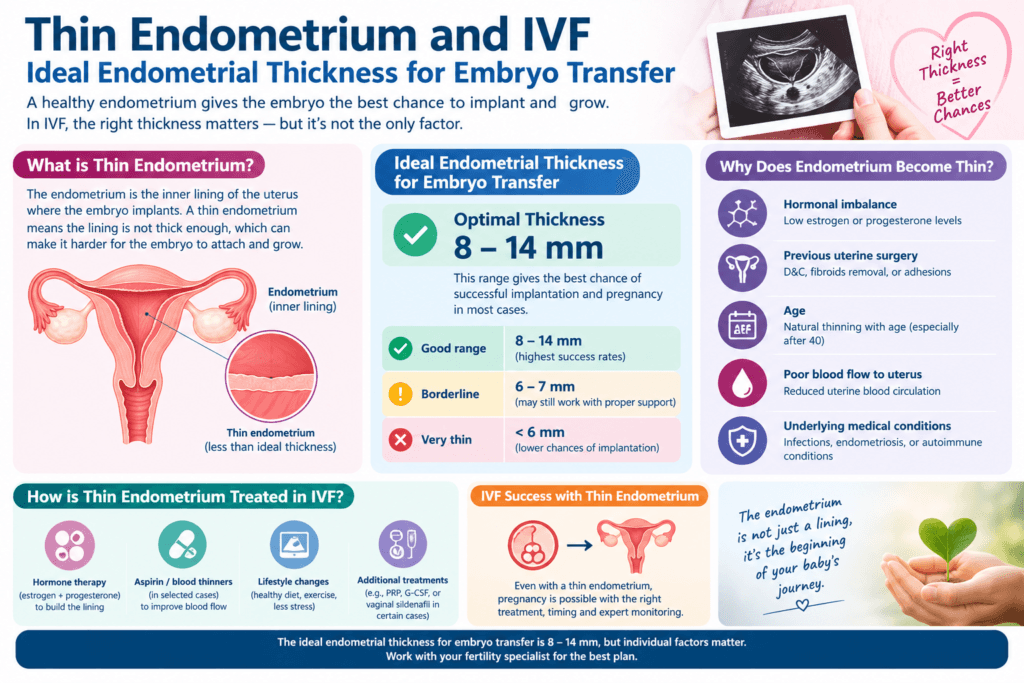
What Is the Endometrium?
The endometrium is the tissue lining the inside of the uterus. Each month it thickens under the influence of oestrogen to prepare for a pregnancy. If no embryo implants, it sheds as your period. On ultrasound, doctors measure its thickness in millimetres and look at its pattern.
What Is the Ideal Endometrial Thickness for Embryo Transfer?
| Lining thickness | What it usually means for transfer |
|---|---|
| Below 6 mm | Thin. Transfer is usually postponed and the cause investigated |
| 6 to 7 mm | Borderline. Decided case by case |
| 7 to 8 mm | Generally acceptable |
| 8 to 12 mm | Considered favourable by most specialists |
| Above 14 mm | Thick. May need checking for polyps or hyperplasia |
Thickness is not the only factor. Doctors also look for a triple-line pattern, which shows the lining has responded well to oestrogen, and check blood flow to the lining.
What Causes a Thin Endometrium?
- Previous D&C or uterine surgery that damaged the lining
- Asherman syndrome: scar tissue (adhesions) inside the uterus
- Genital tuberculosis, which is still an important cause in India
- Low oestrogen levels or poor response to oestrogen
- Reduced blood flow to the uterus
- Long-term use of certain medicines, such as clomiphene
- Age-related changes
How Is a Thin Lining Evaluated?
- Transvaginal ultrasound across the cycle to track growth
- Hysteroscopy to look directly inside the uterus for adhesions or polyps
- Endometrial biopsy when tuberculosis or infection is suspected
- Doppler ultrasound to check blood flow
Treatments That Can Help
Treatment depends on the cause, and no single method works for everyone.
- Hysteroscopic adhesiolysis: removing scar tissue in Asherman syndrome is often the most effective step.
- Adjusting oestrogen: changing the dose, route (oral, patch, vaginal) or duration.
- Treating tuberculosis with a full course of anti-TB medicines when diagnosed.
- Frozen embryo transfer (FET): freezing embryos gives time to prepare the lining properly, rather than transferring in a cycle where it is not ready.
- Supportive therapies such as low-dose aspirin, vaginal sildenafil, G-CSF or PRP are sometimes tried. Evidence for these is still limited, so they are used selectively.
Can You Get Pregnant With a Thin Endometrium?
Yes, pregnancies do happen with linings below 7 mm, but chances are generally lower and the risk of miscarriage may be higher. That is why specialists prefer to improve the lining before transfer rather than rushing.
Lifestyle Tips That Support a Healthy Lining
These will not replace medical treatment, but they support overall uterine health: stay active with regular walking, avoid smoking, maintain a healthy weight, manage thyroid and blood sugar, and stay well hydrated.
Thin Endometrium Care at Ayuh Fertility Centre
At Ayuh Fertility Centre in Ranip, Ahmedabad, Dr. Krupa Shah uses ultrasound monitoring and in-house hysteroscopy to find the reason for a thin lining before choosing treatment. Embryos can be safely frozen in our lab while the lining is prepared, so you never have to transfer at the wrong time.
Transfer cancelled because of a thin lining? Get a detailed evaluation. Call or WhatsApp +91 94260 28483.
Frequently Asked Questions
Is 7 mm endometrium good for embryo transfer?
Many clinics accept 7 mm with a good triple-line pattern. Your doctor will consider your history too.
Can I get pregnant with a 5 mm endometrium?
It is possible but less likely. Most specialists first try to improve the lining.
How fast can endometrial thickness increase?
With oestrogen, the lining usually grows over 10 to 14 days. Scar-related thin lining needs treatment of the scars first.
Which foods increase endometrial thickness?
No food has been proven to thicken the lining. A balanced diet supports general reproductive health.
Is a thick endometrium also a problem?
A lining above about 14 mm may need evaluation for polyps or hyperplasia before transfer.