
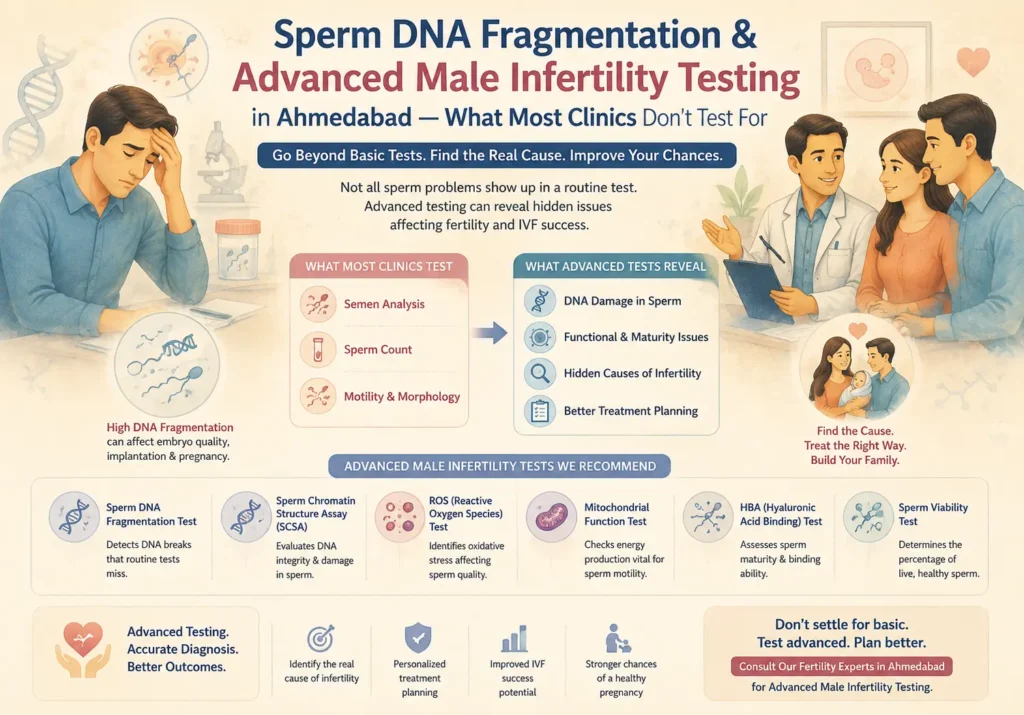
Male infertility advanced testing in Ahmedabad is a subject that many couples only encounter after months — sometimes years — of unexplained fertility struggles. They have done all the standard tests. The semen analysis came back normal. The hormone levels look fine. And yet, conception isn’t happening, IVF cycles are failing, or pregnancies are ending in early loss.
For these couples, the standard evaluation simply hasn’t gone far enough.
A normal semen analysis tells you about sperm count, motility, and shape. What it doesn’t tell you is whether the genetic material inside those sperm is intact — whether the DNA they carry is healthy enough to fertilise an egg, support embryo development, and sustain a pregnancy.
At Ayuh Fertility Centre in Ahmedabad, Dr. Krupa M. Shah understands that male infertility is significantly underdiagnosed when clinics rely solely on standard semen analysis. Advanced testing — particularly sperm DNA fragmentation assessment — can reveal hidden fertility issues that no basic report will show. And understanding those issues changes the treatment plan entirely.
This guide explains what advanced male fertility testing involves, when it is needed, what sperm DNA fragmentation really means, and how this knowledge can meaningfully improve the chances of a successful fertility outcome.
Author Bio
Dr. Krupa A. Shah MBBS · MS (Obstetrics & Gynaecology) · Infertility Specialist Founder, Ayuh Fertility Centre, Ahmedabad
19+ Years of Experience in reproductive medicine, obstetrics, and gynaecology.
Dr. Krupa Shah completed her MBBS from Baroda Medical College (2006) and her MS in Obstetrics & Gynaecology from B.J. Medical College, Ahmedabad (2010). After 12 years of experience at leading clinics in Chennai — including Apollo Hospital and Iswarya Fertility Centre — she completed an Advanced IVF Fellowship at Ludwig Maximilians University, Munich, Germany, one of Europe’s most prestigious reproductive medicine institutions.
She is a member of the Ahmedabad Obstetrics and Gynaecology Society (AOGS), the Indian Society of Assisted Reproduction (ISAR), and the Federation of Obstetric and Gynaecological Societies of India (FOGSI).
IVF laboratory is ART National Board Certified.
🩺 Medically Reviewed By
This article is medically reviewed by Dr. Krupa M. Shah, ensuring accurate and reliable fertility information.
Why Standard Semen Analysis Doesn’t Always Tell the Full Story
A standard semen analysis remains a valuable and important first step in male fertility evaluation. It measures three key parameters:
- Sperm count — the number of sperm per millilitre of semen
- Motility — the percentage of sperm that are moving and the quality of that movement
- Morphology — the percentage of sperm with a normal shape
When all three are within normal ranges, the report is labelled “normal” — and in many clinics, that is where the male fertility evaluation ends.
But here is the clinical reality: a normal semen analysis does not guarantee that sperm are healthy at the genetic level. Sperm that look normal, swim normally, and are present in normal numbers can still carry damaged DNA — and that damage has profound consequences for fertilisation, embryo quality, and pregnancy outcomes.
Research consistently shows that 15–25% of men with normal standard semen analysis have elevated sperm DNA fragmentation when specifically tested. These men appear to have no male factor infertility issue based on conventional testing — but they do. It is simply invisible to standard assessment.
This is why many couples with “unexplained infertility” or repeated IVF failures despite good embryos ultimately discover — often after considerable emotional and financial investment — that a significant male factor was present but undetected throughout.
Understanding Male Infertility Beyond Sperm Count
Fertility science has evolved considerably beyond the era when a sperm count was considered the definitive measure of male reproductive health. Today, we understand that sperm quality is a multilayered concept — and sperm count is just one layer.
What truly determines a sperm’s fertilisation potential includes:
- DNA integrity — the completeness and accuracy of the genetic material the sperm carries
- Mitochondrial function — the energy-producing capacity that powers sperm movement and enables penetration of the egg
- Chromatin packaging — how tightly and correctly the sperm’s DNA is packaged, which affects embryo stability after fertilisation
- Reactive oxygen species (ROS) levels — the oxidative stress environment within the semen, which can cause ongoing DNA damage
- Genetic completeness — the presence of all necessary chromosomes and critical fertility-related gene sequences
Male infertility advanced testing in Ahmedabad — offered at specialised fertility centres — goes beyond counting sperm to assess these deeper dimensions of sperm health. For couples where standard testing has not provided answers, this level of evaluation can be genuinely transformative.
What Is Sperm DNA Fragmentation?
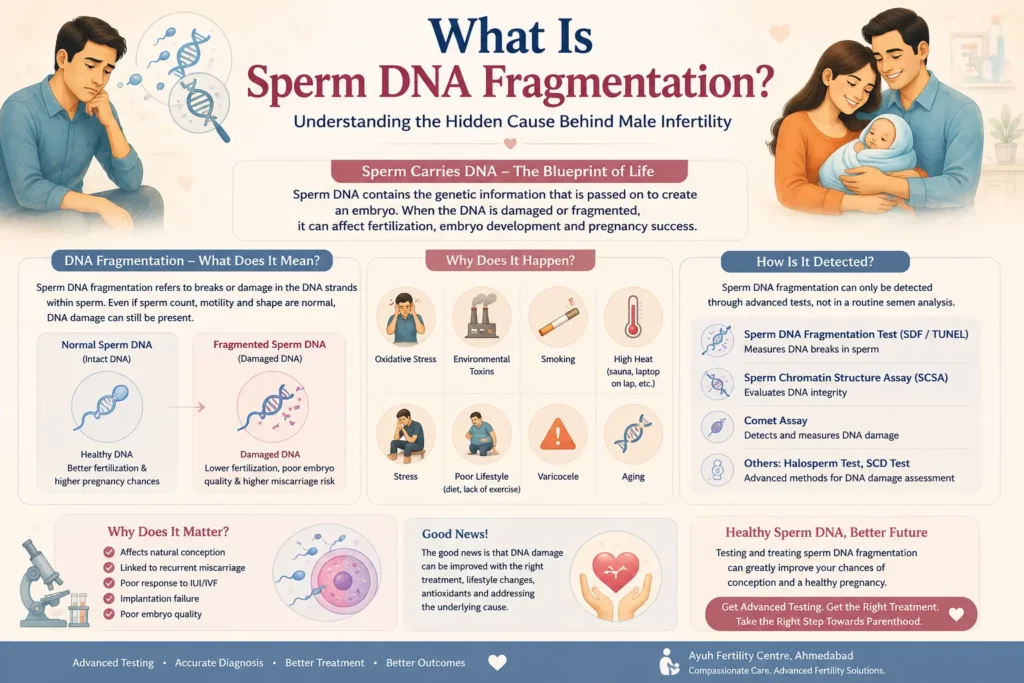
Sperm DNA fragmentation refers to breaks or damage in the DNA strands within sperm cells. Every sperm carries half of the genetic blueprint required to create a new life — 23 chromosomes, packaged tightly within the sperm head. When this DNA is fragmented — broken, damaged, or incompletely formed — the sperm may still be able to fertilise an egg, but what comes next is compromised.
How DNA Fragmentation Occurs
During sperm production (spermatogenesis), which takes approximately 74 days, sperm cells undergo a complex maturation process. During this process, the DNA must be precisely replicated and tightly packaged. If oxidative stress, heat, toxins, infection, or other damaging agents interfere with this process, breaks occur in the DNA strands — resulting in fragmentation.
Unlike many sperm abnormalities, fragmented DNA is completely invisible under a microscope. A sperm with severely fragmented DNA can look and swim perfectly normally.
Why Sperm DNA Fragmentation Matters
The consequences of high sperm DNA fragmentation affect every stage of the fertility process:
- Fertilisation problems — While a fragmented sperm can fertilise an egg, the resulting embryo starts with damaged genetic material
- Poor embryo quality — Embryos from sperm with high DNA fragmentation show higher rates of developmental arrest and abnormal cell division
- Failed IVF and ICSI cycles — Even with good-quality eggs and optimal laboratory conditions, high fragmentation reduces the likelihood of viable embryo formation
- Implantation failure — Embryos carrying damaged DNA are less likely to implant successfully in the uterine lining
- Recurrent miscarriage — A significant proportion of early pregnancy losses — including biochemical pregnancies — are linked to chromosomal and DNA abnormalities originating from fragmented sperm
The sperm DNA fragmentation test in Ahmedabad is a specific laboratory assessment that quantifies the percentage of sperm in a sample carrying DNA damage — providing a clinically actionable picture that no standard semen report can deliver.
What Causes Sperm DNA Fragmentation?
Understanding the causes helps identify which factors are modifiable — and which require medical intervention.
Lifestyle Causes
- Smoking — One of the most consistently documented causes of elevated sperm DNA fragmentation. Cigarette smoke contains thousands of reactive oxygen species that directly damage sperm DNA. Even secondhand smoke exposure has measurable effects.
- Alcohol — Chronic alcohol consumption disrupts testosterone production and increases oxidative stress within the testes, contributing to DNA damage.
- Obesity — Excess adipose tissue elevates scrotal temperature and increases oestrogen levels, both of which impair sperm production quality and increase fragmentation rates.
- Chronic stress — Elevated cortisol suppresses testosterone and increases systemic oxidative stress — both of which affect sperm DNA integrity during the maturation process.
- Poor diet — Diets deficient in antioxidants (vitamins C, E, selenium, zinc) leave sperm vulnerable to oxidative DNA damage during the 74-day maturation cycle.
Medical Causes
- Varicocele — Enlarged veins in the scrotum raise testicular temperature and create oxidative stress conditions that directly increase DNA fragmentation. Varicocele is one of the most common and correctable causes of elevated fragmentation.
- Infection and inflammation — Genital tract infections — including subclinical ones that produce no obvious symptoms — generate reactive oxygen species that damage maturing sperm.
- Hormonal imbalances — Low testosterone, elevated FSH, or other hormonal disruptions affect spermatogenesis quality and completeness.
- Advanced paternal age — Sperm DNA repair mechanisms decline with age. Men over 40–45 show progressively higher fragmentation rates, which partially explains the association between paternal age and miscarriage risk.
- Cancer treatments — Chemotherapy and radiotherapy cause significant, sometimes permanent DNA damage to sperm-producing cells.
Environmental Causes
- Occupational chemical exposure — Pesticides, heavy metals (lead, cadmium), and industrial solvents are all associated with elevated sperm DNA damage.
- Heat exposure — Prolonged heat to the scrotal area — from occupational exposure, frequent sauna use, laptop placement, or tight clothing — raises testicular temperature above the threshold required for healthy sperm maturation.
- Air pollution — Particulate matter and pollutants act as oxidative stressors with documented effects on sperm DNA integrity in men living in high-pollution urban environments.
When Should Men Consider Advanced Fertility Testing?
Not every man needs advanced sperm testing. But there are clear clinical situations where standard semen analysis is insufficient and deeper evaluation is genuinely warranted.
Male infertility advanced testing in Ahmedabad is most clearly indicated in the following circumstances:
- Recurrent IVF failure — Two or more failed IVF cycles despite good embryo quality should prompt comprehensive male evaluation, including DNA fragmentation testing
- Repeated ICSI failure — ICSI bypasses fertilisation barriers but cannot compensate for fragmented sperm DNA; failures despite ICSI warrant advanced testing
- Recurrent miscarriage — Particularly early losses (before 8–10 weeks); paternal DNA fragmentation is a recognised contributor to embryo chromosomal instability and pregnancy loss
- Unexplained infertility — Where female evaluation has been normal and standard semen analysis is also normal, advanced sperm testing frequently identifies the missing piece
- Poor embryo quality in IVF cycles — When eggs appear normal but embryos consistently develop poorly, the sperm DNA contribution to embryo quality should be assessed
- Advanced paternal age — Men over 40–45 should consider fragmentation testing as part of fertility evaluation, given the age-related increase in DNA damage rates
- Previous normal semen analysis with ongoing infertility — A normal report that has not translated to conception after 12+ months warrants deeper investigation
Sperm DNA Fragmentation Test — How It Works
The sperm DNA fragmentation test is a specialised laboratory analysis that goes well beyond standard microscopy. Understanding the process can reduce anxiety about undergoing it.
Sample Collection
A semen sample is collected by the male partner — typically by masturbation into a sterile container at the clinic or at home within a specified time frame. Standard abstinence guidelines (2–5 days) apply. The collection process is identical to that for a standard semen analysis.
Laboratory Analysis
Several testing methods are used to assess DNA fragmentation. The most commonly used include:
- TUNEL assay (Terminal Deoxynucleotidyl Transferase dUTP Nick End Labelling) — Detects actual DNA strand breaks at the molecular level; highly sensitive and reproducible
- SCSA (Sperm Chromatin Structure Assay) — Measures chromatin integrity and generates a DNA Fragmentation Index (DFI); widely used in research and clinical settings
- Comet assay — Electrophoretic technique that measures both single and double-strand DNA breaks; used in specialised laboratories
- SCD test (Sperm Chromatin Dispersion) — A simpler test that assesses chromatin dispersion patterns as a proxy for DNA integrity
Report Interpretation
Results are expressed as a DNA Fragmentation Index (DFI) — the percentage of sperm in the sample carrying fragmented DNA:
| DFI Level | Clinical Interpretation |
|---|---|
| Below 15% | Low fragmentation — generally favourable |
| 15–30% | Moderate fragmentation — clinical significance depends on context |
| Above 30% | High fragmentation — associated with reduced fertility and IVF outcomes |
Your fertility specialist will interpret these results in the context of your complete clinical picture — not as an isolated number.
Other Advanced Male Fertility Tests Most Clinics Don’t Routinely Offer
Sperm DNA fragmentation is the most important advanced test — but it is not the only one. A comprehensive male infertility evaluation at a specialist centre may also include:
Oxidative Stress Testing
Measures the level of reactive oxygen species (ROS) in semen. Elevated ROS is one of the primary mechanisms of sperm DNA damage. Identifying oxidative stress helps guide treatment — particularly antioxidant therapy — and explains why some men with normal semen parameters have elevated fragmentation.
Sperm Chromatin Testing
Assesses how tightly the DNA within sperm is packaged (chromatin compaction). Poorly compacted chromatin — even without obvious DNA strand breaks — is associated with impaired embryo development and increased miscarriage risk.
Genetic Testing — Karyotyping
A blood test that analyses the male partner’s chromosomal complement. Chromosomal abnormalities (such as Klinefelter syndrome — 47,XXY) can cause azoospermia or severely impaired spermatogenesis. Karyotyping is recommended before ICSI in men with very low or absent sperm count.
Y-Chromosome Microdeletion Analysis
The Y chromosome carries several gene sequences critical for sperm production (the AZF regions). Deletions in these regions — which can only be detected by specific genetic testing — explain azoospermia or severe oligospermia in a significant number of men. This test also has important implications for the potential fertility of any male children born through ART.
Hormonal Evaluation
A comprehensive hormonal panel — FSH, LH, testosterone, prolactin, thyroid function — assesses the hormonal axis controlling sperm production. Hormonal imbalances are often treatable causes of impaired spermatogenesis that are entirely missed without testing.
Testicular Function Assessment
In cases of azoospermia (no sperm in ejaculate), testicular biopsy combined with hormonal and genetic testing assesses whether sperm production is occurring within the testes (obstructive azoospermia) or whether production itself is impaired (non-obstructive azoospermia). This distinction drives the treatment pathway — including whether surgical sperm retrieval is likely to yield viable sperm.
How Sperm DNA Fragmentation Affects IVF and ICSI Success
This is one of the most clinically important connections in contemporary fertility medicine — and one that is still underappreciated in many treatment settings.
Fertilisation rates: ICSI can achieve fertilisation even with fragmented sperm by bypassing the natural selection barriers. However, fertilisation with a fragmented sperm creates an embryo with compromised genetic material from the moment of conception.
Embryo quality: Embryos from high-fragmentation sperm show consistently higher rates of developmental arrest — particularly in the critical transition from day 3 to day 5 blastocyst stage. This results in fewer viable embryos available for transfer and freezing.
Implantation rates: Even embryos that develop to blastocyst stage carry a higher chromosomal error rate when formed from fragmented sperm. These embryos are less likely to implant successfully and more likely to be detected as abnormal on preimplantation genetic testing (PGT).
Pregnancy rates: Multiple studies have demonstrated a clear inverse relationship between DFI levels and clinical pregnancy rates — both in natural conception and in IVF cycles. As DFI rises, pregnancy rates fall — even when female factors are normal.
Miscarriage risk: The association between elevated sperm DNA fragmentation and early pregnancy loss is one of the most consistent findings in male fertility research. DNA damage that is not severe enough to prevent fertilisation or early development may still cause chromosomal instability that results in first-trimester miscarriage.
Understanding a couple’s fragmentation level before IVF allows the clinical team to adjust the treatment approach — whether through lifestyle modification, medical treatment, varicocele repair, or consideration of testicular sperm for ICSI (which typically carries lower fragmentation than ejaculated sperm).
Can High DNA Fragmentation Be Treated?
Yes — in many cases, meaningfully so. The approach depends on the underlying cause of the fragmentation.
Lifestyle Improvements
For men whose fragmentation is driven primarily by lifestyle factors, a focused 2–3 month preparation period before IVF can produce measurable improvement:
- Stopping smoking completely — reduces ROS levels and fragmentation rates within weeks
- Eliminating alcohol — reduces oxidative stress and hormonal disruption
- Achieving a healthy BMI — reduces scrotal temperature and systemic inflammation
- Improving diet — increasing antioxidant-rich foods (colourful vegetables, berries, nuts, seeds, oily fish)
- Managing stress — reducing cortisol through yoga, mindfulness, and sleep improvement
- Avoiding heat exposure — no saunas, hot baths, or laptops on the lap during the preparation period
Antioxidant Therapy
Targeted antioxidant supplementation — including vitamins C and E, CoQ10, zinc, selenium, and L-carnitine — is commonly prescribed to reduce oxidative stress and support DNA integrity during sperm maturation. This should always be prescribed and monitored by your fertility specialist rather than self-prescribed.
Varicocele Surgery
Varicocelectomy — surgical repair of enlarged scrotal veins — is one of the most effective interventions for elevated fragmentation when a varicocele is identified. Multiple studies show significant reduction in DFI following successful varicocele repair, with corresponding improvements in pregnancy rates. This is also explored alongside laparoscopic evaluation when combined pelvic factors are relevant.
Fertility Treatment Adjustments
When fragmentation remains elevated despite treatment, the IVF/ICSI protocol itself can be adjusted:
- Testicular sperm extraction (TESE/TESA) — Sperm retrieved directly from the testis typically show significantly lower fragmentation than ejaculated sperm, because they have not been exposed to the oxidative environment of the epididymis and seminal tract. Using testicular sperm for ICSI in men with high ejaculate fragmentation often improves embryo quality.
- PICSI (Physiological ICSI) — A modified ICSI technique that uses hyaluronan binding to select sperm with more intact DNA for injection
- Time-adjusted semen collection — Shorter abstinence periods (1 day) can reduce fragmentation in some men, as more recently produced sperm carry less accumulated DNA damage
Male Fertility Specialist in Ahmedabad — When Should You See One?
A male fertility specialist in Ahmedabad — whether a reproductive urologist, andrologist, or fertility specialist with specific expertise in male factor evaluation — should be consulted earlier than most couples currently seek this input.
You should consider specialist evaluation if:
- You have been trying to conceive for 12 months (or 6 months if your partner is over 35) without success
- Your semen analysis shows any abnormality — even a mild one
- Your semen analysis is normal but conception has not occurred
- You have experienced one or more failed IVF or ICSI cycles
- Your partner has experienced two or more early miscarriages
- Embryo quality in IVF cycles has been consistently poor
- You have a history of varicocele, testicular injury, pelvic infection, or reproductive surgery
- You are over 40 and planning fertility treatment
Why early specialist evaluation matters:
Male infertility — particularly the advanced forms that standard testing misses — is a time-sensitive issue. The sooner it is identified, the more treatment options are available. A man whose fragmentation is driven by a varicocele may significantly improve his sperm quality through surgery — but that surgery needs time (at least 3 months) to take effect before IVF. Identifying this after a second or third failed cycle means months of avoidable delay and emotional cost.
At Ayuh Fertility Centre, male fertility is evaluated as an integral part of the couple’s fertility workup — not as an afterthought when female investigations have been exhausted.
Common Myths About Male Fertility Testing
Myth: Normal sperm count means male fertility is normal. Reality: Sperm count is one measure among many. A man with a completely normal count can have high DNA fragmentation, poor chromatin packaging, or critical genetic abnormalities — none of which appear on standard analysis. Normal count is a starting point, not a final answer.
Myth: Male infertility is rare. Reality: Male factors contribute to infertility in approximately 40–50% of all cases where couples struggle to conceive. Far from rare, male infertility is one of the most common fertility diagnoses — it simply receives less clinical and social attention than female infertility.
Myth: Fertility problems are usually the woman’s issue. Reality: This is one of the most harmful and persistent myths in reproductive health. In approximately half of all infertile couples, a male factor is identified — either alone or in combination with female factors. Both partners must be evaluated, simultaneously and thoroughly, from the beginning.
Myth: Advanced testing is unnecessary if IVF is already planned. Reality: Advanced male testing directly informs how IVF is conducted. Knowing a man’s fragmentation level before the cycle may change the sperm selection technique (PICSI), the source of sperm used (testicular vs ejaculated), and the post-cycle plan. This information is most useful before treatment, not after a cycle fails.
Myth: DNA fragmentation cannot be treated — it’s permanent. Reality: In many men, DNA fragmentation levels can be meaningfully improved through lifestyle changes, targeted supplementation, varicocele repair, or adjusted collection protocols. Treatment is not always possible, but it is frequently available — and the sooner it is identified, the more time there is to act.
The Emotional Impact of Male Infertility
Male infertility — particularly the advanced, hidden kind that standard testing misses — carries an emotional weight that is rarely discussed openly. When a man’s semen analysis comes back normal but fertility challenges persist, the confusion can be deeply unsettling. And when further testing reveals a sperm DNA problem, the emotional response can be complex.
Feelings of shame, inadequacy, or failure are extremely common — and entirely understandable. But they are also based on a profound misunderstanding of what a biological diagnosis means. Sperm DNA fragmentation is a medical finding. It reflects oxidative stress, lifestyle factors, or anatomy. It does not reflect a person’s worth, masculinity, or potential as a father.
What genuinely helps:
- Honest conversation between partners — Both people are affected by fertility challenges. Sharing the emotional reality — including fear and grief — reduces isolation and strengthens the relationship.
- Reframing the diagnosis — A fragmentation result is information that enables better treatment. It is not a verdict.
- Professional support — A counsellor experienced in fertility can provide tools specifically suited to the emotional complexity of male infertility.
- Active participation in the solution — Men who engage with lifestyle changes, attend appointments, and take ownership of their contribution to the treatment journey consistently report feeling less helpless and more purposeful.
The couple that faces this together — honestly, without blame — is better positioned for every stage of what comes next.
FAQs-
Q1: What is sperm DNA fragmentation?
Sperm DNA fragmentation refers to breaks or damage in the DNA strands carried within sperm cells. Every sperm carries half the genetic material needed to create a new life. When this DNA is damaged — through oxidative stress, smoking, heat, infection, varicocele, or other causes — the sperm may still fertilise an egg but the resulting embryo starts with compromised genetic material. This leads to poor embryo development, failed implantation, and increased miscarriage risk. Fragmented sperm look and swim normally — the damage is completely invisible under a standard microscope, which is why specific testing is required to detect it.
Q2: Is the sperm DNA fragmentation test necessary for all men?
Not for all men — but for a significant and underserved group, yes. The sperm DNA fragmentation test in Ahmedabad is most clearly indicated for men with recurrent IVF or ICSI failures, couples with recurrent miscarriage, couples with unexplained infertility despite normal standard semen analysis, cases of consistently poor embryo quality, and men of advanced paternal age (over 40–45). If your fertility journey falls into any of these categories and fragmentation has not been tested, it is a genuinely important gap to address before proceeding with further treatment cycles.
Q3: Can high DNA fragmentation cause IVF failure?
Yes — this is one of the most important and underrecognised causes of repeated IVF failure. Even when ICSI achieves fertilisation, a sperm with significantly fragmented DNA produces an embryo with genetic instability. These embryos show higher rates of developmental arrest, reduced blastocyst formation, lower implantation rates, and increased miscarriage risk. In couples where IVF has failed despite apparently good embryo quality, elevated sperm fragmentation is frequently identified when advanced testing is finally performed. Identifying this early — before cycles fail — enables treatment adjustments that can significantly change outcomes.
Q4: Can DNA fragmentation be treated or improved?
In many men, yes — to a meaningful degree. Lifestyle changes (stopping smoking, reducing alcohol, improving diet, managing weight and stress) can reduce oxidative stress and fragmentation within the 74-day sperm maturation window. Antioxidant therapy prescribed by a fertility specialist directly targets the oxidative damage mechanism. Varicocele repair can produce significant fragmentation reduction in men where varicocele is identified as the cause. For men with persistently high fragmentation, using testicular rather than ejaculated sperm for ICSI — or PICSI technique for sperm selection — can improve embryo outcomes even without reducing fragmentation itself.
Q5: Who should undergo advanced male fertility testing?
Advanced male infertility testing in Ahmedabad is recommended for: men whose partners have experienced two or more miscarriages; couples with two or more failed IVF or ICSI cycles; couples with unexplained infertility despite normal standard testing; cases where embryo quality has been consistently poor; men over 40 planning fertility treatment; men with a history of varicocele, testicular injury, or reproductive infection; and any man whose instinct — or whose fertility specialist’s clinical judgement — suggests the standard semen analysis is not the complete picture. Earlier evaluation means earlier answers and more treatment options.
Conclusion:
Male infertility advanced testing in Ahmedabad is not an optional extra — for the couples who need it, it is the missing piece that explains years of unexplained struggle and failed treatment.
A normal semen analysis is reassuring — but it is not the complete picture of male reproductive health. Sperm DNA fragmentation, oxidative stress, genetic factors, and hormonal imbalances are dimensions of male fertility that standard testing simply cannot assess. And in couples where these hidden factors are present, no amount of IVF cycles — without first identifying and addressing them — will produce the outcome they deserve.
Dr. Krupa M. Shah and the team at Ayuh Fertility Centre believe that every couple deserves a complete fertility evaluation — one that looks at both partners, at every level that matters. If your fertility journey has not yet included advanced male testing and the answers have remained elusive, that evaluation may be the most important next step you take.
The technology to find the answers exists. The treatment options — once those answers are known — are real and meaningful. And the sooner you have the complete picture, the sooner you can move forward with a plan that is truly built for your situation.
👉 Book your consultation with Ayuh Fertility Centre today
👉 Get expert guidance for PCOS and fertility treatment
👉 Start your journey toward a healthy and successful pregnancy
📍 Visit us in Ahmedabad
📞 Call now to schedule your appointment