
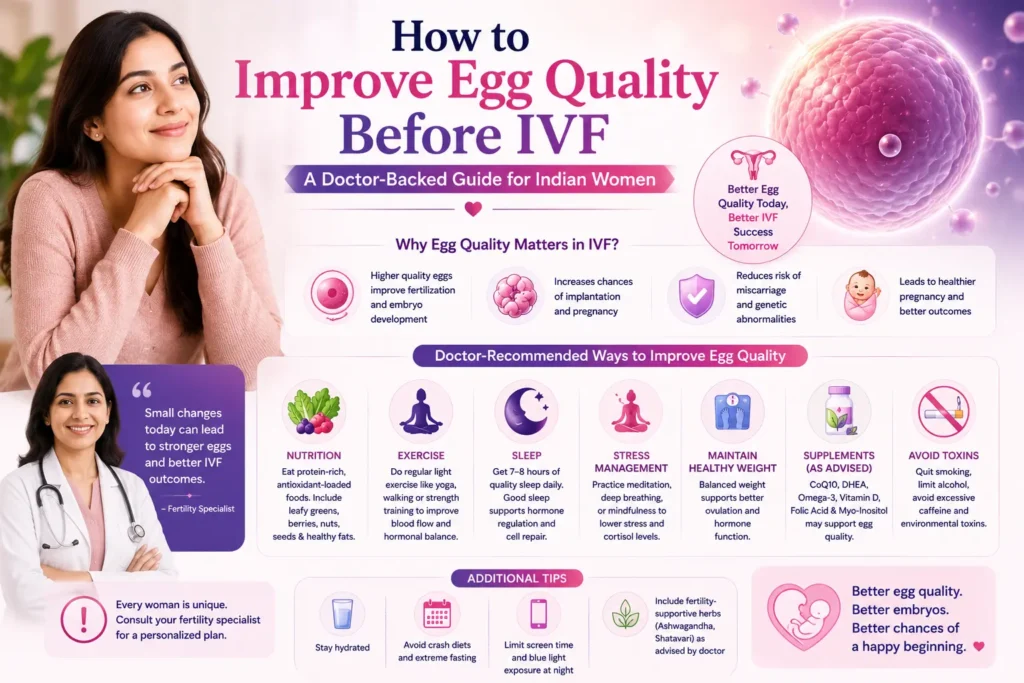
How to improve egg quality before IVF is one of the first questions women ask when they begin thinking about fertility treatment — and one of the most important. It is also deeply personal. Age, past diagnoses, failed attempts, or simply the fear of the unknown can make egg quality feel like an uncontrollable factor standing between you and the family you want.
The good news is that while egg quality cannot be completely reversed by lifestyle alone, learning how to support it through diet, supplements, lifestyle changes, and timely medical care gives every woman a meaningful way to prepare her reproductive health before treatment begins.
At Ayuh Fertility Centre in Ahmedabad, Dr. Krupa M. Shah has guided thousands of Indian women through exactly this preparation journey. Her consistent message is this: you cannot change your age or your genetics, but you can create the best possible environment for your eggs to mature and perform well during IVF.
This guide is grounded in current science, tailored to Indian dietary habits and lifestyles, and written to help you make informed, confident choices in the months before your IVF cycle.
Author Bio
Dr. Krupa A. Shah MBBS · MS (Obstetrics & Gynaecology) · Infertility Specialist Founder, Ayuh Fertility Centre, Ahmedabad
19+ Years of Experience in reproductive medicine, obstetrics, and gynaecology.
Dr. Krupa Shah completed her MBBS from Baroda Medical College (2006) and her MS in Obstetrics & Gynaecology from B.J. Medical College, Ahmedabad (2010). After 12 years of experience at leading clinics in Chennai — including Apollo Hospital and Iswarya Fertility Centre — she completed an Advanced IVF Fellowship at Ludwig Maximilians University, Munich, Germany, one of Europe’s most prestigious reproductive medicine institutions.
She is a member of the Ahmedabad Obstetrics and Gynaecology Society (AOGS), the Indian Society of Assisted Reproduction (ISAR), and the Federation of Obstetric and Gynaecological Societies of India (FOGSI).
IVF laboratory is ART National Board Certified.
🩺 Medically Reviewed By
This article is medically reviewed by Dr. Krupa M. Shah, ensuring accurate and reliable fertility information.
What Is Egg Quality and Why Does It Matter?
Before diving into what can be done, it helps to understand what egg quality actually means — because it is often confused with egg quantity.
Egg quantity refers to your ovarian reserve — how many eggs remain in your ovaries. This is what the AMH (Anti-Mullerian Hormone) blood test and antral follicle count (AFC) ultrasound measure.
Egg quality refers to the chromosomal and cellular health of individual eggs — specifically, whether an egg has the correct number of chromosomes (euploid) and whether its mitochondria (the energy-producing structures inside the egg) are functioning well enough to support fertilisation and early embryo development.
This distinction matters enormously for IVF:
- A high egg count with poor quality often leads to poor fertilisation rates, low-quality embryos, failed implantation, or early miscarriage
- A lower egg count with good quality can still yield healthy embryos and successful pregnancies
- Embryo quality — which drives IVF success — is directly determined by egg quality (and sperm quality)
Egg quality is what fertility specialists are really talking about when they discuss IVF success rates and treatment planning. It is the single most influential biological factor in whether a fertilised egg becomes a healthy baby.
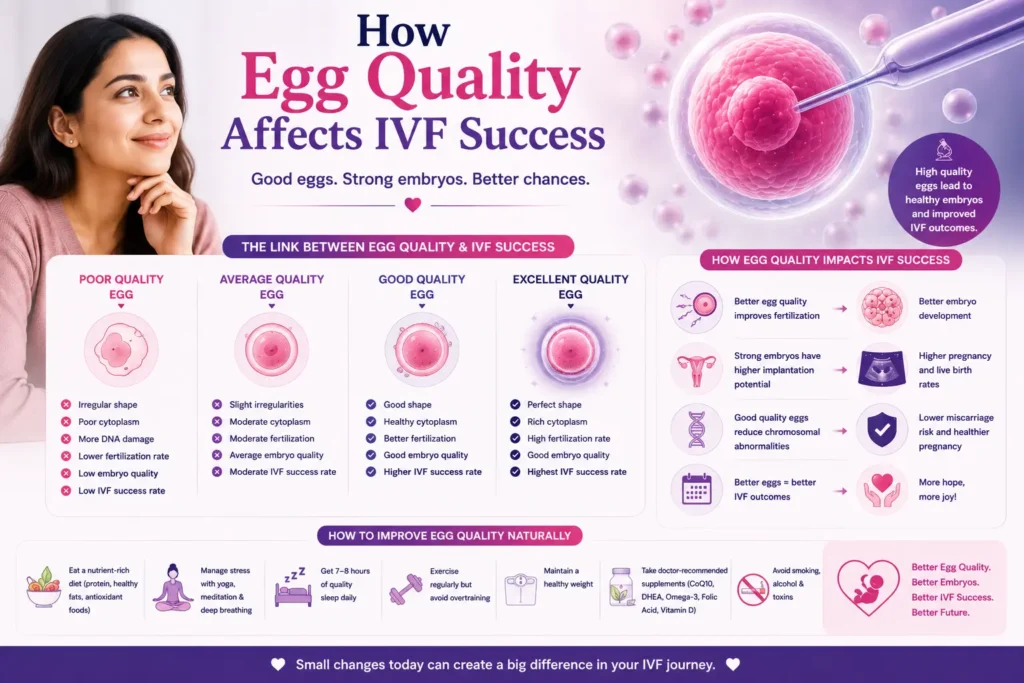
How Egg Quality Affects IVF Success
Understanding the link between egg quality and IVF outcomes helps explain why the question of how to improve egg quality for IVF matters so much in clinical practice.
Fertilisation rates: Poor quality eggs are less likely to fertilise successfully, even with ICSI (Intracytoplasmic Sperm Injection) — where a single sperm is injected directly into the egg. If the egg lacks sufficient energy or has chromosomal issues, fertilisation either fails or produces an abnormal embryo.
Embryo development: Even when fertilisation occurs, poor quality eggs often fail to develop into blastocysts (day-5 embryos) — the stage at which embryos are most suitable for transfer and most likely to implant successfully.
Implantation rates: Chromosomally abnormal embryos are far less likely to implant in the uterine lining. This leads to failed transfers, which are both financially and emotionally costly.
Miscarriage risk: The majority of early miscarriages — including biochemical pregnancies (positive test followed by early loss) — are caused by chromosomal abnormalities in the embryo, which originate from egg quality issues.
Overall IVF success: Across all age groups, egg quality is consistently identified in research as one of the two or three most important determinants of whether an IVF cycle results in a live birth.
Can Egg Quality Really Be Improved?
This is where honesty matters most — because the internet is full of both unhelpful pessimism (“nothing can change egg quality”) and misleading optimism (“these supplements will fix everything”).
The truth is more nuanced and more hopeful than either extreme.
What cannot be changed:
- The biological decline in egg quality that occurs naturally with age — particularly after 35
- Chromosomal issues in individual eggs that are already present
- The total number of eggs you have (ovarian reserve)
What may genuinely be supported:
- The mitochondrial function within eggs — the energy production system that powers fertilisation and early division — can be influenced by nutritional status, particularly antioxidants and CoQ10
- Oxidative stress in the follicular environment — the fluid surrounding maturing eggs — can be reduced through diet and lifestyle
- Hormonal balance, which affects follicle development and egg maturation, is influenced by weight, sleep, stress, and nutritional status
- Inflammatory conditions like endometriosis, when actively managed, create a better pelvic environment for egg development
The realistic framing is this: you are working with the eggs you have. What you can do is give them the best possible cellular environment to mature in — and that is genuinely worth doing. Many women are surprised by the difference a focused 2–3 month preparation period makes to their cycle outcomes.
Common Causes of Poor Egg Quality
Understanding what damages egg quality helps identify which factors you may be able to address before your IVF treatment in Ahmedabad.
Age The most significant and unavoidable factor. As women age, eggs naturally accumulate chromosomal errors. By the late 30s and particularly after 40, the proportion of chromosomally abnormal eggs increases substantially. This is why age is consistently the strongest predictor of IVF success.
Oxidative stress Free radicals — produced by poor diet, smoking, pollution, and chronic illness — damage egg DNA and mitochondrial function. The follicular fluid surrounding developing eggs is particularly vulnerable to oxidative damage.
Smoking Smoking accelerates ovarian ageing, directly damages egg DNA, and significantly reduces both ovarian reserve and egg quality. Even secondhand smoke exposure has been associated with reduced fertility.
Obesity and significant underweight Both extremes of body weight disrupt the hormonal signalling that governs follicle development and egg maturation. Excess adipose tissue in women with high BMI increases oestrogen and inflammatory cytokines, both of which impair egg quality.
PCOS (Polycystic Ovary Syndrome) While PCOS is associated with high egg numbers, the eggs produced often have maturation issues related to insulin resistance and hormonal imbalance. Managing PCOS through diet and medication before IVF improves egg quality meaningfully.
Endometriosis Endometriomas (chocolate cysts) on the ovaries directly damage ovarian tissue and reduce both the quantity and quality of eggs. Surgical management through laparoscopy before IVF is often recommended in such cases.
Poor nutrition Deficiencies in folate, vitamin D, zinc, selenium, and omega-3 fatty acids affect the cellular environment in which eggs mature. Long-term nutritional deficiencies compound over time.
Chronic stress Elevated cortisol disrupts FSH and LH signalling, which directly affects follicle development and egg maturation quality.
Environmental toxins Bisphenol A (BPA) from plastic containers, pesticides, and certain industrial chemicals are known endocrine disruptors — they interfere with hormonal signalling in ways that affect egg quality.
How to Improve Egg Quality Naturally in India
For Indian women preparing for IVF, the good news is that traditional Indian dietary patterns — when followed in their whole-food form — are naturally well-suited to supporting fertility. The challenge is that modern Indian diets have shifted significantly toward refined grains, processed foods, and excess sugar.
Here is a practical, India-specific guide to improving egg quality naturally through diet:
Eat More Antioxidant-Rich Foods
Antioxidants neutralise the free radicals that damage eggs at the cellular level. Indian foods naturally rich in antioxidants include:
- Amla (Indian gooseberry) — one of the richest sources of vitamin C in nature; supports collagen synthesis and cellular protection
- Turmeric (haldi) — curcumin has anti-inflammatory and antioxidant properties; use in cooking regularly
- Pomegranate (anar) — rich in polyphenols; widely consumed in India and well-studied for reproductive health benefits
- Berries — blueberries, strawberries (increasingly available in Indian cities); excellent antioxidant sources
- Tomatoes — lycopene-rich; particularly beneficial when cooked
- Spinach (palak) and methi (fenugreek leaves) — iron, folate, and antioxidant-rich staples of Indian cooking
Prioritise Good-Quality Protein
Protein provides the amino acids needed for hormone synthesis, follicle development, and cellular repair. Good-quality protein sources widely available in India:
- Dals and legumes (moong, masoor, chana) — excellent plant-based protein with added folate benefit
- Paneer — complete protein and calcium source
- Eggs — one of the most nutritionally complete fertility foods; include regularly if non-vegetarian
- Fish — particularly pomfret, rohu, and mackerel (rich in omega-3)
- Chicken (for non-vegetarians) — lean protein without excess saturated fat
Include Healthy Fats Daily
Healthy fats are essential for hormone synthesis, cell membrane integrity, and reducing inflammation. In Indian cooking:
- Cold-pressed coconut oil or sesame oil for cooking (in moderation)
- Ghee — in moderation, ghee contains fat-soluble vitamins A, D, E, and K that support hormonal health
- Walnuts (akhrot) — particularly rich in omega-3; a handful daily is easy to incorporate
- Flaxseeds (alsi) — grind fresh and add to rotis, dahi, or smoothies; excellent omega-3 source
- Almonds (badam) and pumpkin seeds — zinc, vitamin E, and healthy fat combination
Choose Whole Grains Over Refined Grains
Replace maida (refined flour) rotis and white rice with:
- Jowar, bajra, and ragi rotis — traditional Indian millets with excellent nutritional profiles and low glycaemic index
- Brown rice or hand-pound rice — retains fibre and B vitamins
- Oats — widely available, easy to prepare, and excellent for blood sugar stability
Stable blood sugar — particularly important for women with PCOS — supports the hormonal environment needed for healthy follicle development.
Stay Well Hydrated
Aim for 8–10 glasses of water daily. In Indian conditions — particularly summer months — dehydration happens quickly and affects blood viscosity and nutrient delivery to the ovaries. Coconut water is an excellent additional hydration option, providing electrolytes naturally.
Reduce or eliminate: sugary chai in excess, packaged fruit juices (high fructose), and cold drinks. These spike blood sugar and provide no nutritional benefit.
Best Lifestyle Changes Before IVF
Diet is one part of the preparation equation. These lifestyle factors are equally important when thinking about how to improve egg quality for IVF:
Sleep (7–9 hours, consistent schedule) Melatonin — produced during darkness — is concentrated in follicular fluid surrounding eggs and plays a protective antioxidant role. Women with disrupted sleep have been found to have lower melatonin levels in their follicular fluid. Keep a consistent sleep and wake time, and reduce screen exposure in the hour before bed.
Moderate exercise Walking, yoga, and swimming support healthy weight, insulin sensitivity, and stress hormone regulation — all of which benefit egg quality. Avoid overtraining or high-intensity workouts during the active preparation period, as these can elevate cortisol and disrupt hormonal signalling.
Stress management Chronic stress elevates cortisol, which suppresses FSH and LH — the hormones that drive follicle development. Yoga, pranayama, and meditation are deeply rooted in Indian culture and have measurable effects on cortisol levels with consistent practice.
Stop smoking If either partner smokes, this is the single most impactful lifestyle change available. Smoking accelerates ovarian ageing at the cellular level. Stop as early as possible — ideally at least 3 months before the cycle.
Limit alcohol Most fertility specialists recommend eliminating alcohol entirely during IVF preparation and treatment. Alcohol disrupts oestrogen metabolism and has been associated with poorer egg quality and lower implantation rates.
Reduce caffeine Limit to one cup of chai or coffee daily. High caffeine intake is associated with modest reductions in fertility outcomes. Switch to warm herbal teas (tulsi, ginger, or fennel) for additional antioxidant support.
Reduce plastic exposure Use steel, glass, or ceramic containers instead of plastic for storing and heating food. Avoid heating food in plastic containers. BPA and phthalates from plastics are known endocrine disruptors that affect hormonal signalling.
Egg Quality Supplements Before IVF
Supplements are one of the most searched topics for women preparing for IVF — and also one of the most commercially cluttered. Here is an honest, evidence-grounded overview of egg quality supplements before IVF in Ahmedabad and what the research actually supports:
CoQ10 (Coenzyme Q10 — preferably Ubiquinol form) CoQ10 is the most extensively studied supplement for egg quality. It supports mitochondrial energy production within eggs — the energy needed for fertilisation and early cell division. Mitochondrial function declines naturally with age, and CoQ10 supplementation has shown promise in improving embryo quality, particularly in women over 35 or those with poor ovarian response. Discuss with your fertility doctor before starting.
Folic Acid / Methylfolate Critical for DNA synthesis and cell division. Folic acid deficiency increases the risk of chromosomal abnormalities in embryos. All women planning IVF should be taking folic acid — or its more bioavailable form, methylfolate — for at least 3 months before egg retrieval. Confirmed as essential by Indian and international fertility guidelines.
Vitamin D Vitamin D deficiency is extremely common in Indian women — largely because cultural practices of sun avoidance and indoor lifestyles limit natural production, despite abundant sunshine. Low vitamin D is consistently associated with poorer IVF fertilisation and clinical pregnancy rates. Get your level tested; your doctor will advise on supplementation dose based on your result.
Omega-3 Fatty Acids (DHA and EPA) Omega-3 fatty acids are incorporated into egg cell membranes, improving fluidity and receptor function — both of which matter for fertilisation. DHA is particularly important for embryo development. Indian diets that are vegetarian or low in oily fish may be deficient in DHA specifically; an algae-based DHA supplement is a good plant-based alternative.
Antioxidant vitamins (Vitamin C and Vitamin E) Both are well-established antioxidants that reduce oxidative stress in follicular fluid. Many prenatal multivitamins contain both. There is no need to take these separately if you are using a comprehensive prenatal supplement — check the label.
Prenatal multivitamin A good quality prenatal multivitamin covers folate, iron, iodine, vitamin B12, and other micronutrients that are commonly deficient in Indian women. Begin 3 months before IVF rather than waiting until pregnancy is confirmed.
Dehydroepiandrosterone (DHEA) Occasionally recommended by fertility specialists for women with significantly diminished ovarian reserve or poor response to stimulation in previous IVF cycles. This is not a supplement to self-prescribe — it has hormonal effects and must be used under medical supervision only.
Important: All supplements should be discussed with and approved by your fertility specialist at Ayuh Fertility Centre before starting. Some can interact with IVF medications or have hormonal effects. More is not better — and unsupervised use can be counterproductive.
How Long Does It Take to Support Better Egg Health?
This is one of the most practically important questions in IVF preparation — and the answer is grounded in biology.
Eggs take approximately 90 days to mature inside the ovary before they are ready for retrieval. This period — called folliculogenesis — is when the egg is most sensitive to its nutritional and hormonal environment. The dietary choices, supplements, sleep patterns, and stress levels you experience during those 90 days directly influence the cellular quality of the eggs that will be collected during your IVF cycle.
This is why fertility specialists consistently recommend beginning preparation at least 3 months (ideally 90 days) before your planned egg retrieval date.
Starting the week before your injections begin is better than nothing — but it is not the same as 3 months of consistent preparation. The earlier you start, the more of the egg maturation window you benefit from.
Consistency matters more than perfection. Three months of generally better nutrition, sleep, and stress management will do more than two weeks of flawless effort right before retrieval.
Foods That May Support Fertility Health
Here is a practical, easy-to-follow summary of fertility-supportive foods organised by category — with a focus on what is readily available across India:
Fruits
- Pomegranate — polyphenols support blood flow to the uterus and ovaries
- Amla — extremely high in vitamin C; one of nature’s most powerful antioxidants
- Banana — vitamin B6 supports hormonal balance
- Papaya (ripe) — folate and vitamin C; avoid raw papaya during IVF
- Seasonal fruits — guava, mango (in moderation), orange, and sitaphal (custard apple) all offer fertility-relevant nutrients
Vegetables
- Palak (spinach) — iron, folate, magnesium
- Methi (fenugreek) — supports insulin sensitivity; important for PCOS
- Carrots and sweet potato — beta-carotene converts to vitamin A, essential for egg health
- Broccoli and cauliflower — sulforaphane supports liver detoxification of excess oestrogen
- Beetroot — improves blood flow to the uterus; popular in Indian fertility nutrition
Nuts and Seeds
- Walnuts — highest plant-based omega-3 source
- Almonds — vitamin E and magnesium
- Pumpkin seeds — zinc (critical for egg maturation and sperm health)
- Sunflower seeds — vitamin E and selenium
- Flaxseeds (ground) — omega-3 and lignans; add to rotis or yoghurt
Dairy
- Full-fat dahi (yoghurt) — probiotics support gut health, which influences hormonal balance; calcium and protein
- Paneer — complete protein and calcium
- Milk — vitamin D (if fortified) and calcium; choose full-fat over skimmed
Dals and Legumes
- Moong dal — easily digestible protein and folate
- Masoor dal — iron and folate
- Rajma and chana — zinc and protein
- Soya — isoflavones and protein; moderate consumption is appropriate; avoid excess
Healthy Oils
- Cold-pressed sesame oil — vitamin E and sesamin; traditional Indian oil with antioxidant properties
- Ghee — fat-soluble vitamins; use in moderation as part of cooking
- Cold-pressed coconut oil — MCTs support energy; use in moderation
- Extra virgin olive oil — if available; excellent for Mediterranean-style preparation dishes
Foods and Habits That May Negatively Affect Egg Quality
Maida-based foods (refined flour) White bread, pav, naan, and packaged biscuits spike blood sugar and contribute to insulin resistance — particularly harmful for women with PCOS preparing for IVF.
Ultra-processed and packaged snacks Namkeens, chips, instant noodles, and packaged baked goods contain trans fats, excessive sodium, and chemical additives. Trans fats specifically are associated with poorer reproductive outcomes.
Excess sugar Mithai, sugary chai, packaged fruit juices, and cold drinks consumed regularly contribute to oxidative stress and hormonal disruption. Replace with whole fruit and herbal teas.
Smoking (including secondhand smoke) Accelerates ovarian ageing and damages egg DNA. Avoid smoke exposure — including from other household members — during IVF preparation.
Alcohol Disrupts oestrogen metabolism and is associated with poorer egg quality and implantation rates. Eliminate or reduce to zero during the preparation period.
Extreme dieting or prolonged calorie restriction Severe restriction depletes the micronutrients — zinc, folate, vitamin D, B12 — that are essential for egg maturation. Crash dieting before IVF is counterproductive.
Chronic sleep deprivation Reduces melatonin levels in follicular fluid, increases cortisol, and disrupts the pulsatile hormonal signalling that governs follicle development.
Age and Egg Quality — What Indian Women Should Know
This is one of the most sensitive and important conversations in fertility medicine. The impact of age on egg quality is real — and being honest about it is an act of care, not discouragement.
Under 30 Egg quality is generally at its best. IVF success rates are highest in this age group. Lifestyle preparation still matters — particularly for women with PCOS, endometriosis, or nutritional deficiencies — but the biological foundation is strong.
Ages 30–35 Egg quality remains relatively good for most women, though a gradual decline begins. This is often the window where proactive preparation makes the most meaningful difference to IVF outcomes. Women in this group should not delay evaluation if they have been trying for 12 months without success.
Ages 35–40 The decline in both egg quality and quantity becomes more clinically significant. After 35, chromosomal abnormality rates in eggs rise more steeply. IVF success rates are lower than in younger women, though many women in this group do achieve successful pregnancies. Timely evaluation and treatment are important — delays have real costs at this age.
Over 40 Egg quality decline is significant. The proportion of chromosomally abnormal eggs is higher, and IVF success rates with own eggs are lower. However, many women over 40 do achieve successful IVF pregnancies — particularly those with good ovarian reserve and no other complicating factors. Honest, individualised counselling from an experienced fertility specialist in Ahmedabad is essential at this stage. Donor egg IVF is also an option that many couples explore when own-egg outcomes are unlikely.
The message is not that age determines everything — it is that age is a meaningful factor that warrants timely evaluation rather than waiting.
When Should You See a Fertility Specialist?
Knowing when to seek expert evaluation is one of the most important decisions in the fertility journey. Many Indian women wait longer than necessary — sometimes due to social pressure, sometimes due to hope that things will resolve naturally.
Seek evaluation from a fertility specialist if:
- You are under 35 and have been trying to conceive for 12 months without success
- You are 35 or older and have been trying for 6 months without success
- You have irregular or absent periods (possible PCOS, thyroid issue, or premature ovarian insufficiency)
- You have a known or suspected diagnosis of endometriosis
- You have experienced two or more miscarriages
- A previous IVF cycle failed and you want expert review before trying again
- You have a low AMH result from a previous blood test
- You have PCOS and want to understand how it affects your IVF readiness
A fertility evaluation does not commit you to IVF immediately. It gives you a clear picture of your ovarian reserve, uterine health, and overall fertility status — from which informed decisions can be made.
Common Myths About Egg Quality
Myth: The right supplements can completely reverse age-related egg quality decline. Reality: Supplements can support mitochondrial function and reduce oxidative stress, but they cannot reverse chromosomal ageing in eggs. They are one supportive tool among many — not a cure for biological fertility decline.
Myth: AMH level equals egg quality. Reality: AMH measures ovarian reserve — how many eggs remain. It says very little about the chromosomal quality of those eggs. A woman with a low AMH can have excellent quality eggs; a woman with a high AMH can have significant quality issues. These are separate measurements.
Myth: IVF can fix any egg quality problem. Reality: IVF bypasses many fertility barriers, but it cannot create chromosomally normal eggs from abnormal ones. Preimplantation Genetic Testing (PGT-A) can help identify healthy embryos for transfer — but this requires normal embryos to exist in the first place, which depends on egg quality.
Myth: Healthy young women never have egg quality problems. Reality: While age is the strongest predictor, egg quality issues can affect women of any age — due to endometriosis, genetic factors, oxidative stress, nutritional deficiencies, or unknown causes. Never assume egg quality is fine without proper evaluation.
Myth: If I eat well for a week before egg retrieval, my eggs will be better. Reality: Eggs mature over 90 days. One week of clean eating before retrieval has minimal impact. Sustained preparation over 2–3 months is what influences the cellular environment during egg maturation.
Frequently Asked Questions
Q1: Can egg quality be improved naturally?
Yes, within realistic limits. The nutritional and hormonal environment in which eggs mature over approximately 90 days can be meaningfully supported through diet, supplements (under medical guidance), sleep, stress management, and lifestyle changes. Antioxidant-rich foods, omega-3 fatty acids, folate, and CoQ10 are the most studied nutritional supports for egg health. What cannot be changed is the natural chromosomal ageing that occurs with age, or genetic factors. The goal is to optimise the quality of the eggs you have — not to create new ones.
Q2: What supplements help egg quality before IVF?
The supplements most commonly recommended before IVF for egg quality support include CoQ10 (particularly for women over 35 or with poor ovarian response), folic acid or methylfolate (essential for all women), vitamin D (especially important in Indian women, where deficiency is very common), omega-3 fatty acids, and a prenatal multivitamin. Each of these has evidence supporting its role in reproductive health. However, all should be taken only under the supervision of your fertility specialist at Ayuh Fertility Centre — and discussed before starting, not after.
Q3: Does age affect egg quality?
Yes — age is the single most significant factor influencing egg quality. As women age, the proportion of chromosomally abnormal eggs increases. This process begins gradually in the early 30s and accelerates after 35. By age 40, the majority of eggs in most women carry chromosomal abnormalities. This is why IVF success rates decline with age. However, many women over 35 — and even over 40 — do achieve successful IVF pregnancies, particularly with early evaluation, good preparation, and personalised treatment planning.
Q4: How long before IVF should I start preparing my eggs?
Ideally, begin your preparation 3 months (90 days) before your planned egg retrieval date. This aligns with the biological timeline of egg maturation — eggs that will be collected in your IVF cycle are actively developing during those 90 days. Starting your dietary improvements, supplements, sleep routine, and lifestyle changes at least 3 months early means your eggs benefit from a better cellular environment throughout their entire maturation window.
Q5: Can diet actually improve IVF success rates?
Research supports a meaningful association between dietary patterns and IVF outcomes. A Mediterranean-style diet — rich in antioxidants, whole grains, lean proteins, and healthy fats — has been associated with improved fertilisation and clinical pregnancy rates in multiple studies. Indian women following similar whole-food dietary principles (millets, dals, seasonal vegetables, healthy fats like ghee and walnuts, limited refined carbohydrates) can apply these principles naturally within their existing food culture. Diet alone cannot overcome medical diagnoses, but it creates a better biological foundation for treatment.
Conclusion:
Understanding how to improve egg quality for IVF is not about chasing a miracle — it is about taking evidence-based, consistent steps that give your eggs the best possible cellular environment to mature in. It is about arriving at your IVF cycle as prepared as you can be — physically, nutritionally, and emotionally.
No preparation plan can guarantee a baby. What it can do is give you — and your fertility team — the best possible foundation to work from. And in a process where so much feels beyond your control, that matters deeply.
Dr. Krupa M. Shah at Ayuh Fertility Centre in Ahmedabad approaches every patient’s egg quality journey with the same combination of honesty, science, and compassion. Whether you are just beginning to think about IVF or preparing for your next cycle after a previous attempt, a personalised consultation will give you clarity on where your egg health stands — and exactly what steps are most relevant for you.
You cannot change your biology. But you can give it every advantage science and good care can offer.
👉 Book your consultation with Ayuh Fertility Centre today
👉 Get expert guidance for PCOS and fertility treatment
👉 Start your journey toward a healthy and successful pregnancy
📍 Visit us in Ahmedabad
📞 Call now to schedule your appointment