
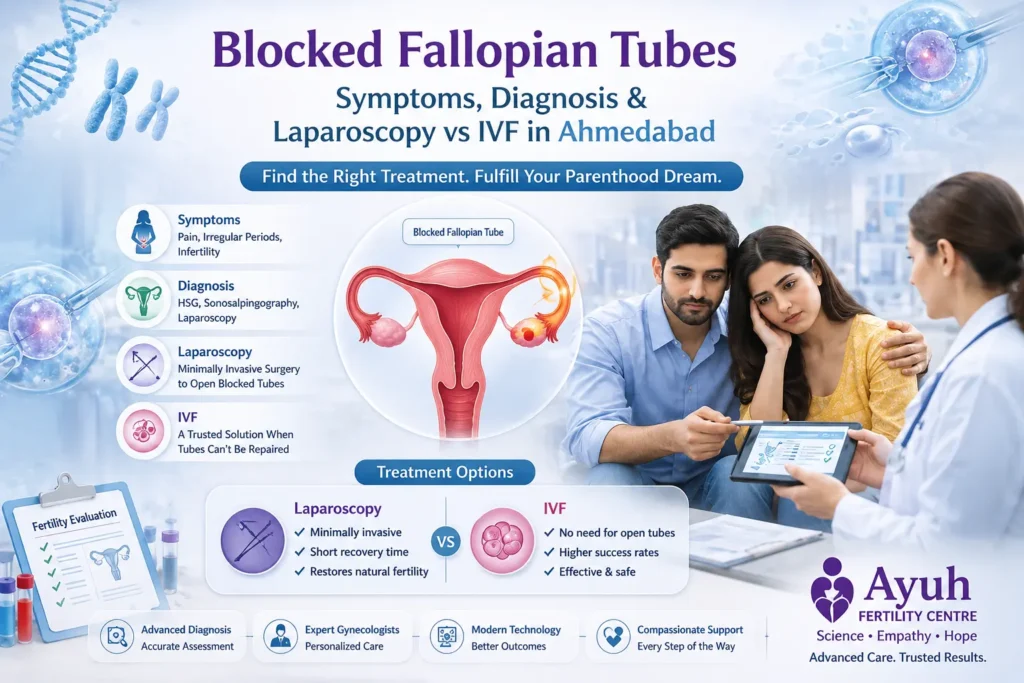
Blocked fallopian tubes are one of the most common — and most silent — causes of infertility that couples encounter. You have been trying for months. Your periods are completely regular. You feel perfectly healthy. There is no pain, no obvious symptom, nothing that would make you suspect anything is physically wrong. And yet, month after month, conception does not happen.
This is the frustrating reality for many women with blocked fallopian tubes: the condition itself is almost always silent. It produces no warning signs until a couple begins investigating why pregnancy has not occurred — and even then, it requires specific testing to uncover, because it is invisible on a standard ultrasound and undetectable through blood tests.
The good news is that blocked fallopian tubes are a well-understood, well-studied cause of infertility — and one with clear, evidence-based treatment pathways. Depending on the severity and location of the blockage, treatment may involve laparoscopic surgical correction, or it may mean bypassing the tubes entirely through IVF.
Dr. Krupa A. Shah, founder of Ayuh Fertility Centre in Ahmedabad, evaluates every case of tubal infertility individually — because the right treatment for blocked tubes is never one-size-fits-all.
This blog explains everything you need to understand about blocked fallopian tubes — clearly, honestly, and with genuine hope.
Author Bio
Dr. Krupa A. Shah MBBS · MS (Obstetrics & Gynaecology) · Infertility Specialist Founder, Ayuh Fertility Centre, Ahmedabad
19+ Years of Experience in reproductive medicine, obstetrics, and gynaecology.
Dr. Krupa Shah completed her MBBS from Baroda Medical College (2006) and her MS in Obstetrics & Gynaecology from B.J. Medical College, Ahmedabad (2010). After 12 years of experience at leading clinics in Chennai — including Apollo Hospital and Iswarya Fertility Centre — she completed an Advanced IVF Fellowship at Ludwig Maximilians University, Munich, Germany, one of Europe’s most prestigious reproductive medicine institutions.
She is a member of the Ahmedabad Obstetrics and Gynaecology Society (AOGS), the Indian Society of Assisted Reproduction (ISAR), and the Federation of Obstetric and Gynaecological Societies of India (FOGSI).
IVF laboratory is ART National Board Certified.
🩺 Medically Reviewed By
This article is medically reviewed by Dr. Krupa M. Shah, ensuring accurate and reliable fertility information.
What Are Blocked Fallopian Tubes?
The fallopian tubes are two thin, muscular structures connecting each ovary to the uterus. Despite their small size, they play an essential and active role in natural conception.
Their role in fertilisation: Each month, when an egg is released from the ovary (ovulation), the fimbriae — delicate, finger-like projections at the end of the tube — sweep the egg into the tube. The tube then becomes the meeting point for sperm and egg, where fertilisation actually occurs. After fertilisation, the tube’s muscular contractions and internal lining gently guide the developing embryo toward the uterus over approximately 5–6 days.
How pregnancy normally occurs: Sperm travels from the cervix, through the uterus, and into the fallopian tube to meet the egg. After fertilisation, the embryo travels back through the tube into the uterus, where it implants into the uterine lining. Every step of this journey depends on the tube being open, healthy, and functioning correctly.
What happens when one or both tubes are blocked: When a tube is blocked — partially or completely — this entire process is disrupted. Sperm may be unable to reach the egg, the egg may be unable to enter the tube at all, or a fertilised embryo may become trapped within a partially blocked tube (which can lead to a dangerous ectopic pregnancy). Blocked fallopian tubes are responsible for approximately 25–35% of female infertility cases — making them one of the most common identifiable causes of difficulty conceiving.
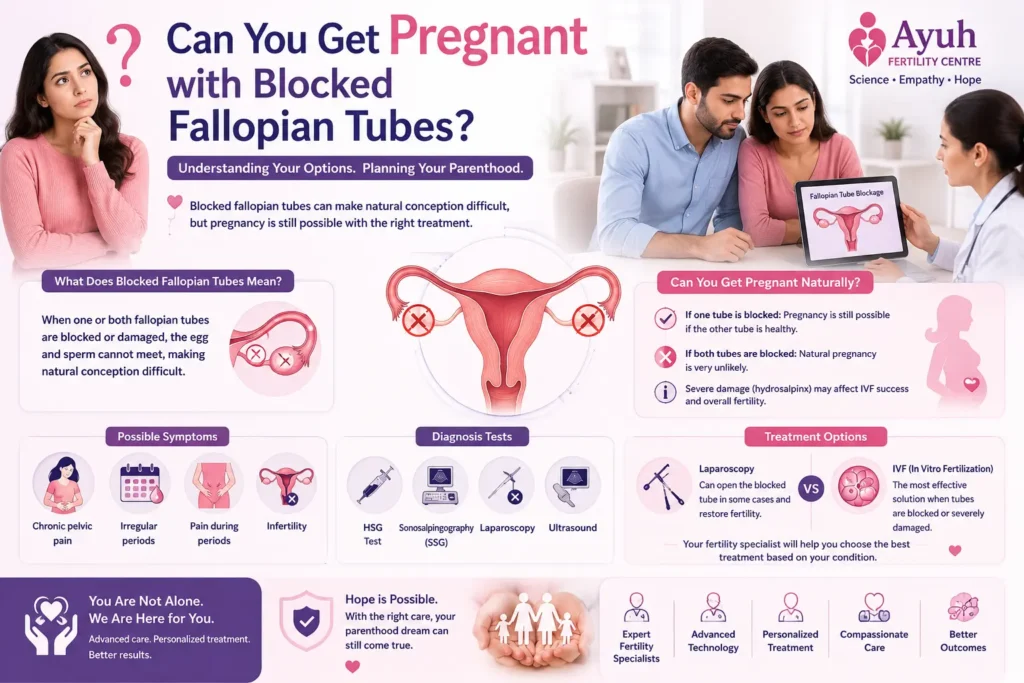
Can You Get Pregnant with Blocked Fallopian Tubes?
This is the question every woman with this diagnosis wants answered first — and the honest answer depends entirely on the specifics of the blockage.
One blocked tube: If only one fallopian tube is blocked and the other is completely open and healthy, natural conception is often still possible. The body alternates ovulation between the two ovaries in most (though not all) cycles, meaning that in months when the healthy-tube-side ovary releases the egg, conception can occur normally. Many women with unilateral (one-sided) tubal blockage do conceive naturally — though it may take longer than average.
Both tubes blocked: If both fallopian tubes are completely blocked, natural conception is not possible — because there is no pathway for sperm and egg to meet. In this situation, IVF becomes the necessary and appropriate treatment, as it bypasses the tubes entirely.
Partial blockage: A partial blockage is more complex. It may allow sperm through intermittently, or it may allow fertilisation to occur but prevent the embryo from properly travelling to the uterus — significantly raising the risk of ectopic pregnancy (where the embryo implants within the tube itself, a medical emergency). Partial blockages require careful individual assessment to determine the safest path forward.
When natural conception is still realistically possible:
- One tube fully open and healthy
- Good ovarian reserve
- Normal sperm parameters in the male partner
- No additional fertility factors (endometriosis, PCOS, advanced age)
When IVF becomes the appropriate treatment:
- Both tubes completely blocked
- Severe damage to the only functioning tube
- Hydrosalpinx (fluid-filled, distended tube) present
- Combined with other infertility factors
- Previous failed surgical correction
- Advanced maternal age, where time is a significant clinical factor
The realistic, honest answer to can I get pregnant with blocked tubes: it depends entirely on whether one tube remains open and functional, and whether any additional fertility factors are present. A thorough fertility evaluation is the only way to answer this question specifically for you.
Symptoms of Blocked Fallopian Tubes
Here is the single most important thing to understand about this condition: most women with blocked fallopian tubes experience no symptoms at all.
This is precisely why so many cases are only discovered during a fertility evaluation — not because anything felt wrong, but because pregnancy was not happening.
When symptoms do occur, they may include:
- Difficulty conceiving — by far the most common, and often the only, presenting sign
- Pelvic pain — particularly if the blockage is caused by endometriosis or pelvic inflammatory disease
- Painful periods (dysmenorrhoea) — when associated with underlying endometriosis
- Chronic pelvic infection symptoms — unusual vaginal discharge, low-grade fever, or recurring pelvic discomfort if active infection is present
- Hydrosalpinx symptoms — a feeling of pelvic fullness or mild, dull lower abdominal pain on one side, caused by fluid accumulation within a blocked, distended tube
- Pain during intercourse — particularly with deep penetration, if associated with pelvic adhesions or endometriosis
The critical takeaway: if you have been trying to conceive for 12 months without success (or 6 months if above 35) and have experienced no other obvious fertility-related symptoms, blocked fallopian tubes should still be on your evaluation checklist. Infertility is very often the only sign.
What Causes Blocked Fallopian Tubes?
Understanding the underlying cause helps guide both diagnosis and the most appropriate treatment approach.
Pelvic Inflammatory Disease (PID) The most common cause of tubal blockage. PID is typically caused by untreated sexually transmitted infections (especially chlamydia and gonorrhoea) that ascend into the pelvic organs, causing inflammation and subsequent scarring of the fallopian tubes.
Endometriosis Endometriosis tissue growing on or around the fallopian tubes causes inflammation and adhesions that can distort the tube’s structure and block its passage. Endometriosis-related tubal damage is frequently identified only during diagnostic laparoscopy.
Previous Pelvic Surgery Any prior abdominal or pelvic surgery — including appendectomy, ovarian cyst removal, or caesarean section — carries a risk of creating adhesions (internal scar tissue) that can bind or block the fallopian tubes.
Ectopic Pregnancy A previous ectopic pregnancy — and its surgical management — frequently results in damage to or removal of the affected tube, and can sometimes cause scarring that affects the remaining tube as well.
Tuberculosis Genital tuberculosis remains a notable cause of tubal blockage in India specifically. TB affecting the reproductive organs can cause severe, often bilateral, tubal damage — frequently with minimal or no symptoms until infertility investigation begins.
Sexually Transmitted Infections Beyond PID, certain STIs directly cause inflammation within the tubes themselves, leading to scarring and blockage over time, particularly when infections go undiagnosed and untreated.
Congenital Abnormalities Rarely, women are born with structural abnormalities of the fallopian tubes that affect their function from birth — though this is a less common cause than the acquired conditions listed above.
How Are Blocked Fallopian Tubes Diagnosed?
Several diagnostic approaches are available, each with different strengths and applications.
HSG (Hysterosalpingography) The most commonly used first-line test. A contrast dye is injected through the cervix into the uterus and tubes, and X-ray imaging tracks whether the dye flows freely through both tubes and spills into the pelvis. HSG is performed on an outpatient basis, typically takes 15–20 minutes, and provides a clear initial assessment of tubal patency. Limitations: HSG shows whether dye passes through but cannot assess the external condition of the tubes, surrounding adhesions, or fimbrial health.
Sonosalpingography (SSG / HyCoSy) A similar concept to HSG, but using saline or a contrast agent combined with ultrasound rather than X-ray. This avoids radiation exposure and can be performed in the same visit as a routine fertility ultrasound. Limitations: Similar to HSG — confirms patency but provides limited information about tube condition or surrounding pelvic structures.
Laparoscopy The gold standard for tubal assessment. Laparoscopic surgery allows direct visualisation of the tubes, ovaries, and pelvic cavity, combined with a dye test (chromopertubation) performed under direct vision. This identifies not just whether the tubes are open, but their external condition — adhesions, fimbrial damage, endometriosis, and hydrosalpinx — all of which HSG cannot detect. Benefits: Both diagnostic and therapeutic — many conditions found can be treated in the same procedure. Limitations: A surgical procedure requiring general anaesthesia, though minimally invasive with same-day or next-morning discharge.
Ultrasound A standard pelvic ultrasound can identify hydrosalpinx (a clearly fluid-filled, distended tube) and assess overall uterine and ovarian anatomy, but cannot directly assess tubal patency in tubes that are not significantly distended.
Complete Fertility Evaluation At Ayuh Fertility Centre, tubal assessment is performed alongside hormonal evaluation (AMH, FSH, thyroid), semen analysis for the male partner, and a complete clinical history — because tubal factor infertility is frequently found alongside, not instead of, other contributing factors.
Laparoscopy vs IVF for Blocked Tubes — Which Is Better?
This is the central decision most couples with tubal infertility need to understand. The honest answer: laparoscopy vs IVF for blocked tubes India is not a competition with one universal winner — it is a clinical decision based on your specific tubal condition.
| Factor | Laparoscopy | IVF |
|---|---|---|
| Treatment Goal | Repair/restore tubal function, remove disease | Bypass tubes entirely |
| Procedure | Minimally invasive surgery under general anaesthesia | Ovarian stimulation, egg retrieval, lab fertilisation, embryo transfer |
| Recovery | 1–2 weeks for normal activity | No surgical recovery (egg retrieval has 24–48hr recovery) |
| Success Rate | Variable — depends heavily on damage severity; 20–40% natural conception in mild cases over 12 months | 40–60%+ per cycle at experienced centres (age-dependent) |
| Cost (Ahmedabad) | Procedure cost varies by complexity | ₹1,20,000–₹1,40,000 per cycle plus medications |
| Time to Pregnancy | Months (natural conception attempt period after surgery) | Single cycle — typically 4–6 weeks |
| Suitable Candidates | Mild-moderate blockage, younger women, good ovarian reserve, single tube affected | Both tubes blocked, severe damage, failed prior surgery, advanced age, combined infertility factors |
| Risks | Surgical risks (low), possible recurrence of adhesions, does not guarantee restored function | OHSS (low risk, well-managed), standard IVF cycle considerations |
The key clinical insight: Laparoscopy aims to fix the underlying problem — giving the chance of repeated natural conception in future cycles. IVF aims to bypass the problem entirely — offering a more immediate and predictable pathway to pregnancy, particularly valuable when time, severity of damage, or additional fertility factors make tubal repair less promising.
When Is Laparoscopy Recommended?
Dr. Krupa Shah recommends laparoscopic surgery in the following situations:
Mild Blockage or Adhesions Partial blockage caused by thin, mild adhesions around the tube — rather than severe internal damage — often responds well to laparoscopic adhesiolysis (release of scar tissue), restoring functional tubal patency.
Endometriosis-Related Blockage When endometriosis is the underlying cause, laparoscopy serves a dual purpose — confirming the diagnosis and treating the disease (removing lesions, draining endometriomas) in the same procedure, which can restore tubal function and improve overall fertility.
Hydrosalpinx Requiring Removal A hydrosalpinx is not just a blockage — the fluid within it is toxic to embryos and significantly reduces IVF success rates if left untreated. Laparoscopic removal or disconnection (salpingectomy or proximal tubal occlusion) is recommended even when the ultimate plan is to proceed with IVF, because it protects the embryo transfer environment.
Younger Women with Good Ovarian Reserve For women under 35 with reasonable ovarian reserve and time on their side, attempting surgical correction followed by natural conception is a reasonable first approach before considering IVF.
Benefits: Addresses the root cause; may restore the possibility of repeated natural conception without further intervention; can be combined with treatment of other pelvic conditions.
Limitations: Does not guarantee restored function; adhesions can recur; surgical risks, while low, are still present; not appropriate for severe or complete bilateral blockage.
When Is IVF Recommended Instead?
Dr. Krupa Shah recommends proceeding directly to IVF — bypassing tubal repair attempts — in these situations:
Both Tubes Completely Blocked When both fallopian tubes are confirmed completely blocked, natural conception has no possible pathway. IVF, which retrieves eggs directly from the ovaries and transfers embryos directly into the uterus, is the only treatment that can achieve pregnancy.
Severe Tubal Damage When tubes show extensive scarring, fimbrial destruction, or are severely distorted, surgical repair has a low probability of restoring meaningful function — making the surgery itself less likely to be worthwhile compared to proceeding directly to IVF.
Failed Prior Laparoscopy If a previous surgical attempt to correct tubal blockage did not result in pregnancy after an appropriate trial period, repeating surgery rarely improves outcomes. IVF becomes the more efficient next step.
Advanced Maternal Age For women above 35–37, the time required for surgical recovery plus a natural conception attempt period can represent a meaningful loss of fertility window. IVF offers a more time-efficient path when age is already a clinical consideration.
Additional Infertility Factors When tubal blockage coexists with other factors — low AMH, significant male factor infertility requiring ICSI, or PCOS — IVF addresses multiple barriers simultaneously, which surgery alone cannot achieve.
Why IVF bypasses the tubes completely: IVF retrieves eggs directly from the ovaries through egg pickup (OPU), fertilises them in Ayuh’s ISO-certified embryology laboratory, and transfers the resulting embryo directly into the uterus — meaning the condition of the fallopian tubes becomes clinically irrelevant to the treatment’s success.
IVF Success in Women with Blocked Tubes
Here is genuinely reassuring news: women whose infertility is caused purely by blocked fallopian tubes — with no other contributing factors — often have some of the best IVF outcomes among all infertility diagnoses.
Why tubal-factor-only patients often do well with IVF:
- The ovaries and egg quality are typically completely normal — the blockage is a mechanical, not a hormonal or egg-quality, problem
- The uterus is usually structurally and functionally normal
- There is no inherent reason embryo development or implantation would be impaired
- IVF directly and completely bypasses the only barrier present
What still determines individual success:
- Age — the most significant factor in any IVF cycle, regardless of the underlying diagnosis
- Egg quality — generally unaffected by tubal disease itself, but still age-dependent
- Embryo quality — determined by egg and sperm quality, not tubal status
- Uterine health — must be separately assessed and optimised, particularly if hydrosalpinx fluid has been present
- Importance of individualised treatment — Dr. Krupa Shah designs each stimulation protocol based on the complete clinical picture, not the tubal diagnosis alone
While no treatment guarantees pregnancy, tubal-factor infertility — when isolated and properly managed (including hydrosalpinx treatment before transfer if present) — represents one of the more favourable diagnostic categories within IVF treatment.
Emotional Impact of Infertility Due to Blocked Tubes
A diagnosis of blocked fallopian tubes often arrives as a genuine shock — precisely because there were no warning signs.
Shock After Diagnosis Many women describe feeling blindsided. They felt healthy. Their periods were normal. There was no pain. And suddenly, an HSG or laparoscopy reveals a condition that has likely existed, silently, for years.
Anxiety About the Cause Learning that a prior infection, an old surgery, or undiagnosed endometriosis caused this can trigger difficult emotions — confusion, frustration, sometimes anger at a body that “kept this secret.”
Relationship Stress Processing a tubal infertility diagnosis together as a couple — and navigating the laparoscopy-versus-IVF decision — can be emotionally demanding, particularly when the path forward is not immediately clear.
Concerns About Delayed Pregnancy The realisation that time has already been spent trying to conceive naturally, without knowing about a tubal blockage, can create urgency and grief about lost time — particularly for women approaching their late 30s.
Emotional Support and Counselling At Ayuh Fertility Centre, every tubal infertility diagnosis is delivered with complete explanation and time for questions — never as a rushed clinical fact. Dr. Krupa Shah ensures couples leave every consultation with both clarity about their condition and a clear sense of the path forward, whatever that path may be.
Lifestyle Tips While Planning Pregnancy
It is important to be honest upfront: lifestyle changes cannot physically unblock fallopian tubes. No diet, supplement, or exercise routine can dissolve scar tissue or reopen a blocked tube. Claims suggesting otherwise are not evidence-based.
However, lifestyle factors do support overall fertility and IVF outcomes when treatment is underway:
Healthy Weight A BMI between 18.5–24.9 supports better hormonal balance, improved IVF stimulation response, and better implantation conditions.
Balanced, Anti-Inflammatory Diet A diet rich in vegetables, whole grains, healthy fats, and lean protein supports egg quality and reduces systemic inflammation — relevant background support for any fertility treatment.
Regular Moderate Exercise 30 minutes of moderate activity most days supports healthy weight, insulin sensitivity, and overall wellbeing during the fertility treatment process.
Avoiding Smoking Smoking directly damages egg quality and reduces IVF success rates — complete cessation is strongly recommended regardless of the underlying infertility cause.
Stress Management The emotional weight of a tubal infertility diagnosis is real. Mindfulness, counselling, and adequate support genuinely help manage the psychological burden of treatment.
Regular Medical Follow-Up Staying engaged with your fertility specialist — attending all monitoring appointments and follow-up consultations — ensures that your treatment plan remains responsive to your specific situation.
Common Myths About Blocked Fallopian Tubes
Myth 1: Blocked tubes always cause pain. False. The majority of women with blocked fallopian tubes have no symptoms at all. Infertility itself is very often the only sign — which is why fertility evaluation, not symptom-watching, is the appropriate path to diagnosis.
Myth 2: Pregnancy is impossible with blocked tubes. False. If even one tube remains open and functional, natural conception is often still possible. Even with both tubes blocked, IVF offers a highly effective pathway to pregnancy by bypassing the tubes entirely.
Myth 3: IVF is always the only option. False. For mild-to-moderate blockage — particularly in younger women with good ovarian reserve — laparoscopic surgical correction is often an appropriate and successful first approach before considering IVF.
Myth 4: Herbal remedies or supplements can unblock fallopian tubes. False, and potentially harmful if it delays appropriate medical evaluation. There is no evidence-based herbal or supplement treatment that can reopen a blocked fallopian tube. Scar tissue and structural blockage require either surgical intervention or treatment that bypasses the tube (IVF).
Myth 5: Surgery always works. False. Laparoscopic tubal surgery has variable success depending on the severity and location of the blockage. Mild adhesions respond well; severe, extensive damage often does not. This is exactly why Dr. Krupa Shah assesses each case individually rather than assuming surgery is always the right or successful first step.
Questions to Ask Your Fertility Specialist
Before deciding on a treatment path, these questions help ensure complete clarity:
- Are both of my tubes blocked, or just one?
- Based on the laparoscopy or HSG findings, is laparoscopic surgery likely to restore tubal function in my case?
- Should I attempt natural conception after surgery, or proceed directly to IVF?
- What are my realistic pregnancy chances given my specific tubal condition and age?
- If I have a hydrosalpinx, does it need to be treated before IVF?
- How long should I wait — and try naturally — after laparoscopic correction before reconsidering my approach?
Dr. Krupa Shah answers each of these questions individually at every consultation at Ayuh Fertility Centre — because the right answer depends entirely on your specific diagnostic findings.
FAQs — Blocked Fallopian Tubes in Ahmedabad
1. Can blocked fallopian tubes be treated?
Yes, in many cases. Mild-to-moderate blockages caused by adhesions or endometriosis can often be treated through laparoscopic surgery, which releases scar tissue and may restore tubal function. However, severe damage, complete bilateral blockage, or extensive scarring often cannot be fully corrected surgically — in which case IVF becomes the appropriate treatment, bypassing the tubes entirely rather than attempting to repair them. Dr. Krupa Shah determines the most appropriate approach based on the specific findings from your diagnostic evaluation.
2. Can I get pregnant naturally with one blocked tube?
Often, yes. If one fallopian tube remains completely open and functional, and the other tube is blocked, natural conception is frequently still possible — particularly if ovulation alternates between both ovaries across cycles and there are no other significant fertility factors. Success may take longer than average, and your fertility specialist will assess your overall ovarian reserve, the health of the open tube, and your partner’s sperm parameters to give you a realistic, personalised prognosis rather than a generic answer.
3. Is IVF necessary if both tubes are blocked?
Yes, if both fallopian tubes are confirmed completely blocked, natural conception has no biological pathway — sperm cannot reach the egg through any route. IVF is the necessary and appropriate treatment in this situation, because it retrieves eggs directly from the ovaries and places the resulting embryo directly into the uterus, making the blocked tubes clinically irrelevant to achieving pregnancy. Many women with bilateral tubal blockage and no other infertility factors achieve excellent IVF success rates, since their underlying egg and uterine health are typically unaffected.
4. Which is better — laparoscopy or IVF for blocked tubes?
Neither is universally better — the right choice depends on your specific situation. Laparoscopy is generally preferred for mild-to-moderate blockage in younger women with good ovarian reserve, as it addresses the root cause and may allow repeated natural conception. IVF is generally preferred for severe or complete bilateral blockage, failed prior surgery, advanced maternal age, or when additional infertility factors are present. Dr. Krupa Shah makes this recommendation individually based on your complete diagnostic picture — never as a default protocol.
5. How are blocked fallopian tubes diagnosed?
The most common first-line test is HSG (Hysterosalpingography), an X-ray procedure using contrast dye to assess whether the tubes are open. Sonosalpingography is a similar ultrasound-based alternative. Laparoscopy is considered the gold standard, as it allows direct visualisation of the tubes along with a dye test, revealing not just whether they are open but their external condition — including adhesions, fimbrial damage, and hydrosalpinx — information that HSG alone cannot provide. At Ayuh Fertility Centre, tubal assessment is part of a complete fertility evaluation, never assessed in isolation.
Conclusion
Blocked fallopian tubes can feel like a frightening, even isolating, diagnosis — particularly because it so often arrives without warning, after months or years of unexplained difficulty conceiving. But it is also one of the most well-understood and treatable causes of infertility in modern reproductive medicine.
Whether the right path forward is laparoscopic repair or IVF depends entirely on your specific tubal condition, your age, your ovarian reserve, and your individual fertility goals. There is no universal answer — and any approach presenting one as automatically superior to the other is not giving you the complete, honest picture.
Dr. Krupa A. Shah brings 19+ years of combined laparoscopic surgical and IVF expertise to every tubal infertility case at Ayuh Fertility Centre — meaning your surgeon and your fertility specialist are the same trusted clinician, working from one complete understanding of your case rather than fragmented opinions across different providers. Her Advanced IVF Diploma from the International School of Medicine, Kiel–Goettingen–Munich, Germany, and her ART National Board Certified, ISO-Certified laboratory mean that whichever path is right for you, the expertise and standard of care remain the same.
Timely evaluation matters. The sooner blocked fallopian tubes are identified, the more options remain available to you.
Book your fertility evaluation at Ayuh Fertility Centre.
👉 Book your consultation with Ayuh Fertility Centre today
👉 Get expert guidance for PCOS and fertility treatment
👉 Start your journey toward a healthy and successful pregnancy
📍 Visit us in Ahmedabad
📞 Call now to schedule your appointment