
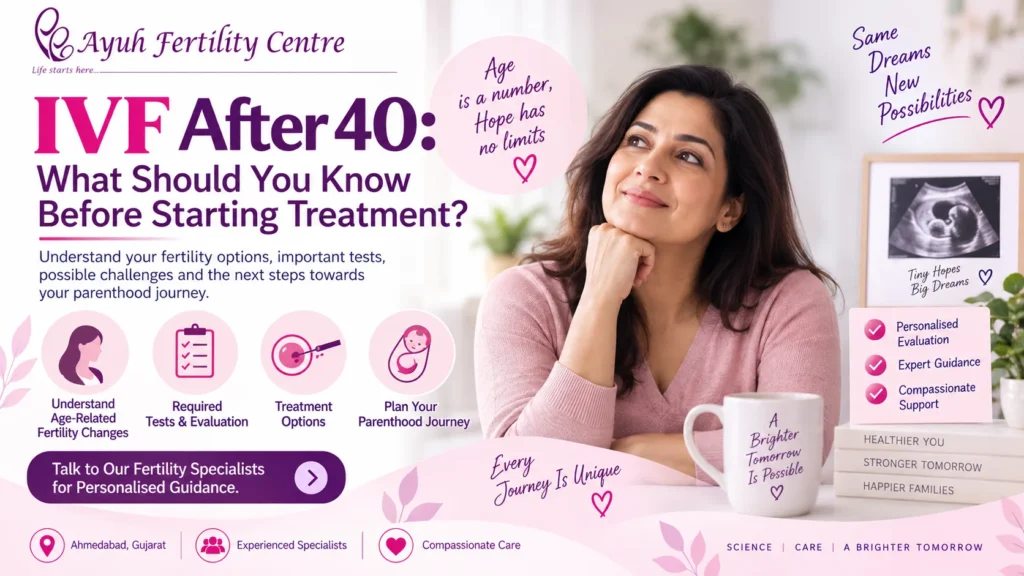
Thinking about IVF after 40 can bring many questions. Is pregnancy still possible? Should you have fertility testing first? Does egg quality change with age? Will ovarian reserve testing predict IVF success? Should you consider genetic testing?
There is no single answer for every woman.
Female fertility generally declines with age, and the decline becomes more important in the late 30s and 40s. The American Society for Reproductive Medicine (ASRM) notes that female age is an important predictor of reproductive potential and that women over 40 may benefit from more immediate fertility evaluation and treatment rather than waiting for an extended period.
At the same time, age alone does not determine an individual’s IVF outcome. Factors such as ovarian reserve, previous pregnancy history, sperm factors, uterine health, embryo development and the treatment approach also need to be considered.
This guide explains what women considering IVF after 40 should discuss with a fertility specialist.
Is IVF After 40 Possible?
Yes, IVF can be considered after 40, but treatment planning may require a more detailed evaluation.
The fertility team generally looks at:
- Age
- Ovarian reserve
- Menstrual and ovulation history
- Previous pregnancies
- Previous IVF or fertility treatment
- Uterine and tubal factors
- Sperm quality
- Overall medical history
ASRM recommends more immediate infertility evaluation and treatment for women over 40 because fertility declines with age.
The important point is that IVF after 40 should be personalised rather than based on age alone.
Why Does Fertility Change After 40?
One of the major changes associated with increasing age is a decline in the number and quality of available eggs.
This can affect:
- Number of eggs retrieved during IVF
- Number of mature eggs
- Fertilization
- Embryo development
- Chromosomal status of embryos
- Chance of miscarriage
ASRM notes that pregnancy and live-birth chances decrease with increasing female age while the risk of aneuploidy and miscarriage increases.
This does not mean that every woman over 40 will have the same fertility situation.
Individual assessment remains important.
Does Ovarian Reserve Matter for IVF After 40?
Yes, ovarian reserve is an important part of IVF evaluation.
Doctors may use tests such as:
AMH
Anti-Müllerian hormone (AMH) can provide information about ovarian reserve and expected response to ovarian stimulation.
Antral Follicle Count
An ultrasound can be used to count small follicles in the ovaries.
FSH and Other Hormone Tests
Depending on the clinical situation, your doctor may recommend additional hormone testing.
However, ovarian reserve tests should be interpreted carefully.
ASRM states that AMH and antral follicle count are useful markers for predicting ovarian response and egg yield, but they have only a weak association with qualitative outcomes such as egg quality, pregnancy and live birth.
So, AMH is not a pregnancy test and cannot by itself predict your IVF outcome.
What Tests May Be Needed Before IVF After 40?
A fertility specialist may recommend a comprehensive evaluation before beginning treatment.
Depending on your medical history, this may include:
- AMH testing
- Antral follicle count
- Other hormone testing
- Pelvic ultrasound
- Assessment of the uterus
- Tubal evaluation when clinically relevant
- Semen analysis
- Review of previous pregnancy history
- Review of previous fertility treatment
- Genetic testing or counselling when indicated
ASRM recommends evaluating ovulatory status, the female reproductive tract and the male partner’s semen as part of infertility evaluation.
The exact tests should be based on your individual medical history rather than using the same test package for everyone.
Can IVF After 40 Work With Your Own Eggs?
IVF using your own eggs can be considered after 40.
However, the expected outcomes are strongly influenced by age and individual reproductive factors.
CDC ART data are reported by age because ART outcomes vary substantially between age groups and individual circumstances. The CDC specifically cautions that national or clinic averages should not be interpreted as an individual’s personal chance of success.
Therefore, rather than relying on a general percentage found online, discuss your personal situation with your fertility specialist.
What Happens to Egg Quality After 40?
Egg quality is an important consideration when undergoing IVF after 40.
As women age, the proportion of eggs with chromosomal abnormalities tends to increase. This can contribute to reduced embryo developmental potential and increased miscarriage risk.
This is different from simply having fewer eggs.
A woman can have a reasonable ovarian reserve but still experience age-related changes in egg quality.
This is why fertility assessment after 40 should consider both egg quantity and age-related egg quality.
Can a Woman With Low AMH Have IVF After 40?
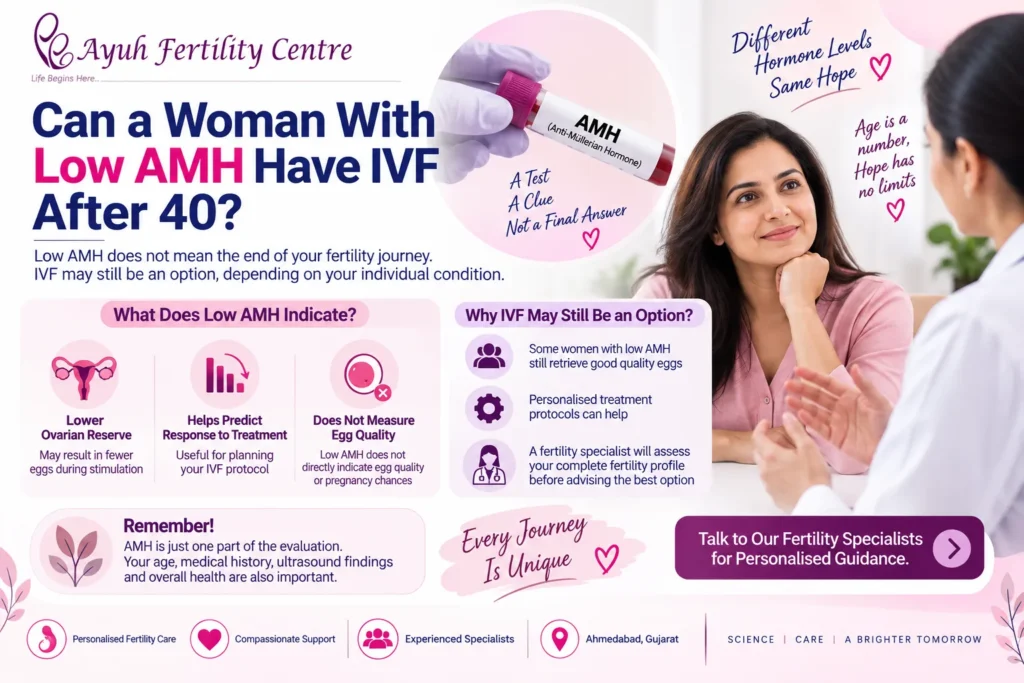
A low AMH level does not automatically mean that IVF is impossible.
AMH primarily provides information about ovarian reserve and expected response to stimulation. It does not directly measure egg quality.
ASRM specifically notes that extremely low AMH values should not be used by themselves to refuse IVF treatment.
Your doctor may consider:
- AMH level
- Antral follicle count
- Age
- Previous IVF response
- Number of eggs retrieved previously
- Overall reproductive history
Together, these factors provide more useful information than one laboratory value alone.
What If Only a Few Eggs Are Retrieved?
The number of eggs retrieved during IVF varies considerably.
A lower egg yield does not automatically mean that pregnancy is impossible.
The important steps after retrieval include:
Egg retrieval → Mature eggs → Fertilization → Embryo development → Embryo assessment → Transfer or freezing
Not every retrieved egg will be mature, and not every mature egg will fertilize or develop into a blastocyst.
Therefore, the focus should not be solely on the number of eggs collected.
Is Genetic Testing Considered in IVF After 40?
Depending on individual circumstances, your fertility specialist may discuss preimplantation genetic testing (PGT).
PGT-A evaluates embryos for chromosome number abnormalities.
However, PGT is not automatically required for every woman over 40.
Whether it is appropriate depends on factors such as:
- Age
- Previous IVF history
- Previous pregnancy losses
- Family history
- Number of embryos available
- Specific genetic concerns
- Clinical recommendations
Genetic counselling may be appropriate when there is a known inherited condition or other specific indication.
Does the Male Partner’s Age Matter?
Yes.
While female age has a major effect on fertility, the male partner’s age and reproductive health can also be relevant.
A semen analysis can evaluate factors such as:
- Sperm concentration
- Motility
- Morphology
Depending on the history, your doctor may recommend additional male fertility evaluation.
ASRM’s recent guidance on advancing paternal and maternal age notes that increasing paternal age can also be associated with changes in semen parameters and certain reproductive risks.
Therefore, IVF after 40 should generally involve evaluation of both partners when applicable.
Does IVF After 40 Increase Pregnancy Risks?
Pregnancy at an older maternal age is associated with increased risks for some pregnancy complications.
These can include conditions such as:
- Hypertensive disorders
- Gestational diabetes
- Pregnancy complications requiring closer monitoring
The exact risks depend on age, general health and other medical factors.
ASRM notes that medical risks associated with reproduction at advanced maternal age increase in certain age groups and that pregnancy-related risks need to be considered alongside fertility treatment.
This is why a pre-treatment medical assessment and appropriate pregnancy monitoring are important.
How Should You Prepare for IVF After 40?
How to Prepare for IVF After 40
Before starting IVF after 40, it is important to have an open discussion with your fertility specialist about your medical history, reproductive history, previous fertility treatments and current health. A detailed fertility evaluation can help your doctor understand your individual situation and develop a personalized IVF treatment plan after age 40.
Review Your Fertility History
Bring previous IVF reports, pregnancy records, fertility test results, ultrasound reports and treatment details if available. Tell your fertility specialist about previous pregnancies, miscarriages, fertility treatments, surgeries and any previous IVF cycles.
This information can help your doctor understand your fertility history after 40 and decide which investigations or treatment approaches may be appropriate.
Check Ovarian Reserve
Your doctor may recommend AMH testing, antral follicle count (AFC) and ultrasound assessment to understand your ovarian reserve. These tests can provide useful information about how the ovaries may respond to fertility treatment.
However, AMH does not directly measure egg quality. After 40, age-related changes in egg quality are also an important part of fertility evaluation.
Evaluate Sperm Health
Fertility evaluation should include both partners. A semen analysis can assess sperm count, motility and morphology and may identify male-factor issues that could influence the IVF treatment plan.
Depending on your history and your fertility specialist’s assessment, additional male fertility testing may sometimes be considered.
Review Your Medications and Supplements
Tell your fertility specialist about all prescription medicines, over-the-counter medicines, vitamins and supplements you are currently taking.
Some medications may need to be reviewed before attempting pregnancy. Do not stop or change prescribed medication without medical advice.
Address Existing Health Conditions
Before pregnancy after 40 with IVF, your doctor may review existing health conditions such as diabetes, thyroid disorders, hypertension, obesity or other medical concerns.
Appropriate management of existing conditions can be an important part of preconception care and IVF preparation after 40. Your specialist may also recommend additional medical evaluation depending on your personal history.
Discuss Your Previous IVF Treatment
If you have already undergone IVF, share details such as the number of eggs retrieved, number of mature eggs, fertilization results, embryo development, embryo grades and previous transfer outcomes.
Understanding previous IVF cycle results after 40 can help your specialist identify what information may be useful when planning another cycle.
Understand Egg Quantity and Egg Quality
One important point to discuss during IVF after age 40 is the difference between egg quantity and egg quality. Ovarian reserve tests can provide information about the expected response to ovarian stimulation, while age is an important factor associated with changes in egg quality.
This is why your fertility specialist may consider age, ovarian reserve, previous IVF results, reproductive history and overall health together, rather than relying on one test alone.
Ask About Embryo Development and Testing
If embryos are created during IVF, discuss how embryo development will be monitored and whether any additional testing may be appropriate for your situation.
For some patients, embryo genetic testing in IVF may be discussed as part of treatment planning. The decision depends on individual circumstances, and your fertility specialist can explain the potential benefits, limitations and implications.
Maintain a Healthy Preconception Routine
Before starting IVF treatment after 40, discuss nutrition, physical activity, sleep, alcohol, smoking and caffeine with your doctor. Taking care of your general health can support overall preconception preparation.
Avoid starting fertility supplements or changing your diet based only on online advice. Your doctor can help determine what is appropriate for you.
Understand the IVF Treatment Timeline
Ask your fertility specialist to explain the expected IVF timeline, including ovarian stimulation, monitoring, egg retrieval, fertilization, embryo development and embryo transfer.
Knowing what happens at each stage can make the IVF treatment process after 40 easier to understand and help you prepare for appointments and medications.
Discuss Your Treatment Expectations
Every woman has a different fertility profile. Your specialist may consider your age, AMH level, antral follicle count, egg retrieval results, previous IVF history, sperm health, uterine health and medical conditions when discussing treatment options.
Instead of focusing only on a general IVF success rate after 40, ask how these individual factors may influence your treatment plan.
Prepare a List of Questions for Your Fertility Specialist
Before your consultation, consider asking:
- What does my AMH level mean for IVF?
- How does age affect my fertility treatment?
- What tests do I need before IVF?
- What can I expect during ovarian stimulation?
- What happens if only a few eggs are retrieved?
- How will my embryos be evaluated?
- Should embryo genetic testing be discussed in my case?
- What are my available IVF treatment options?
- Are there any health conditions I should manage before pregnancy?
- What should I expect during IVF after 40 in Ahmedabad?
Remember: IVF After 40 Is Individualized
There is no single IVF plan that works the same way for every woman over 40. IVF after 40 involves evaluating several factors together, including ovarian reserve, age, reproductive history, sperm health, uterine health and overall medical condition.
A detailed consultation with a qualified fertility specialist in Ahmedabad can help you understand your test results and discuss treatment options suited to your individual circumstances.
Suggested SEO keywords naturally covered: IVF after 40, IVF after age 40, IVF treatment after 40, fertility after 40, IVF preparation after 40, IVF treatment plan, ovarian reserve, AMH testing, egg quality after 40, IVF cycle results, embryo genetic testing, pregnancy after 40 with IVF, fertility specialist in Ahmedabad, IVF treatment in Ahmedabad, IVF Centre in Ahmedabad.
What Questions Should You Ask Your IVF Specialist After 40?
Before beginning IVF, consider asking:
- What do my AMH and antral follicle count indicate?
- What is my expected response to ovarian stimulation?
- How many eggs might we realistically retrieve?
- What factors could affect embryo development?
- Should we consider PGT in my situation?
- What are the options if very few eggs or embryos develop?
- Would a fresh or frozen embryo transfer be considered?
- What medical checks should I complete before pregnancy?
- Are there any health conditions that should be addressed first?
- What treatment options are available if my own eggs do not produce a transferable embryo?
These questions can help you understand your treatment plan instead of relying on general IVF statistics.
IVF After 40: What About Donor Eggs?
For some patients, a fertility specialist may discuss donor-egg IVF as one of the treatment options.
This may be considered depending on:
- Ovarian reserve
- Previous IVF outcomes
- Age
- Embryo development
- Genetic or medical considerations
- Individual reproductive goals
Donor eggs are a separate treatment pathway and require appropriate counselling and medical evaluation.
The decision should be made after discussing all relevant options with a qualified fertility specialist.
Is IVF After 40 the Same for Everyone?
No.
Two women who are both 41 can have very different fertility profiles.
One may have:
- Different ovarian reserve
- Different egg yield
- Different embryo development
- Different medical history
- Different previous treatment experience
Therefore, IVF after 40 should be personalised according to the patient’s complete reproductive and medical picture.
IVF After 40: Frequently Asked Questions
1. Is IVF after 40 possible?
Yes. IVF can be considered after 40, but fertility evaluation and treatment planning become particularly important because female fertility declines with age. A specialist can assess ovarian reserve, reproductive history, uterine factors, sperm health and other factors before recommending a treatment approach.
2. Can I get pregnant naturally after 40?
Natural pregnancy is still possible after 40, but fertility generally declines with age. ASRM notes that female age is an important predictor of fecundity and recommends more immediate fertility evaluation for women over 40 who are seeking treatment.
3. Does IVF guarantee pregnancy after 40?
No. IVF cannot guarantee pregnancy or live birth at any age. IVF outcomes vary according to age, diagnosis, ovarian response, embryo development and other individual factors. The CDC also cautions that average ART success rates should not be interpreted as an individual’s personal probability of success.
4. Does AMH determine IVF success after 40?
No. AMH is useful for assessing ovarian reserve and anticipating ovarian response, but it does not independently determine egg quality or guarantee IVF success. ASRM notes that AMH and antral follicle count have only weak associations with qualitative outcomes such as pregnancy and live birth.
5. Can I do IVF with my own eggs after 40?
IVF using your own eggs may be an option after 40, depending on your ovarian reserve, reproductive history and overall health. Your fertility specialist can assess your individual circumstances and discuss whether using your own eggs, donor eggs or another treatment approach should be considered.
6. What happens if I have low AMH after 40?
Low AMH can indicate reduced ovarian reserve and may be associated with a lower expected egg yield during stimulation. However, it does not by itself determine whether pregnancy is possible. ASRM states that extremely low AMH should not be used alone to refuse IVF treatment.
7. Should I have fertility testing immediately after 40?
If you are over 40 and experiencing difficulty conceiving, a prompt fertility evaluation is generally appropriate rather than waiting for a prolonged period. ASRM specifically states that more immediate evaluation and treatment may be warranted for women over 40.
8. Is PGT-A necessary for every woman having IVF after 40?
No. PGT-A is not automatically appropriate for every patient over 40. It is a separate genetic testing procedure, and whether it should be considered depends on the patient’s circumstances, embryo availability, reproductive history and medical advice. Discuss its potential benefits and limitations with your fertility specialist.
9. What if I produce only one or two eggs during IVF after 40?
A low number of retrieved eggs can make an IVF cycle more challenging, but egg count alone does not determine the final outcome. The maturity of the eggs, fertilization, embryo development and other factors also matter. Your doctor can review your response and discuss whether changes to the treatment plan or alternative options are appropriate.
10. Is IVF after 40 safe?
IVF is an established fertility treatment, but every medical procedure has potential risks. In addition, pregnancy at older maternal ages can involve increased risks of certain complications. A fertility specialist and obstetric team can evaluate your individual health and discuss appropriate precautions before treatment and pregnancy.
Final Takeaway
IVF after 40 requires individualised fertility assessment rather than relying on age or a single test result.
Age can affect fertility, egg quality and embryo development, while ovarian reserve testing can provide information about expected ovarian response. However, tests such as AMH cannot independently predict whether IVF will result in a pregnancy.
A thorough evaluation of both partners when applicable, followed by a personalised treatment plan, can help you understand your available options.
If you are considering IVF after 40 in Ahmedabad, speak with a fertility specialist about your ovarian reserve, previous reproductive history, embryo-related factors, overall health and the treatment options appropriate for your situation.
About the Author / Medical Reviewer
Dr. Krupa A. Shah
Fertility Specialist & Founder
Ayuh Fertility Centre, Ahmedabad
Medical Disclaimer
This article is for general educational information and does not replace individual medical advice, diagnosis or treatment. IVF outcomes and pregnancy risks vary between individuals. Always discuss your personal fertility history and treatment options with a qualified fertility specialist.