
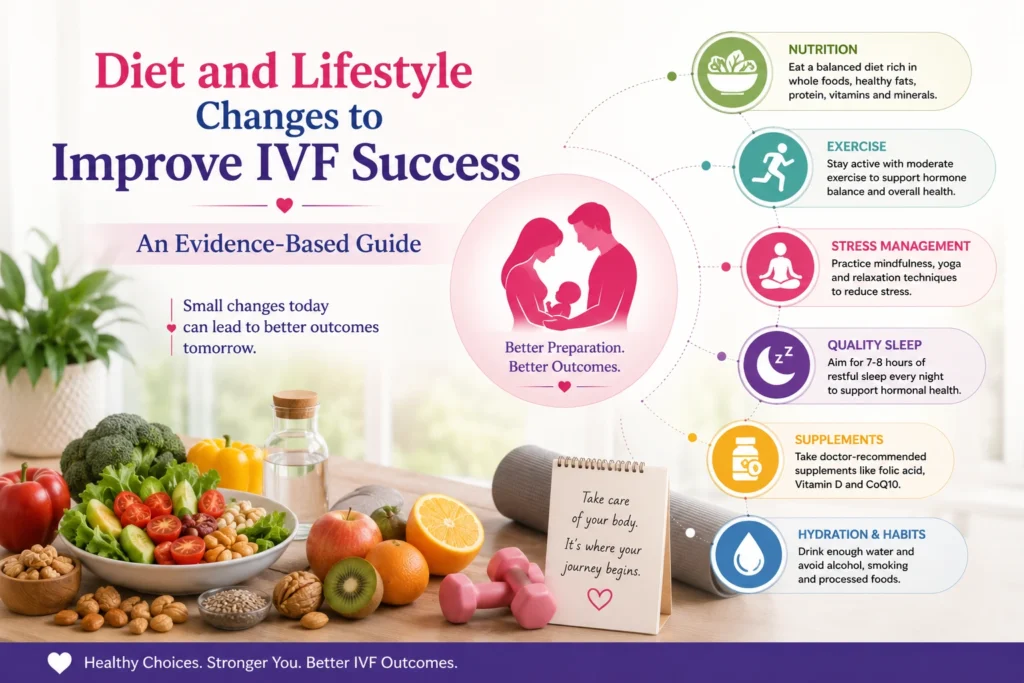
To improve IVF success, most couples focus entirely on the medical side — the injections, the scans, the laboratory, the doctor. And that is absolutely right. The clinical quality of your IVF protocol matters enormously. But there is another dimension that is genuinely within your control — and one that is consistently underutilised: what you eat, how you move, how you sleep, and how you manage stress in the months leading up to and during treatment.
This is not about miracle diets or supplements that promise to guarantee pregnancy. It is about something far more honest — the evidence-based reality that the biological environment in which your eggs develop, your embryos are created, and your uterine lining prepares for implantation is partly shaped by your daily choices. And those choices, made consistently over 90 days, can meaningfully improve the conditions in which your IVF cycle operates.
Dr. Krupa A. Shah, founder of Ayuh Fertility Centre in Ahmedabad, discusses lifestyle preparation with every couple before beginning treatment. Not because healthy habits replace clinical expertise — they do not. But because they work with it. And couples who understand this distinction make better choices throughout their journey.
This blog gives you the evidence-based version of that conversation.
Author Bio
Dr. Krupa A. Shah MBBS · MS (Obstetrics & Gynaecology) · Infertility Specialist Founder, Ayuh Fertility Centre, Ahmedabad
19+ Years of Experience in reproductive medicine, obstetrics, and gynaecology.
Dr. Krupa Shah completed her MBBS from Baroda Medical College (2006) and her MS in Obstetrics & Gynaecology from B.J. Medical College, Ahmedabad (2010). After 12 years of experience at leading clinics in Chennai — including Apollo Hospital and Iswarya Fertility Centre — she completed an Advanced IVF Fellowship at Ludwig Maximilians University, Munich, Germany, one of Europe’s most prestigious reproductive medicine institutions.
She is a member of the Ahmedabad Obstetrics and Gynaecology Society (AOGS), the Indian Society of Assisted Reproduction (ISAR), and the Federation of Obstetric and Gynaecological Societies of India (FOGSI).
IVF laboratory is ART National Board Certified.
🩺 Medically Reviewed By
This article is medically reviewed by Dr. Krupa M. Shah, ensuring accurate and reliable fertility information.s of experience — ensuring accurate, evidence-based, and practical guidance on diet and lifestyle for IVF preparation.
Can Diet and Lifestyle Really Affect IVF Success?
The honest answer: yes — meaningfully, but not miraculously.
The research on this is increasingly robust. A growing body of peer-reviewed evidence shows that nutritional status, body composition, oxidative stress levels, sleep quality, and psychological stress all influence reproductive outcomes — including IVF success rates. These are not alternative medicine claims. They are mainstream clinical findings that fertility specialists in Ahmedabad and worldwide now incorporate into pre-treatment counselling.
What the evidence shows:
Egg quality is influenced by oxidative stress Eggs take approximately 90 days to mature from their primordial stage to the point of ovulation. During this maturation window, oxidative damage — caused by poor nutrition, smoking, alcohol, and chronic stress — directly affects chromosomal integrity. A diet rich in antioxidants (vitamins C and E, CoQ10, selenium) during this window reduces oxidative damage and may improve egg quality.
Sperm quality responds rapidly to lifestyle changes Sperm are continuously produced in a 72–90 day cycle. Unlike eggs, new sperm are created constantly — which means lifestyle improvements made now are reflected in sperm quality approximately three months later. This gives the male partner a genuinely modifiable window to improve fertilisation potential.
Hormonal balance is affected by body composition and nutrition Insulin resistance — worsened by refined carbohydrates, processed foods, and excess body fat — disrupts the hormonal cascade governing ovulation, egg development, and endometrial receptivity. Improving insulin sensitivity through dietary changes and weight management directly improves the hormonal environment for IVF stimulation.
Implantation environment is shaped by uterine blood flow and inflammation An anti-inflammatory diet improves uterine blood flow. Adequate hydration and iron intake support endometrial thickness and receptivity. These are measurable, physiologically meaningful effects — not placebo.
What lifestyle cannot do: it cannot reverse age-related ovarian reserve decline, unblock fallopian tubes, or eliminate chromosomal conditions. But it can meaningfully improve the conditions within which your IVF cycle operates.
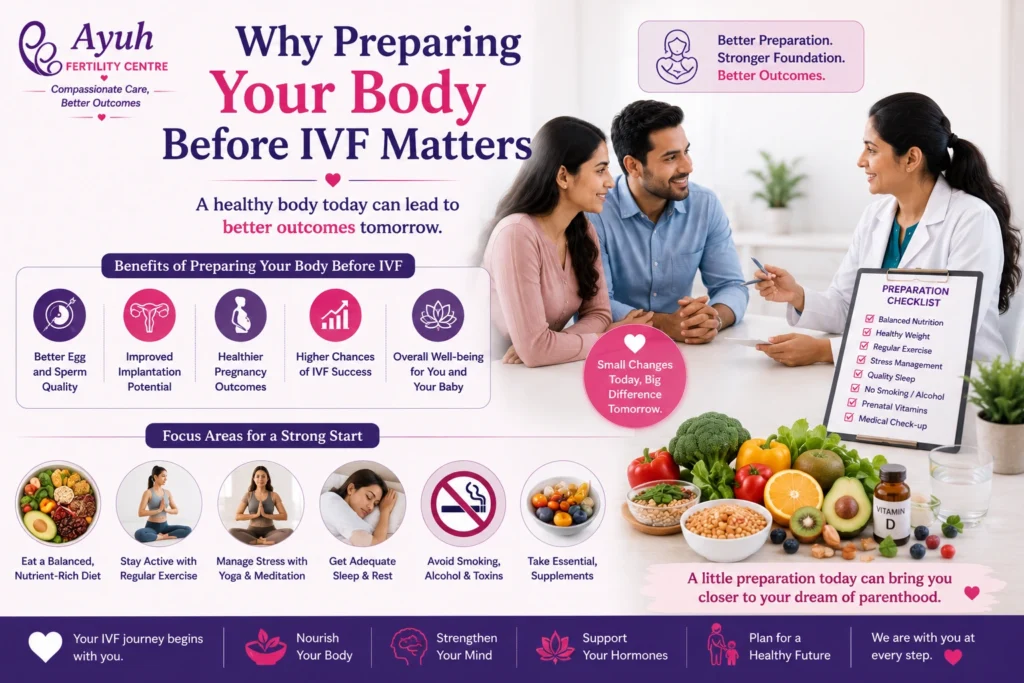
Why Preparing Your Body Before IVF Matters
This is the IVF preparation guide section that most couples wish they had received before their first appointment.
The biological timelines involved in IVF preparation are specific — and understanding them helps couples see why starting lifestyle changes 2–3 months before treatment genuinely matters.
Egg development timeline: The eggs retrieved during an IVF cycle are not produced overnight. They began their final maturation phase approximately 90 days before retrieval. The nutritional and oxidative environment during this 90-day window directly influences egg quality. This is why dietary changes made in the 3 months before your IVF cycle are meaningful — and why changes made in the week before retrieval are not.
Sperm development timeline: As mentioned, a complete sperm production cycle takes approximately 72–90 days. Lifestyle improvements — smoking cessation, alcohol reduction, nutritional optimisation, heat avoidance — need to be sustained for at least 3 months before sperm collection to show measurable improvements in parameters.
Uterine preparation: The endometrium — the uterine lining that must receive and support the embryo — is influenced by hormonal balance, inflammation levels, and circulation. Nutritional and lifestyle choices that reduce inflammation and improve hormonal balance improve endometrial quality over months, not days.
The practical takeaway: If you know you will be starting IVF treatment in 3–4 months, begin your lifestyle preparation now. If your cycle starts sooner, every positive change still has value — but the full benefit of the 90-day window requires 90 days.
At Ayuh Fertility Centre, Dr. Krupa Shah discusses preparation timelines individually with every couple during their pre-IVF consultation.
Best Diet for IVF Success
The diet for IVF success with the strongest evidence base is not a restrictive, expensive, or complicated eating plan. It is the Mediterranean dietary pattern — consistently associated with better fertility outcomes in multiple well-designed studies.
The Mediterranean pattern for fertility:
Abundant vegetables and fruits Colourful vegetables and fruits provide the antioxidants — vitamin C, vitamin E, beta-carotene, lycopene, and flavonoids — that reduce oxidative damage to eggs, sperm, and developing embryos. Aim for 5–7 portions daily, prioritising variety and colour.
Whole grains over refined carbohydrates Brown rice, whole wheat, oats, quinoa, and legumes provide low-glycaemic energy that supports insulin sensitivity. Replacing refined carbohydrates (white bread, white rice, maida-based foods) with whole grain alternatives reduces insulin spikes that disrupt reproductive hormones — particularly relevant for women with PCOS.
Healthy fats — olive oil, avocado, nuts, seeds Monounsaturated and polyunsaturated fats are structural components of cell membranes — including egg cell membranes. Olive oil, avocados, walnuts, and almonds support cell membrane integrity and hormonal production. The evidence for olive oil specifically in IVF outcomes is noteworthy in several fertility nutrition studies.
Lean proteins and plant proteins Egg whites, chicken, fish, legumes (dal, chana, rajma), and tofu provide the amino acid building blocks for reproductive hormones and cellular repair. Replacing some animal protein with plant protein sources is consistently associated with better fertility outcomes.
Fatty fish for omega-3 Salmon, mackerel, sardines, and other oily fish are the richest dietary sources of omega-3 fatty acids — essential for egg membrane quality, anti-inflammatory prostaglandin production, and endometrial receptivity. Aim for 2–3 portions per week.
Adequate hydration Water is the medium in which every cellular biological process occurs. Adequate hydration — 2–2.5 litres daily during IVF preparation — supports follicular fluid quality, cervical mucus, and endometrial blood flow.
What to eat specifically on the day of egg retrieval and transfer: Dr. Krupa Shah provides specific dietary guidance for the retrieval and transfer periods at Ayuh’s pre-procedure consultations — including hydration protocols and post-retrieval nutrition to support recovery.
Foods That May Support Egg Quality
Improving egg quality before IVF through nutrition requires focusing specifically on foods that reduce oxidative damage and support mitochondrial function in maturing eggs.
Antioxidant-rich foods:
- Berries (blueberries, strawberries, pomegranate) — among the richest dietary antioxidant sources
- Dark leafy greens (spinach, kale, methi) — provide folate, vitamin K, and antioxidants
- Tomatoes — lycopene content with specific protective effects for cell membranes
- Walnuts — alpha-linolenic acid and vitamin E combination
Folate-rich foods: Folate (B9) is essential for DNA synthesis and repair in maturing eggs and early embryo development. Food sources include dark leafy greens, legumes, citrus fruits, and fortified cereals. Supplement-level folate (400–800 mcg daily as folic acid or methylfolate) is recommended by virtually all fertility specialists from the pre-conception period through early pregnancy.
Omega-3 fatty acid sources: Fatty fish, flaxseeds, chia seeds, and walnuts. Omega-3s are incorporated into egg cell membranes, where they influence the egg’s ability to respond to fertilisation signals and maintain chromosomal stability during division.
Vitamin D sources: Sunlight exposure (20–30 minutes daily), fatty fish, egg yolks, and fortified dairy. Vitamin D receptors are present in ovarian follicles — and low vitamin D levels are consistently associated with poorer IVF outcomes. Dr. Krupa Shah checks vitamin D levels as part of the pre-IVF evaluation at Ayuh and recommends supplementation where levels are inadequate.
Protein adequacy: Eggs (the dietary kind), legumes, and dairy provide leucine and other branched-chain amino acids essential for cellular growth and repair in developing follicles.
Practical note: These foods support egg quality as part of a consistent dietary pattern — not as individual “superfoods” consumed in isolation. The cumulative effect of a well-constructed overall diet over 90 days is what matters.
Foods and Habits That May Negatively Affect Fertility
Just as some foods support reproductive health, others are associated with impaired fertility outcomes. The key is understanding why — which makes avoidance feel informed rather than punitive.
Excess sugar and refined carbohydrates High-glycaemic foods spike blood sugar, trigger insulin surges, and — particularly in women with PCOS or insulin resistance — disrupt the hormonal balance governing ovulation and egg development. This is one of the most consistently supported dietary recommendations in fertility research.
Ultra-processed foods Ready-to-eat meals, packaged snacks, instant noodles, and fast food typically contain trans fats, artificial additives, refined carbohydrates, and excess sodium — all associated with increased inflammation and poorer reproductive outcomes.
Alcohol Even moderate alcohol consumption is associated with reduced IVF success rates in several meta-analyses. Alcohol disrupts hormonal balance, reduces folate absorption, and increases oxidative stress. Complete avoidance during IVF treatment cycles is the consistent medical recommendation.
Smoking Smoking is directly genotoxic — it damages DNA in eggs and sperm. Smokers have measurably lower ovarian reserve, higher rates of chromosomal abnormalities in eggs, and significantly reduced IVF success rates compared to non-smokers. Complete cessation, not reduction, is the clinical standard.
Trans fats Found in partially hydrogenated oils, commercial fried foods, and some packaged bakery products. Trans fats disrupt cell membrane integrity and are specifically linked to ovulatory dysfunction. Read labels and avoid “partially hydrogenated” oils.
Excess caffeine The evidence on caffeine is less clear-cut than on alcohol or smoking — but most fertility specialists recommend limiting caffeine to below 200mg per day (approximately one cup of filter coffee) during IVF preparation and treatment. High caffeine intake is associated with increased miscarriage risk in some studies.
Exercise During IVF Treatment — What Is Safe?
Exercise during IVF treatment is safe — and beneficial — when approached sensibly. The key is understanding which types of exercise are appropriate at each stage of the treatment cycle.
Benefits of regular moderate exercise before and during IVF:
- Improves insulin sensitivity and blood sugar regulation
- Supports healthy BMI and body composition
- Reduces cortisol and improves mood
- Improves sleep quality
- Supports cardiovascular health and pelvic blood flow
Exercise that is safe and recommended throughout IVF preparation:
- Brisk walking — 30–45 minutes most days; the single most accessible and consistently beneficial form of exercise for fertility preparation
- Yoga — particularly gentle, restorative, and yin styles. Reduces cortisol, improves circulation, and supports mind-body connection during a stressful process
- Swimming — low-impact, full-body, and non-jarring; excellent throughout the stimulation phase
- Light cycling (stationary) — appropriate during most of the IVF cycle
- Pilates and stretching — core stability and flexibility work is generally well-tolerated
Exercise to avoid or modify during IVF stimulation and after retrieval:
- High-intensity interval training (HIIT) — during stimulation, the ovaries enlarge significantly. High-impact, high-intensity activity increases the risk of ovarian torsion (twisting). Avoid from stimulation start through retrieval.
- Heavy weightlifting — avoid during stimulation and for 1–2 weeks post-retrieval
- Running and jumping — high-impact activities jar the enlarged ovaries during stimulation. Reduce to walking or swimming.
- Hot yoga and saunas — elevated core temperature is harmful to developing follicles and embryos. Avoid entirely during IVF cycles.
After embryo transfer: Light walking is safe and recommended. Absolute bed rest is not evidence-based and is not routinely recommended. Avoid intense exercise, abdominal work, and high-impact activity for the two-week wait period.
How Weight Can Affect IVF Outcomes
Body weight — specifically BMI and body fat distribution — has a well-documented relationship with IVF outcomes. This section is about information, not judgment.
How excess weight affects fertility:
- Elevated body fat increases peripheral estrogen conversion, disrupting the hormonal feedback loop governing ovulation
- Visceral fat raises scrotal temperature in male partners, reducing sperm quality
- Insulin resistance — strongly associated with obesity — impairs ovarian response to IVF stimulation and reduces endometrial receptivity
- Higher gonadotropin doses may be needed for adequate stimulation, increasing treatment costs and OHSS risk
How underweight affects fertility:
- Very low body fat reduces estrogen production and suppresses ovulation
- Inadequate nutritional reserves affect egg quality and early embryo development
- Underweight women may have reduced endometrial thickness, affecting implantation
The evidence-based BMI target: A BMI between 18.5 and 24.9 is consistently associated with the best reproductive outcomes. For women with BMI above 27–30, a structured, moderate weight loss of 5–10% before starting IVF is associated with meaningfully improved ovarian response, better embryo quality, and higher live birth rates.
Important: This is not about reaching an “ideal” weight before being “allowed” to do IVF. It is about the clinical reality that body composition affects outcomes — and that moderate improvements, achieved sustainably, genuinely make a difference.
Dr. Krupa Shah approaches weight discussions individually and compassionately — always in the context of what is clinically meaningful for each specific patient, never as a barrier to care.
Stress and IVF Success — What the Evidence Says
The relationship between psychological stress and IVF outcomes is more nuanced than the headline “stress causes IVF failure” — which is both an oversimplification and, for many couples, a source of additional guilt.
What the evidence actually shows: Acute, normal IVF-related anxiety does not directly cause cycle failure. However, chronic, severe psychological stress — particularly when it disrupts sleep, exercise, and nutritional habits, or leads to elevated cortisol over extended periods — does affect the hormonal environment in ways that are biologically relevant.
What this means practically: You do not need to be perfectly calm to achieve IVF success. But investing in stress reduction is not just for emotional wellbeing — it is a physiologically relevant preparation step.
Evidence-based stress reduction approaches:
Mindfulness-Based Stress Reduction (MBSR) Eight-week MBSR programmes have shown measurable reductions in IVF-related anxiety in clinical studies. Even informal daily mindfulness practice — 10–15 minutes of focused breath attention — reduces cortisol and improves psychological resilience.
Yoga and gentle movement Beyond physical benefits, yoga specifically reduces HPA axis activation — the physiological stress response system that disrupts reproductive hormones. This is why yoga is frequently recommended by fertility specialists during IVF preparation.
Counselling and therapy Professional psychological support during IVF is not a crisis intervention — it is a proactive clinical strategy. Fertility counsellors understand the specific emotional landscape of IVF treatment and provide practical, evidence-based coping tools.
Connection and support Social connection — particularly with people who understand your experience — reduces the isolation that compounds IVF-related stress. Online fertility communities and in-person support groups provide this in accessible formats.
Sleep and Fertility Health
Sleep is one of the most underappreciated components of fertility preparation — and one of the most consistently supported by evidence.
Why sleep quality matters for IVF:
Melatonin production Melatonin — produced during deep sleep in darkness — is not only a sleep regulator but also a powerful antioxidant that directly protects egg cells from oxidative damage during follicular development. Poor sleep reduces melatonin, directly increasing oxidative stress in maturing follicles.
Cortisol rhythm Normal cortisol follows a diurnal rhythm — high in the morning, low at night. Disrupted sleep disrupts this rhythm, leading to elevated evening cortisol that interferes with the hypothalamic-pituitary-ovarian (HPO) axis governing ovulation and stimulation response.
Hormonal regulation Growth hormone, LH, and FSH are all secreted in pulses that are influenced by sleep architecture. Consistently poor sleep quality disrupts these hormone secretion patterns.
Practical sleep hygiene for IVF preparation:
- Consistent sleep and wake times every day including weekends
- Dark, cool sleeping environment (around 18–20°C optimal)
- No screens for 60 minutes before bed — blue light suppresses melatonin production
- Avoid caffeine after 2pm
- If anxiety is disrupting sleep, address the anxiety directly rather than relying on sleep aids
Aim for 7–9 hours of quality sleep consistently throughout your IVF preparation and treatment periods.
Lifestyle Changes for Male Fertility Before IVF
IVF preparation is not only for the female partner. Male factor infertility contributes to approximately 50% of infertility cases — and sperm quality directly affects fertilisation rates, embryo development, and ultimately IVF success.
The 90-day sperm production cycle gives the male partner a meaningful window to improve sperm parameters before ICSI or IVF.
Dietary changes:
- Increase antioxidant-rich foods — berries, nuts, dark leafy greens, tomatoes
- Adequate zinc (pumpkin seeds, shellfish, legumes) — essential for testosterone production and sperm maturation
- Omega-3 fatty acids — improve sperm membrane integrity
- Reduce processed food, excess sugar, and alcohol
Smoking cessation Smoking is directly genotoxic to sperm DNA. It is one of the highest-impact modifiable factors for male fertility. Complete cessation produces measurable improvements in sperm DNA fragmentation within 3 months.
Alcohol reduction Alcohol reduces testosterone, impairs sperm motility, and increases DNA fragmentation. During active IVF cycles, zero alcohol is the clinical recommendation.
Heat avoidance Laptop computers on the lap, hot baths, saunas, and tight synthetic underwear all raise scrotal temperature above the optimal range. These are free, simple changes with a measurable 90-day impact.
Regular moderate exercise Exercise improves testosterone production, reduces insulin resistance, and supports a healthy BMI — all of which improve sperm parameters. Avoid extreme or prolonged endurance exercise, which can temporarily reduce testosterone.
Sperm DNA fragmentation testing If previous IVF cycles have shown unexplained poor fertilisation or embryo quality, sperm DNA fragmentation testing at Ayuh can identify this as a contributing factor and guide targeted treatment — including antioxidant supplementation or PICSI sperm selection in subsequent cycles.
Supplements Before IVF — What Patients Should Know
Supplements can support fertility preparation — but they are clinical tools, not consumer products to take based on internet advice. Here is the honest picture:
Folic acid / Methylfolate 400–800 mcg daily is universally recommended from at least 3 months before conception through the first trimester. Essential for neural tube development and DNA synthesis in the early embryo. This is the single most evidence-supported fertility supplement.
Vitamin D Many Indian women are deficient in vitamin D — a factor that directly affects IVF outcomes through its role in follicular development, ovarian response, and endometrial receptivity. Dosing should be based on blood levels — not a generic recommendation. Dr. Krupa Shah checks vitamin D as part of pre-IVF bloodwork at Ayuh.
CoQ10 (Ubiquinol form) Coenzyme Q10 is a mitochondrial antioxidant that plays a direct role in cellular energy production in maturing eggs. Evidence supports its use for women above 35 and those with low ovarian reserve. Dose and timing should be discussed with your specialist.
Prenatal vitamins A comprehensive prenatal vitamin covering folate, vitamin D, iron, iodine, and B vitamins provides a useful nutritional foundation during IVF preparation. Not a substitute for dietary improvement — a complement to it.
DHEA (for low ovarian reserve) In selected women with diminished ovarian reserve, DHEA supplementation under specialist supervision has shown benefit in some studies. This is prescribed only when clinically indicated — not as a general supplement.
Critical rule: All supplements during IVF preparation should be discussed with and approved by Dr. Krupa Shah before starting. Some supplements interact with IVF medications or have dose-dependent risks.
90-Day IVF Preparation Checklist
This checklist is designed to be genuinely actionable — covering all the preparation dimensions discussed in this blog.
Nutrition
- ☐ Switch to a Mediterranean-style eating pattern
- ☐ Increase vegetables and fruits to 5–7 portions daily
- ☐ Replace refined carbohydrates with whole grains
- ☐ Add fatty fish 2–3 times per week
- ☐ Reduce ultra-processed food, excess sugar, and trans fats
- ☐ Drink 2–2.5 litres of water daily
- ☐ Reduce caffeine to below 200mg/day
- ☐ Eliminate alcohol during treatment cycles
Exercise
- ☐ Walk 30–45 minutes most days
- ☐ Add gentle yoga or stretching 3–4 times per week
- ☐ Reduce high-intensity exercise during stimulation
- ☐ Avoid hot yoga and saunas entirely during treatment
Sleep
- ☐ Consistent sleep and wake times daily
- ☐ No screens 60 minutes before bed
- ☐ Aim for 7–9 hours nightly
- ☐ Keep bedroom dark and cool
Stress Management
- ☐ 10–15 minutes of mindfulness or breathing exercises daily
- ☐ Identify and protect one enjoyable activity unrelated to IVF
- ☐ Discuss counselling or therapy if anxiety is significant
- ☐ Communicate openly with your partner about emotional needs
Medical Preparation
- ☐ Start folic acid 400–800 mcg daily
- ☐ Confirm vitamin D levels and supplement if needed
- ☐ Discuss all supplements with Dr. Krupa Shah before starting
- ☐ Complete all pre-IVF investigations on schedule
- ☐ Attend all monitoring appointments during stimulation
Male Partner Checklist
- ☐ Stop smoking completely
- ☐ Reduce or eliminate alcohol
- ☐ Avoid laptop heat and hot baths
- ☐ Eat antioxidant-rich foods daily
- ☐ Exercise moderately and consistently
- ☐ Complete semen analysis and, if indicated, DNA fragmentation test
Common Myths About Improving IVF Success
Myth 1: One superfood can boost IVF success. False. No single food — however nutrient-dense — transforms IVF outcomes. What matters is the cumulative effect of a well-constructed, consistent dietary pattern over 90 days. “Eat more pomegranates” is not a fertility strategy. A Mediterranean dietary pattern is.
Myth 2: Supplements guarantee pregnancy. False. Supplements support the biological environment in which IVF occurs — they do not guarantee outcomes. CoQ10, vitamin D, and folic acid have genuine evidence behind them, but they work in the context of a complete clinical approach, not as standalone interventions.
Myth 3: Intense exercise improves fertility. False — and in some cases, the opposite. Vigorous, prolonged exercise can suppress reproductive hormones in women and temporarily reduce testosterone in men. During IVF stimulation, high-impact exercise carries additional risk. Moderate, consistent activity is what the evidence supports.
Myth 4: Lifestyle changes alone can replace IVF. False. For couples where IVF is clinically indicated — blocked tubes, severe male factor, low ovarian reserve, advanced age — lifestyle optimisation supports IVF outcomes but cannot replace the clinical intervention. This is why personalised fertility evaluation before making treatment decisions is always the right first step.
Myth 5: If I do everything right, IVF will definitely work. False — and this myth, however well-intentioned, causes real harm. Couples who do everything “right” and still experience a failed cycle can feel profound, undeserved guilt. IVF outcomes are influenced by biological factors — age, chromosomal status of embryos, implantation biology — that no lifestyle intervention fully controls. Preparation improves conditions. It does not guarantee outcomes.
FAQs
1. Can diet really improve IVF success?
Yes — diet affects several biological processes directly relevant to IVF success. A Mediterranean-style diet rich in antioxidants, omega-3 fatty acids, whole grains, and lean protein reduces oxidative stress on maturing eggs, supports insulin sensitivity, and improves the endometrial environment for implantation. The key is consistency over the 90-day pre-IVF window — not a single week of clean eating before retrieval. Diet is not a replacement for clinical expertise, but it is a genuine supporting factor that Dr. Krupa Shah discusses with every couple during IVF preparation consultations at Ayuh Fertility Centre.
2. Which foods are most important before IVF?
The most evidence-supported foods for IVF preparation include: fatty fish (omega-3 fatty acids for egg membrane quality), dark leafy greens (folate, antioxidants), berries and colourful vegetables (antioxidants reducing oxidative damage), whole grains (insulin stability), nuts and olive oil (healthy fats for hormonal production), and adequate protein from both animal and plant sources. Emphasis on the overall dietary pattern — not individual superfoods — is what the evidence supports. Hydration is consistently underemphasised: 2–2.5 litres of water daily meaningfully supports follicular fluid quality and endometrial blood flow.
3. Is exercise safe during IVF?
Yes — with appropriate modifications by stage. Light-to-moderate exercise (walking, yoga, swimming) is safe and beneficial throughout the IVF cycle. During ovarian stimulation — when the ovaries enlarge significantly — high-impact exercise, HIIT, heavy lifting, and running should be reduced or stopped to minimise the risk of ovarian torsion. After embryo transfer, light walking is appropriate; intense exercise should be avoided during the two-week wait. Dr. Krupa Shah provides stage-specific exercise guidance at every monitoring consultation during the IVF cycle.
4. Does stress actually affect IVF outcomes?
The relationship is nuanced. Normal IVF-related anxiety has not been shown to directly cause cycle failure — couples should not blame themselves for feeling anxious. However, chronic, severe stress that disrupts sleep, appetite, and hormonal balance over months does have physiologically relevant effects on the reproductive hormone environment. Stress management during IVF preparation — through mindfulness, yoga, counselling, and adequate sleep — is clinically recommended not because “stress causes failure” but because your overall wellbeing directly affects the biological conditions in which your IVF cycle operates.
5. Should my partner also change his lifestyle before IVF?
Absolutely — and this is one of the most consistently underprioritised aspects of IVF preparation. Male factor infertility contributes to approximately 50% of infertility cases. Sperm quality directly affects fertilisation rates, embryo development, and IVF outcomes. The 90-day sperm production cycle gives the male partner a genuine window to improve sperm parameters — through smoking cessation, alcohol reduction, antioxidant-rich nutrition, heat avoidance, and moderate exercise. A semen analysis and, where indicated, sperm DNA fragmentation testing at Ayuh Fertility Centre guides the male partner’s specific preparation needs.
Conclusion
To truly improve IVF success, the most powerful approach combines clinical expertise with lifestyle preparation — not one or the other. The injections, the laboratory, the specialist’s protocol — these are irreplaceable. But so is the 90-day window in which your eggs mature, your sperm are produced, your uterine lining is built, and your body prepares for one of the most demanding biological processes it will undergo.
Diet, exercise, sleep, stress management, and supplementation under medical guidance are not alternative approaches to fertility treatment. They are the preparation that gives fertility treatment the best possible environment to work in.
Dr. Krupa A. Shah discusses lifestyle preparation as a standard component of every pre-IVF consultation at Ayuh Fertility Centre. Her Advanced IVF Diploma from the International School of Medicine, Kiel–Goettingen–Munich, Germany, and her 19+ years of clinical experience give every couple access to both the clinical precision and the evidence-based lifestyle guidance that a complete IVF preparation requires.
Small, consistent changes — made with purpose and sustained over time — genuinely move the needle. Not because they guarantee pregnancy. But because they give your body, and your treatment, the best possible conditions to succeed.
Begin your personalised IVF preparation consultation at Ayuh Fertility Centre.
👉 Book a consultation at Ayuh Fertility Centre, Ahmedabad
👉 Book your consultation with Ayuh Fertility Centre today
👉 Get expert guidance for PCOS and fertility treatment
👉 Start your journey toward a healthy and successful pregnancy
📍 Visit us in Ahmedabad
📞 Call now to schedule your appointment