
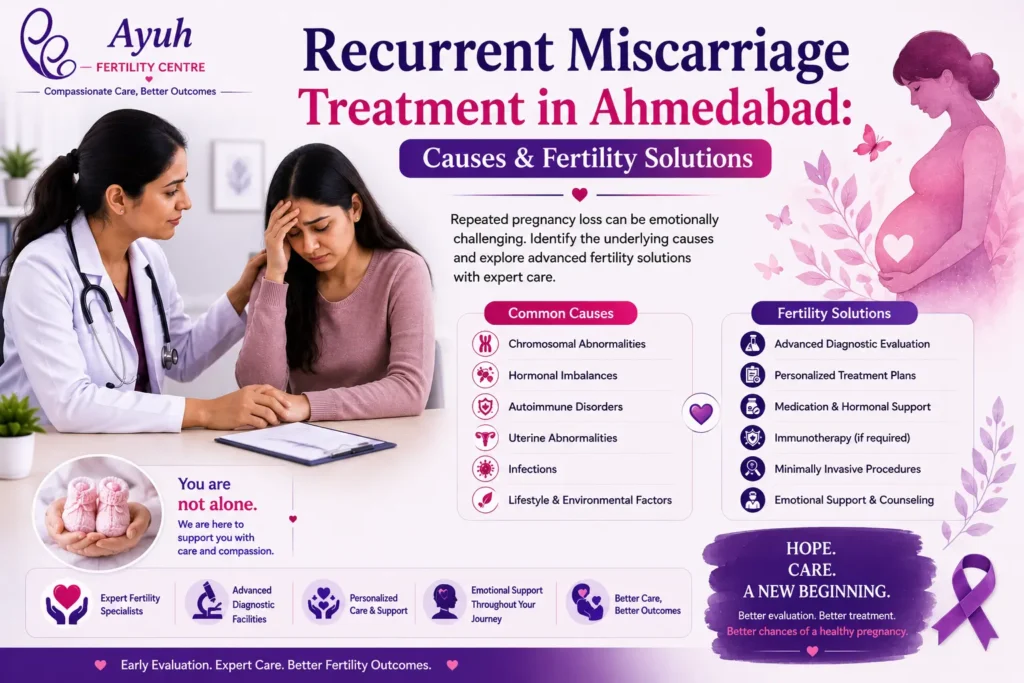
Recurrent Miscarriage Treatment is something no couple should ever have to search for — and yet, here you are. If you have experienced two or more pregnancy losses, you already know a kind of grief that is almost impossible to explain to people who have not lived it. Each loss is not just a medical event. It is a name you gave silently, a future you imagined, a hope you held — and then had to let go.
You are not alone. Recurrent pregnancy loss affects approximately 1–2% of couples trying to conceive — and in many cases, a clear, treatable cause can be identified with the right investigation.
What most couples do not know is that recurrent miscarriage is not simply “bad luck.” It is a clinical condition with identifiable causes in the majority of cases — chromosomal factors, hormonal imbalances, uterine abnormalities, clotting disorders, and more. Each of these has a treatment pathway.
Dr. Krupa A. Shah, founder of Ayuh Fertility Centre in Ahmedabad, has supported hundreds of couples through recurrent pregnancy loss — providing not just diagnosis and treatment, but the compassionate, unhurried conversation that this kind of grief deserves.
This blog is written for you — with honesty, care, and real clinical answers.
Author Bio
Dr. Krupa A. Shah MBBS · MS (Obstetrics & Gynaecology) · Infertility Specialist Founder, Ayuh Fertility Centre, Ahmedabad
19+ Years of Experience in reproductive medicine, obstetrics, and gynaecology.
Dr. Krupa Shah completed her MBBS from Baroda Medical College (2006) and her MS in Obstetrics & Gynaecology from B.J. Medical College, Ahmedabad (2010). After 12 years of experience at leading clinics in Chennai — including Apollo Hospital and Iswarya Fertility Centre — she completed an Advanced IVF Fellowship at Ludwig Maximilians University, Munich, Germany, one of Europe’s most prestigious reproductive medicine institutions.
She is a member of the Ahmedabad Obstetrics and Gynaecology Society (AOGS), the Indian Society of Assisted Reproduction (ISAR), and the Federation of Obstetric and Gynaecological Societies of India (FOGSI).
IVF laboratory is ART National Board Certified.
🩺 Medically Reviewed By
This article is medically reviewed by Dr. Krupa M. Shah, ensuring accurate and reliable fertility information.
What Is Recurrent Miscarriage?
Recurrent Pregnancy Loss (RPL) is defined clinically as two or more confirmed pregnancy losses before 20 weeks of gestation. Some international bodies define it as three or more losses — but most experienced fertility specialists, including Dr. Krupa Shah, recommend investigation after two consecutive losses, particularly in women above 35 where time is a clinical consideration.
A single miscarriage is, sadly, very common — affecting approximately 15–20% of known pregnancies. Most single miscarriages are caused by random chromosomal errors in the embryo and do not indicate an underlying problem.
Recurrent miscarriage is different. When pregnancy is lost two or more times, the probability of a random, unrelated cause drops significantly. There is very likely something — identifiable and often treatable — that is contributing.
How common is recurrent pregnancy loss?
Approximately 1–2% of couples experience recurrent miscarriage. That means millions of couples globally are navigating exactly what you are navigating. And the majority of them, with proper diagnosis and treatment, go on to have successful pregnancies.
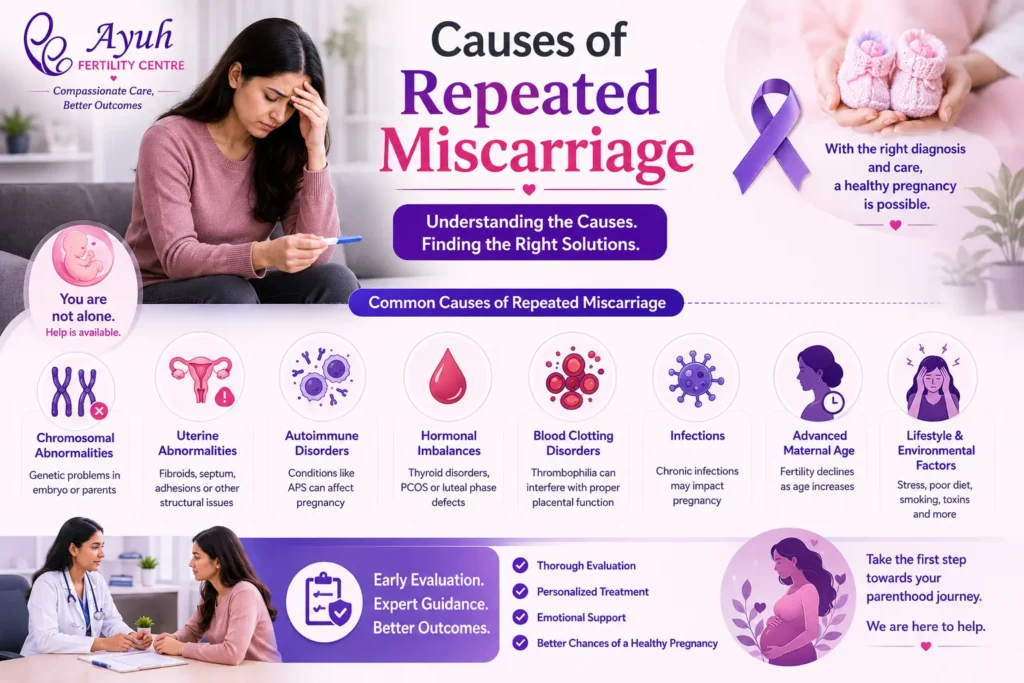
Causes of Repeated Miscarriage
Understanding the causes of repeated miscarriage is the foundation of effective treatment. Here are the most clinically significant factors:
1. Chromosomal Abnormalities in the Embryo The most common cause — responsible for 50–60% of first-trimester miscarriages. As eggs age, chromosomal errors (aneuploidy) increase. An embryo carrying the wrong number of chromosomes typically cannot develop to term. This is why miscarriage rates rise significantly with maternal age. PGT (Pre-Implantation Genetic Testing) during IVF can screen embryos for chromosomal normality before transfer — directly addressing this cause.
2. Parental Chromosomal Abnormalities In approximately 3–5% of recurrent miscarriage couples, one partner carries a structural chromosomal rearrangement (such as a balanced translocation) that does not affect them personally but increases the risk of chromosomally abnormal pregnancies. A karyotype blood test of both partners identifies this.
3. Uterine Abnormalities Structural problems within the uterus — a uterine septum (wall dividing the cavity), submucous fibroids, endometrial polyps, or Asherman’s syndrome (adhesions from prior procedures) — can prevent proper implantation or disrupt early pregnancy development. Hysteroscopy both diagnoses and treats most of these conditions in the same procedure.
4. Antiphospholipid Syndrome (APS) APS is an autoimmune condition in which the body produces antibodies that cause abnormal blood clotting. In pregnancy, this clotting can disrupt the placental blood supply — causing miscarriage, often in the second trimester. APS is diagnosed through blood testing and treated with low-dose aspirin and heparin injections during pregnancy — with excellent outcomes.
5. Hormonal Imbalances Poorly controlled thyroid disorders (hypothyroidism or hyperthyroidism), elevated prolactin, and insulin resistance (common in PCOS) are all associated with increased miscarriage risk. Hormonal evaluation and management before and during pregnancy significantly reduces this risk.
6. Progesterone Deficiency Insufficient progesterone in the luteal phase — the phase after ovulation — may prevent the uterine lining from adequately supporting early pregnancy. Progesterone supplementation from ovulation (or embryo transfer in IVF) through the first trimester is a commonly used treatment.
7. PCOS Women with PCOS have elevated LH levels and insulin resistance that can affect egg quality and early embryo development. Properly managed PCOS treatment before and during pregnancy — including metformin, progesterone support, and careful monitoring — significantly reduces miscarriage risk.
8. Sperm DNA Fragmentation This is one of the most consistently overlooked causes of recurrent miscarriage. High sperm DNA fragmentation — damage to the genetic material inside the sperm — affects embryo quality and development even when the basic semen analysis appears completely normal. Research consistently links high DFI (DNA Fragmentation Index) to recurrent pregnancy loss. Genetic testing and sperm DNA fragmentation assessment are both available at Ayuh.
9. Thrombophilias Inherited or acquired clotting disorders — Factor V Leiden mutation, prothrombin gene mutation, and others — increase pregnancy loss risk through placental microclotting. Blood tests identify these; anticoagulation therapy during pregnancy treats them.
10. Age-Related Egg Quality Decline As discussed, increasing maternal age raises the proportion of chromosomally abnormal eggs — and therefore chromosomally abnormal embryos. This is not a failure of treatment; it is a biological reality that IVF with PGT can partly address by selecting chromosomally normal embryos before transfer.
When Should You See a Fertility Specialist?
The answer for recurrent miscarriage is clear: after two losses, seek a full evaluation. Do not wait for a third.
This recommendation exists because:
- Two consecutive miscarriages represent a statistically significant pattern
- A treatable cause may already be identifiable after two losses
- Delaying investigation costs time — and time has real biological value, particularly after 35
- Early diagnosis prevents further emotional trauma from additional unexplained losses
See a fertility specialist or miscarriage specialist immediately — without waiting — if:
- You have experienced two or more miscarriages at any stage
- You are above 35 and have had even one miscarriage
- A prior pregnancy was lost after a heartbeat was confirmed (second trimester loss)
- You have a known autoimmune condition, clotting disorder, or thyroid problem
- Prior investigations elsewhere gave you no clear explanation
- You have had failed IVF cycles alongside miscarriages
At Ayuh Fertility Centre, the recurrent miscarriage evaluation is comprehensive — both partners are assessed simultaneously — because the cause is frequently found in the combination of factors, not a single isolated test result. Dr. Krupa Shah ensures every couple leaves the evaluation consultation with a clear understanding of what was found, what it means, and what happens next.
Tests Recommended After Recurrent Miscarriage
A thorough recurrent miscarriage workup at Ayuh Fertility Centre typically includes:
For the Female Partner:
Hormonal Profile FSH, LH, AMH, estradiol, prolactin, thyroid (TSH, free T4, anti-TPO antibodies), fasting insulin, and blood glucose. Identifies thyroid disorders, PCOS-related hormonal imbalance, and ovarian reserve status. Available through Ayuh’s in-house diagnostic services.
Autoimmune and Thrombophilia Panel Antiphospholipid antibodies (anticardiolipin IgG/IgM, anti-β2 glycoprotein, lupus anticoagulant), ANA, Factor V Leiden, prothrombin mutation, protein C/S, antithrombin III. Identifies APS and inherited clotting disorders.
Hysteroscopy Diagnostic hysteroscopy directly visualises the uterine cavity. It identifies and — in the same procedure — removes polyps, fibroids, or adhesions; corrects a uterine septum; and treats Asherman’s syndrome. This is one of the most consistently impactful investigations in recurrent miscarriage workups.
Pelvic Ultrasound / Sonography Sonography assesses uterine anatomy, ovarian morphology, and endometrial characteristics. A 3D ultrasound can identify structural uterine abnormalities with high accuracy.
Karyotype (Both Partners) A blood-based chromosomal analysis identifying balanced translocations or other structural rearrangements in either partner that increase the risk of chromosomally abnormal pregnancies.
For the Male Partner:
Semen Analysis Complete WHO 2021 parameters — count, motility, morphology, volume.
Sperm DNA Fragmentation (DFI) Essential in recurrent miscarriage evaluation. High DFI is directly associated with increased miscarriage risk even in the presence of normal basic semen parameters. Available at Ayuh’s ART-certified laboratory.
Genetic Screening Karyotype and — where indicated — Y chromosome microdeletion analysis.
Recurrent Miscarriage Treatment Options
Recurrent Miscarriage Treatment is not one-size-fits-all — it is determined entirely by the cause identified in your evaluation. Here is how each cause is treated:
Chromosomal Cause in Embryo → IVF with PGT IVF with Pre-Implantation Genetic Testing screens embryos for chromosomal normality before transfer — placing only chromosomally healthy embryos into the uterus. This directly reduces miscarriage risk from aneuploidy and is the most significant advance in recurrent miscarriage treatment of the last decade.
Uterine Abnormalities → Hysteroscopic Surgery Operative hysteroscopy removes polyps, fibroids, and adhesions; resects a uterine septum; and releases Asherman’s adhesions. Most procedures are completed in 30–45 minutes as day-care surgery. Fertility outcomes after hysteroscopic correction of uterine abnormalities are consistently excellent.
Antiphospholipid Syndrome → Aspirin + Heparin Low-dose aspirin (75–100 mg daily) and low molecular weight heparin injections during pregnancy significantly reduce miscarriage risk in APS. With proper treatment, live birth rates in APS patients rise from approximately 20% untreated to 70–80% with treatment.
Thyroid Disorders → Thyroid Hormone Optimisation TSH should be maintained below 2.5 mIU/L before conception and throughout the first trimester. Levothyroxine supplementation is inexpensive, safe, and highly effective when properly dosed and monitored.
Progesterone Deficiency → Progesterone Supplementation Vaginal progesterone pessaries or injections from ovulation (or embryo transfer) through 12 weeks of pregnancy support the uterine lining during early implantation. Evidence strongly supports this in women with prior miscarriage and luteal phase deficiency.
PCOS-Related → Metformin + Progesterone + Monitoring Metformin improves insulin sensitivity and reduces LH elevation. Combined with progesterone support and careful early pregnancy monitoring — including serial sonography — this significantly reduces miscarriage risk in PCOS patients.
High Sperm DNA Fragmentation → Lifestyle + ICSI/PICSI Lifestyle modifications (smoking cessation, antioxidants, heat avoidance) reduce DFI within 3 months. In IVF cycles, PICSI (Physiological ICSI) — selecting mature sperm with intact DNA — reduces fertilisation failure and embryo fragmentation associated with high DFI. ICSI at Ayuh’s ISO-certified lab addresses male factor contribution to recurrent loss directly.
Unexplained RPL → Comprehensive Monitoring + Supportive Care In approximately 30–40% of recurrent miscarriage cases, no identifiable cause is found even after thorough investigation. In these cases, evidence supports close early pregnancy monitoring — serial beta-HCG tests, early viability scans — combined with progesterone support and low-dose aspirin. Many unexplained RPL couples go on to successful pregnancies with supportive care alone.
IVF After Miscarriage — When Is It Recommended?
IVF after miscarriage is not always necessary — but in specific situations, it is the most clinically appropriate and effective path forward.
1. Chromosomal Cause — IVF with PGT-A If investigations suggest chromosomal aneuploidy in embryos (particularly in women above 37 or with very high miscarriage rates), IVF with PGT-A (Preimplantation Genetic Testing for Aneuploidy) screens all embryos before transfer. Only chromosomally normal embryos are transferred — dramatically reducing miscarriage risk.
2. Structural Chromosomal Rearrangement in Parent — IVF with PGT-SR If a parent carries a balanced translocation or other structural chromosomal rearrangement, IVF with PGT-SR screens embryos specifically for the unbalanced chromosomal products of that rearrangement. This can turn a history of repeated losses into a successful pregnancy.
3. Multiple Failed Natural Attempts Despite Treatment If hormonal, surgical, and medical management of an identified cause has been completed, but natural conception and early pregnancy loss continue, IVF with embryo selection gives the most controlled environment for a successful pregnancy.
4. Advanced Maternal Age with Declining Ovarian Reserve For women above 37–38 with recurrent miscarriage, the combination of age-related aneuploidy and declining egg reserve means that natural conception carries increasingly high miscarriage risk per pregnancy. IVF with PGT maximises the chance of a chromosomally normal embryo being transferred — making each attempt count more.
5. Donor Egg IVF in Selected Cases When multiple IVF cycles with PGT have consistently produced no chromosomally normal embryos — or when ovarian reserve is critically depleted — donor egg IVF removes the biological barrier of egg quality entirely. Success rates with donor eggs reach 50–65% per cycle regardless of the recipient’s age.
Fertility Treatment After Miscarriage — What Couples Should Know
Fertility treatment after miscarriage involves far more than medication and procedures. It involves rebuilding trust in the process — emotionally and physically.
Physical Recovery Most doctors recommend waiting one to three full menstrual cycles before attempting conception again after a miscarriage. This allows the uterine lining to fully recover and hormonal levels to normalise. For IVF cycles, Dr. Krupa Shah plans this recovery window deliberately — using it for investigation, lifestyle preparation, and protocol design.
Timing of Investigation The investigations described above can begin immediately after a miscarriage — there is no clinical reason to wait. Starting the workup early means that by the time you are physically ready to try again, you have answers and a plan.
Personalised Fertility Plan Every couple’s recurrent miscarriage story is different. The treatment plan that emerges from your investigation — whether it is hysteroscopy plus progesterone support, IVF with PGT, aspirin plus heparin, or thyroid optimisation — is specific to your biology. A personalised fertility plan is not a luxury. It is the difference between continuing to miscarry and finally carrying to term.
Pregnancy and Maternity Monitoring For couples with a history of recurrent miscarriage, early pregnancy monitoring — frequent beta-HCG blood tests, early viability scans at 6–7 weeks, and regular check-ins through the first trimester — is a clinical standard at Ayuh Fertility Centre. High-risk pregnancy care through the second and third trimesters ensures continuity of expert support all the way to delivery.
The Emotional Impact of Recurrent Pregnancy Loss
This section belongs here — alongside the clinical information — because it is just as important.
Recurrent pregnancy loss is grief. Repeated grief. And repeated grief compounds in a way that single loss does not.
Anxiety and Fear of Future Pregnancy After multiple losses, the experience of pregnancy changes fundamentally. What was once a source of joy becomes a source of dread. A positive pregnancy test no longer feels like good news — it feels like the beginning of a wait to find out whether you will lose again.
Guilt and Self-Blame Almost universally, women carry guilt after miscarriage. Did I do something wrong? Was it the exercise I did, the food I ate, the stress I felt? The medical answer, in almost all cases, is no. Miscarriage is almost never caused by anything the woman did. But the mind does not always accept medical answers easily.
Relationship Stress Partners grieve differently and on different timelines. One may want to talk; the other may shut down. One may want to try again immediately; the other needs time. These differences are normal — but without communication and mutual support, they can create real distance.
The Invisible Weight The grief of recurrent miscarriage is largely invisible to the outside world. Pregnancies lost before 12 weeks are often not widely shared — meaning the loss is also largely private. That isolation is genuinely painful.
What Helps At Ayuh Fertility Centre, emotional support is integrated into clinical care. Dr. Krupa Shah takes time with every couple — not just to review test results, but to acknowledge what they have been through and ensure they feel genuinely heard. If formal counselling or psychological support would help, she will say so directly — and refer appropriately.
You are not weak for struggling with this. You are human. And you deserve a care team that recognises that.
Can Women Have Healthy Pregnancies After Recurrent Miscarriage?
Yes. With clarity and conviction — yes.
The statistics on this are genuinely encouraging:
- Even without any treatment, approximately 65–70% of women with unexplained recurrent miscarriage will have a successful pregnancy on their next attempt
- With identified cause and targeted treatment, this rises significantly
- Women with APS treated with aspirin and heparin have live birth rates of 70–80%
- Women with uterine abnormalities corrected by hysteroscopy see significantly improved pregnancy outcomes
- Women with chromosomal aneuploidy as the cause, treated with IVF and PGT, achieve per-transfer success rates comparable to standard IVF — because only chromosomally normal embryos are transferred
The journey from recurrent loss to successful pregnancy is not a straight line. It has difficult moments. But it is a journey that ends in a healthy baby for the majority of couples who receive proper, thorough, compassionate care.
Lifestyle Changes That May Support Fertility After Miscarriage
These are evidence-based recommendations — not miracle promises or extreme approaches.
Nutrition An anti-inflammatory diet — rich in vegetables, whole grains, healthy fats, and lean protein — reduces systemic inflammation and supports hormonal balance. Folic acid (400–800 mcg daily) is recommended from before conception. Vitamin D, omega-3 fatty acids, and CoQ10 may support egg and embryo quality — discuss with Dr. Krupa Shah before starting.
Sleep Disrupted sleep impairs immune regulation, raises cortisol, and disrupts the hormonal environment needed for healthy early pregnancy. Aim for 7–9 hours of consistent, quality sleep.
Stress Reduction Chronic stress is not a direct cause of miscarriage — but it affects immune function, hormonal balance, and overall physiological resilience. Yoga, mindfulness, gentle exercise, and adequate emotional support are all clinically relevant.
Smoking and Alcohol Cessation Both are independently associated with increased miscarriage risk. Smoking damages egg and sperm DNA. Alcohol disrupts hormonal balance and early embryo development. Complete cessation is the clinical recommendation.
Weight Management Both obesity and underweight are associated with hormonal disruption and increased miscarriage risk. A BMI between 18.5–24.9 supports optimal reproductive hormone balance.
Prenatal Vitamins Folic acid, vitamin D, and iron supplementation before and during early pregnancy are standard recommendations for all women with a history of recurrent miscarriage. Your specific supplement needs are assessed individually at Ayuh.
Common Myths About Recurrent Miscarriage
Myth 1: Miscarriage always means infertility. False. Recurrent miscarriage and infertility are related but distinct conditions. Many women with multiple miscarriages conceive easily — the challenge is carrying the pregnancy, not achieving it. Proper diagnosis and treatment address the carrying problem directly.
Myth 2: Stress alone causes miscarriage. False. Emotional stress is not a direct cause of miscarriage. Many women carry healthy pregnancies through enormously stressful periods. Attributing miscarriage to stress unfairly burdens women with guilt for a biologically complex event.
Myth 3: One partner is always “responsible.” False. Recurrent miscarriage is almost never one person’s “fault.” Causes range from chromosomal factors in the embryo — a joint product — to clotting disorders, uterine anatomy, and sperm DNA fragmentation. It is a shared biological challenge, not a failure of either individual.
Myth 4: IVF guarantees success after recurrent miscarriage. False. IVF — particularly with PGT — significantly improves outcomes in chromosomal and genetic causes of recurrent miscarriage. But no treatment guarantees success. What IVF does is give you the best possible chance in the most controlled clinical environment available.
Myth 5: Pregnancy after recurrent miscarriage is not possible. False. This is the most important myth to dispel. The majority of couples who receive thorough investigation and appropriate treatment for recurrent miscarriage go on to have at least one successful pregnancy. The path is not always straightforward — but for most couples, it leads somewhere real.
FAQs
1. What causes repeated miscarriage?
The most common causes of repeated miscarriage are chromosomal abnormalities in embryos (responsible for 50–60% of first-trimester losses), uterine structural problems (septum, polyps, fibroids, adhesions), antiphospholipid syndrome (an autoimmune clotting disorder), hormonal imbalances (thyroid disorders, PCOS, progesterone deficiency), and sperm DNA fragmentation in the male partner. In approximately 30–40% of couples, no single identifiable cause is found even after thorough investigation — but supportive treatment and genetic screening still improve outcomes significantly. At Ayuh Fertility Centre, both partners are evaluated comprehensively by Dr. Krupa Shah before any treatment decision is made.
2. Can IVF help after recurrent miscarriage?
Yes — significantly, in specific situations. IVF with PGT (Pre-Implantation Genetic Testing) screens embryos for chromosomal abnormalities before transfer, dramatically reducing miscarriage risk from aneuploidy. IVF with PGT-SR addresses parental chromosomal rearrangements. For women with advanced age and declining egg quality, IVF maximises the chance of a chromosomally normal embryo per cycle. IVF is not the right next step for every couple with recurrent miscarriage — Dr. Krupa Shah determines this after a complete evaluation and identifies the most appropriate treatment for each couple’s specific cause.
3. How many miscarriages are considered recurrent?
Medically, recurrent pregnancy loss is defined as two or more confirmed pregnancy losses before 20 weeks of gestation. While some older guidelines specified three losses, most current specialist consensus — including the approach at Ayuh Fertility Centre — recommends beginning investigation after two consecutive losses. This is especially important for women above 35, where time is a genuine clinical variable. Two losses represent a statistically significant pattern that warrants investigation — waiting for a third is not clinically justified when investigation can begin now.
4. Can I have a healthy pregnancy after recurrent miscarriage?
Yes — for the majority of couples, the answer is yes. Even without treatment, approximately 65–70% of women with unexplained recurrent miscarriage will carry successfully on their next attempt. With identified cause and appropriate treatment, outcomes improve substantially. Women with APS treated with aspirin and heparin have live birth rates of 70–80%. Women with uterine abnormalities corrected through hysteroscopy see significantly improved subsequent pregnancy rates. Dr. Krupa Shah will give you your specific prognosis based on your individual investigation results — not a generic statistic.
5. When should I see a fertility specialist after recurrent miscarriage?
After two pregnancy losses — immediately. Do not wait for a third. A complete recurrent miscarriage evaluation can begin now and will typically be completed within 3–4 weeks — including hormonal testing, autoimmune and clotting panels, hysteroscopy, karyotyping, sperm DNA fragmentation testing, and genetic screening. The sooner a cause is identified, the sooner it can be treated — and the sooner you can try again with a genuinely improved chance of success. Book a consultation at Ayuh Fertility Centre to begin this process.
Conclusion
Recurrent Miscarriage Treatment is not just a clinical protocol. It is a commitment to standing with couples through one of the most painful experiences a family can face — and helping them find a path forward that is grounded in real medicine, honest answers, and genuine hope.
If you have experienced two or more pregnancy losses, you deserve to know why. You deserve a thorough investigation, a clear explanation of findings, and a treatment plan designed specifically for your biology — not a generic approach applied to every patient.
Dr. Krupa A. Shah has walked alongside hundreds of couples through recurrent pregnancy loss over 19+ years of clinical practice in Ahmedabad. Her Advanced IVF Diploma from the International School of Medicine, Kiel–Goettingen–Munich, Germany, her ART National Board Certified, ISO-Certified, ICMR-compliant laboratory, and her commitment to unhurried, compassionate consultation mean that every couple at Ayuh receives the full picture — medically and emotionally.
Your losses are not the end of your story. They are the chapter that led you to the right help.
Begin your recurrent miscarriage evaluation at Ayuh Fertility Centre.
👉 Book your consultation with Ayuh Fertility Centre today
👉 Get expert guidance for PCOS and fertility treatment
👉 Start your journey toward a healthy and successful pregnancy
📍 Visit us in Ahmedabad
📞 Call now to schedule your appointment