
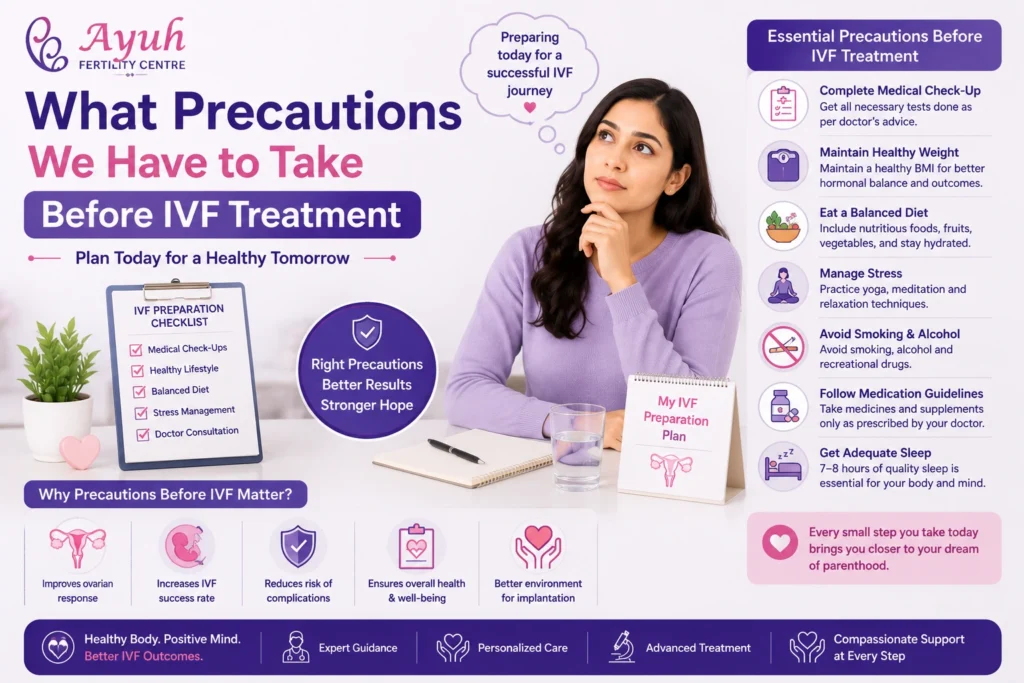
Taking the right precautions before IVF treatment is one of the most important steps a couple can take — and so is the decision to start IVF itself. It takes courage, patience, and a deep hope for something that feels just out of reach. If you have been trying to conceive and are now considering IVF, you are not alone — and you are doing the right thing by seeking the best possible care.
Many couples feel overwhelmed when they first hear the words “IVF treatment.” The questions come flooding in — Where do we start? What should we do differently? Is our body even ready? The good news is that understanding these precautions can make a genuine difference — not just in how you feel physically, but in how confident and prepared you feel walking into that very first appointment.
At Ayuh Fertility Centre, Ahmedabad, Dr. Krupa M. Shah has guided more than 10,000 couples through this journey. She often says that the weeks before IVF begins are just as important as the IVF process itself. Couples who learn how to prepare for IVF treatment — physically, emotionally, and nutritionally — tend to approach the process with greater calm and resilience.
This guide covers everything you need to know — from lifestyle changes and diet to emotional readiness and things to avoid — so you can begin your IVF journey feeling informed, supported, and truly ready.
Author Bio
Dr. Krupa A. Shah MBBS · MS (Obstetrics & Gynaecology) · Infertility Specialist Founder, Ayuh Fertility Centre, Ahmedabad
19+ Years of Experience in reproductive medicine, obstetrics, and gynaecology.
Dr. Krupa Shah completed her MBBS from Baroda Medical College (2006) and her MS in Obstetrics & Gynaecology from B.J. Medical College, Ahmedabad (2010). After 12 years of experience at leading clinics in Chennai — including Apollo Hospital and Iswarya Fertility Centre — she completed an Advanced IVF Fellowship at Ludwig Maximilians University, Munich, Germany, one of Europe’s most prestigious reproductive medicine institutions.
She is a member of the Ahmedabad Obstetrics and Gynaecology Society (AOGS), the Indian Society of Assisted Reproduction (ISAR), and the Federation of Obstetric and Gynaecological Societies of India (FOGSI).
IVF laboratory is ART National Board Certified.
🩺 Medically Reviewed By
This article is medically reviewed by Dr. Krupa M. Shah, ensuring accurate and reliable fertility information.
Why Preparation Before IVF Matters
IVF is not just a medical procedure. It involves your whole body, your emotions, your relationship, and your daily habits. Every part of your health plays a role in how your body responds to fertility treatment.
When your body is in its healthiest state, it creates a better environment for egg development, hormonal response, embryo implantation, and early pregnancy support. Similarly, when your mind is calm and your relationship feels supported, you can handle the emotional waves of IVF with more strength.
Think of IVF preparation the way you would prepare for an important physical challenge — like running a marathon. You would not show up on race day without training. The weeks before IVF are your training period.
Preparation also helps your fertility specialist — like Dr. Krupa Shah — get accurate baseline readings of your hormones, egg reserve, and uterine health. This means your treatment protocol can be personalised to your specific needs, which is one of the most important IVF success factors at Ayuh Fertility Centre.
Medical Check-Ups Before IVF Treatment
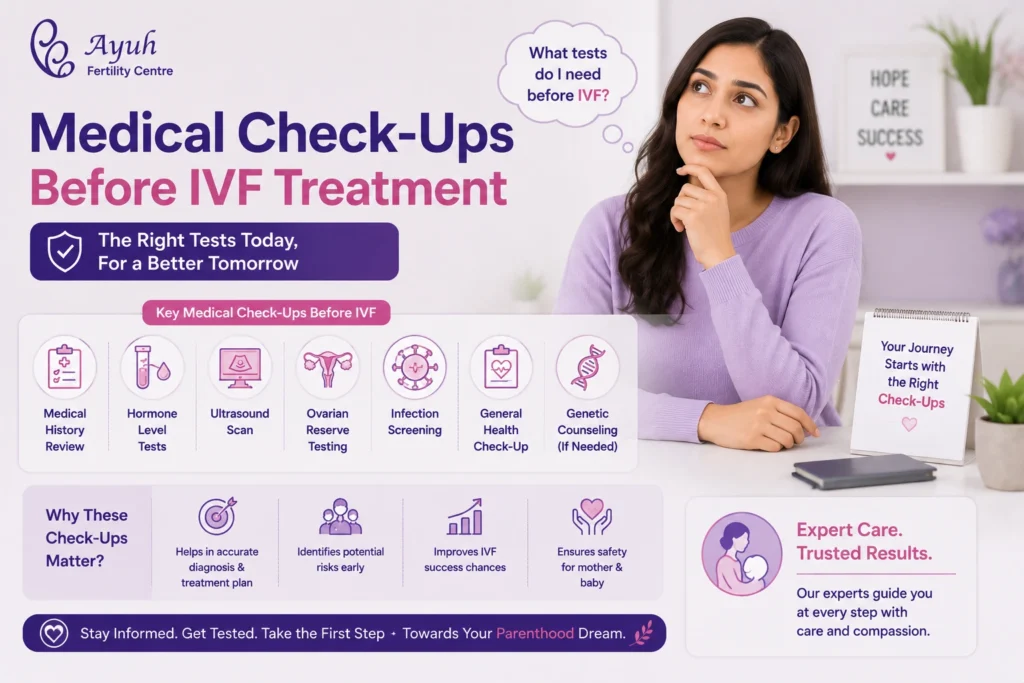
One of the most important aspects of how to prepare for IVF treatment is completing the right medical evaluations. Your fertility specialist will recommend a series of tests before treatment begins.
These tests are not just formalities — they give your doctor critical information about your reproductive health and help design the most effective protocol for you.
Key tests typically recommended before IVF:
- Hormone testing — FSH, LH, oestradiol levels are checked to assess ovarian function
- AMH (Anti-Müllerian Hormone) test — This measures your ovarian reserve, or how many eggs your ovaries likely contain
- Antral follicle count (AFC) via ultrasound — A vaginal ultrasound counts the visible follicles on your ovaries
- Semen analysis — Your partner’s sperm count, motility, and morphology are evaluated
- Thyroid function test — Thyroid disorders can interfere significantly with fertility and pregnancy
- Infection screening — Tests for infections such as hepatitis B, hepatitis C, HIV, and rubella immunity
- Uterine evaluation — A hysteroscopy or saline sonogram may be recommended to check the inside of the uterus for polyps, fibroids, or adhesions that could affect implantation
These evaluations allow Dr. Krupa Shah to identify any underlying conditions that may need to be addressed before IVF treatment begins. Starting treatment without these checks is like setting off on a long journey without a map.
Lifestyle Changes to Improve IVF Success Naturally
When couples ask how to improve IVF success naturally, lifestyle is almost always the first discussion. While no lifestyle change can guarantee a positive outcome, a healthy body undoubtedly creates a more supportive environment for treatment.
Here are the most evidence-supported lifestyle changes to make before IVF:
1. Eat a fertility-friendly diet
Focus on whole foods — vegetables, fruits, whole grains, lean proteins, and healthy fats. The Mediterranean diet is particularly well-regarded by fertility specialists for its anti-inflammatory benefits.
2. Improve your sleep
Aim for 7 to 8 hours of quality sleep every night. Poor sleep disrupts hormone regulation — including the hormones directly involved in fertility. Create a consistent bedtime routine and limit screen exposure before bed.
3. Stay well hydrated
Drink at least 8 to 10 glasses of water per day. Proper hydration supports healthy cervical mucus, follicle development, and hormone transport within the body.
4. Exercise moderately
Gentle, consistent movement — like daily walking, light yoga, or swimming — supports circulation and healthy hormonal balance. Avoid high-intensity or strenuous exercise during IVF preparation, as it can raise cortisol levels.
5. Manage your weight
Both underweight and overweight conditions can negatively affect IVF outcomes. If your BMI is significantly outside the healthy range, your doctor may recommend reaching a healthier weight before beginning treatment. Even a modest improvement can make a difference.
6. Reduce stress actively
Chronic stress raises cortisol, which can interfere with reproductive hormones. Incorporate stress-reduction practices such as mindfulness meditation, gentle yoga, breathing exercises, or spending time in nature.
These IVF lifestyle changes are not about perfection — they are about giving your body the best possible starting point.
Things to Avoid Before IVF Treatment
Knowing what NOT to do is just as important as knowing what to do. Here are the key things to avoid before IVF treatment:
Smoking
Smoking is strongly linked to reduced egg quality, lower fertilisation rates, and worse IVF outcomes overall. Both partners should stop smoking at least 3 months before treatment begins, as sperm quality also takes time to improve.
Alcohol
Alcohol affects hormone levels, egg quality, and sperm health. It is advisable to eliminate alcohol entirely during IVF preparation and throughout the treatment cycle.
Excessive caffeine
Limit caffeine to no more than one small cup of coffee per day. High caffeine intake has been associated with reduced fertility and a higher risk of miscarriage.
Recreational drugs
Any recreational drug use — including cannabis — should be stopped well before IVF begins. These substances can impair egg quality, sperm function, and embryo development.
Crash dieting
Sudden caloric restriction or extreme diets send stress signals to the body and can disrupt hormone production. Avoid any form of crash diet or fasting protocol before IVF.
Excessive exercise
Intense physical training — particularly long-distance running or heavy weightlifting — can affect ovulation and hormonal balance. Replace intense workouts with moderate, gentle activity.
Self-medication
Do not take any supplements, herbal medicines, or over-the-counter medications without your doctor’s knowledge. Some supplements — even seemingly harmless ones — can interfere with fertility medications.
Disrupted sleep patterns
Late nights and irregular sleep schedules affect melatonin levels, which play a role in egg quality and reproductive hormone regulation. Establish a consistent sleep routine at least 6 to 8 weeks before treatment.
IVF Preparation Tips for Women
Here are specific IVF preparation tips tailored for women beginning the journey:
- Start folic acid early — Most fertility doctors recommend beginning folic acid (400–800 mcg) at least 3 months before IVF. It supports healthy cell division and reduces the risk of neural tube defects in early pregnancy
- Track your menstrual cycle — Understanding your cycle length and regularity helps your doctor plan the stimulation protocol accurately
- Manage PCOS if diagnosed — Women with PCOS may need additional support before IVF, including hormonal balancing or ovulation regulation. Dr. Krupa Shah specialises in PCOS-related fertility care
- Understand the injection schedule — IVF involves daily self-administered hormone injections. Ask your nurse or doctor to walk you through the process and practice in advance
- Prepare emotionally — Acknowledge that IVF is emotionally demanding. Allow yourself to feel whatever comes up — hope, anxiety, fear — without judgment
- Maintain a healthy BMI — A BMI between 18.5 and 25 is generally associated with the best IVF outcomes
IVF Preparation Tips for Men
Male fertility is equally important in IVF, yet preparation guidance for men is often overlooked. Sperm health directly affects fertilisation rates and embryo quality — making male preparation a critical part of IVF treatment preparation.
What men should do before IVF:
- Improve nutrition — A diet rich in zinc, selenium, vitamin C, and vitamin E supports healthy sperm production. Foods like nuts, seeds, leafy greens, and eggs are great choices
- Avoid heat exposure — Sperm production is sensitive to heat. Avoid hot tubs, saunas, and laptops placed directly on the lap. Wear loose-fitting underwear
- Stop smoking and alcohol — Both damage sperm DNA and reduce motility. Sperm takes approximately 72 days to mature, so starting 3 months early is advisable
- Manage stress — High stress elevates cortisol, which is known to reduce testosterone levels and sperm quality
- Prioritise sleep — Testosterone production — essential for sperm production — peaks during deep sleep. Seven to eight hours per night is the minimum
- Complete semen analysis — A baseline semen analysis before IVF gives vital information and allows time to address any concerns before treatment begins
Remember: IVF success is a shared responsibility. Both partners preparing together also strengthens the relationship through the process.
Emotional Preparation Before IVF
No guide on IVF preparation would be complete without acknowledging the emotional weight that comes with it.
Fear of failure is real. The anxiety of waiting — for results, for news, for that pregnancy test — can be overwhelming. Partners sometimes carry their worries silently, not wanting to burden each other. These feelings are completely natural and valid.
How to emotionally prepare for IVF:
- Talk openly with your partner — Share your fears, your hopes, and your boundaries. Decide together how you will support each other through difficult moments
- Consider professional counselling — Many fertility clinics, including Ayuh Fertility Centre, offer access to counselling support before and during IVF. A therapist who understands fertility can provide a safe space to process your emotions
- Join a support community — Connecting with others who have been through IVF can reduce feelings of isolation. Online groups and local support communities can be genuinely comforting
- Set realistic expectations together — IVF does not always succeed on the first cycle. Understanding this — and deciding in advance how you will respond to different outcomes — helps couples stay grounded
- Limit your social media consumption — Fertility-related content online can be triggering or misleading. Curate your feed carefully
Emotional wellbeing is not separate from physical fertility health — it is deeply connected to it.
Diet and Nutrition Before IVF
Fertility diet tips before IVF are not about eating perfectly — they are about nourishing your body with what it needs to function at its best.
Foods to prioritise:
- Protein-rich foods — Eggs, legumes, lean meat, and dairy support follicle development and hormone production
- Colourful fruits and vegetables — Rich in antioxidants that protect egg and sperm DNA from oxidative damage
- Healthy fats — Avocado, olive oil, and omega-3-rich fish support hormonal health and reduce inflammation
- Iron-rich foods — Spinach, lentils, and fortified cereals support healthy blood and uterine lining
- Whole grains — Brown rice, oats, and quinoa provide slow-release energy that supports stable blood sugar and insulin levels
Foods to limit or avoid:
- Processed and ultra-processed foods
- Foods high in refined sugar
- Trans fats found in fast food and packaged snacks
- Excessive dairy (some evidence suggests it may affect hormone levels)
Staying well hydrated throughout the day is equally important. Aim for at least 8 glasses of water, and consider adding warm herbal teas like chamomile or ginger for additional anti-inflammatory benefit.
How Much Rest and Exercise Is Recommended Before IVF?
This is one of the most common questions couples ask during fertility health before IVF consultations.
Exercise recommendations:
- Walk daily — 30 minutes of brisk walking most days is ideal. It improves circulation, reduces stress, and supports healthy weight management
- Yoga is beneficial — Fertility yoga specifically focuses on pelvic circulation and stress reduction. Even gentle stretching helps
- Avoid extreme sports or high-intensity interval training — These raise cortisol levels and can affect ovarian function. This is not the time for marathon training or boot camps
- Listen to your body — If you feel fatigued, rest. Fatigue during the stimulation phase of IVF is normal, and your body’s signals are worth honouring
Rest recommendations:
- Aim for 7 to 8 hours of sleep nightly
- Take short daytime rests if needed, particularly during the stimulation phase
- Reduce workload and social commitments where possible during the IVF cycle
Rest is not laziness during IVF preparation — it is medicine.
Common Mistakes Couples Make Before IVF
Understanding these mistakes can help you avoid them:
- Delaying treatment too long — Fertility declines with age, particularly after 35. If you have been trying to conceive for 12 months (or 6 months if you are over 35), it is time to see a specialist
- Ignoring male infertility — Male factor infertility accounts for roughly 40–50% of infertility cases. Both partners must be evaluated before treatment
- Excessive internet research — Reading too many forums, blogs, and unverified stories creates unnecessary anxiety and misinformation. Rely on your fertility specialist for guidance
- Following unverified home remedies — Herbal teas, supplements, and detoxes found online are not regulated and can interfere with medications. Always check with your doctor
- Hiding medical history — Sharing your complete health history — including previous pregnancies, miscarriages, surgeries, and medications — is essential for safe and effective treatment
- Not addressing lifestyle factors in advance — Making changes just days before IVF begins is too late. Give yourself at least 6 to 12 weeks to implement meaningful changes
Can Good Preparation Guarantee IVF Success?
This is an important question — and it deserves an honest answer.
No. Good preparation does not guarantee IVF success.
IVF outcomes depend on many factors that cannot be fully controlled, including:
- Age — Egg quality naturally declines with age, particularly after 37
- Egg quality — Not all eggs can be fertilised or develop into healthy embryos
- Sperm quality — DNA fragmentation and poor morphology affect fertilisation
- Embryo quality — Even a healthy-looking embryo may not implant
- Uterine receptivity — The uterus must be in an ideal state to support implantation
- Underlying medical conditions — Endometriosis, PCOS, chromosomal issues, and immune factors all play a role
What preparation CAN do is optimise your overall health, improve your body’s response to medications, and strengthen your emotional resilience. It creates the best possible conditions for treatment — and that matters.
At Ayuh Fertility Centre, Dr. Krupa Shah is committed to transparent, evidence-based conversations. She will never make promises that cannot be kept — only provide the most expert care possible.
When Should You Consult a Fertility Specialist?
Knowing when to seek help is an important part of fertility care in Ahmedabad and beyond. You should consider consulting a fertility specialist if:
- You have been trying to conceive for 12 months without success (under 35)
- You are over 35 and have been trying for 6 months
- You have irregular or absent periods
- You have been diagnosed with PCOS, endometriosis, or uterine fibroids
- You have experienced two or more miscarriages
- Your partner has a known sperm issue
- You have had previous pelvic surgeries or a history of STIs
- You are considering egg freezing for future family planning
Early intervention is always better. Waiting too long — hoping things will resolve naturally — can reduce the chances of success with any fertility treatment.
Common Myths About IVF Preparation
Let’s gently correct some widespread misconceptions:
Myth 1: Bed rest after embryo transfer improves success Research does not support strict bed rest post-transfer. Normal light activity is fine. Extreme bed rest may actually increase anxiety without improving outcomes.
Myth 2: Herbal remedies alone can treat infertility While some herbs have mild benefits, no herbal remedy can replace medical diagnosis and treatment. Some can even interfere with fertility medications.
Myth 3: Stress alone causes infertility Stress can affect hormone levels, but it is rarely the sole cause of infertility. Most infertility has a physical explanation that requires medical evaluation.
Myth 4: IVF preparation is only for women Male preparation is equally critical. Sperm health has a significant impact on fertilisation rates and embryo quality during IVF.
Myth 5: If you just relax, you will get pregnant This advice, while well-meaning, can be dismissive and harmful. Infertility is a medical condition — not a state of mind — and deserves proper medical attention.
FAQs
Q1. What should I avoid before IVF treatment?
Before IVF, avoid smoking, alcohol, excessive caffeine, recreational drugs, crash dieting, extreme exercise, and self-medication. These habits can negatively affect egg quality, sperm health, hormonal balance, and your body’s response to fertility medications. It is also important to avoid taking any supplements or herbal medicines without first checking with your fertility doctor. Giving yourself at least 6 to 12 weeks to make these changes before treatment begins gives your body adequate time to benefit.
Q2. Can lifestyle changes really improve IVF success naturally?
Yes — meaningful lifestyle changes can support better IVF outcomes. Eating a balanced diet, maintaining a healthy weight, sleeping well, exercising moderately, and reducing stress all contribute to a more receptive body environment for IVF. While no lifestyle change can guarantee success, they create conditions that give treatment the best possible chance. Couples who prepare properly often feel more in control and emotionally stronger throughout the process. To improve IVF success naturally, start at least 3 months before your planned treatment cycle.
Q3. Is coffee bad before IVF?
High caffeine intake has been associated with reduced fertility and a slightly higher risk of miscarriage in some studies. Most fertility specialists, including Dr. Krupa Shah, advise limiting caffeine to one small cup of coffee per day (around 100–150mg) during IVF preparation and the treatment cycle itself. Switching to decaf, herbal tea, or warm lemon water is a simple and supportive choice. During the two-week wait after embryo transfer, many women choose to eliminate caffeine entirely as an extra precaution.
Q4. Should men also prepare before IVF treatment?
Absolutely. Male factor infertility contributes to nearly half of all infertility cases, and sperm quality has a direct impact on fertilisation rates and embryo quality during IVF. Men should stop smoking and alcohol use, improve their diet, avoid heat exposure to the groin area, manage stress, and ensure they are getting enough sleep. Since sperm takes approximately 72 days to develop, these changes should ideally begin at least 3 months before the IVF cycle. Both partners preparing together also strengthens communication and mutual support.
Q5. How early should I start preparing for IVF treatment?
Ideally, start your IVF preparation at least 3 to 6 months before your planned treatment. This gives you time to complete all medical evaluations, address any nutritional deficiencies, make meaningful lifestyle changes, and establish healthy habits for both partners. Some changes — like stopping smoking and beginning folic acid — take time to show full benefit. Starting early also reduces last-minute pressure and gives you space to approach the process with calm and confidence rather than urgency.
Conclusion
Starting IVF is one of the bravest things a couple can do. It takes vulnerability, resilience, and a tremendous amount of love. And while the road is not always predictable, what you do before treatment begins can genuinely shape your experience.
The right precautions before IVF treatment — from medical check-ups and lifestyle changes to emotional readiness and honest conversations with your partner — create a foundation of strength that carries you through the process, no matter what each cycle brings.
At Ayuh Fertility Centre, Dr. Krupa M. Shah and her team are committed to walking with you every step of the way — with honesty, compassion, and the most advanced fertility care available in Ahmedabad. Whether you are just beginning to explore IVF or are ready to book your first consultation, you deserve support that sees you as a whole person, not just a patient.
Prepare well. Trust the process. And know that you are not alone in this.
Book your personalised cost consultation at Ayuh Fertility Centre today.
👉 Book your consultation with Ayuh Fertility Centre today
👉 Get expert guidance for PCOS and fertility treatment
👉 Start your journey toward a healthy and successful pregnancy
📍 Visit us in Ahmedabad
📞 Call now to schedule your appointment