
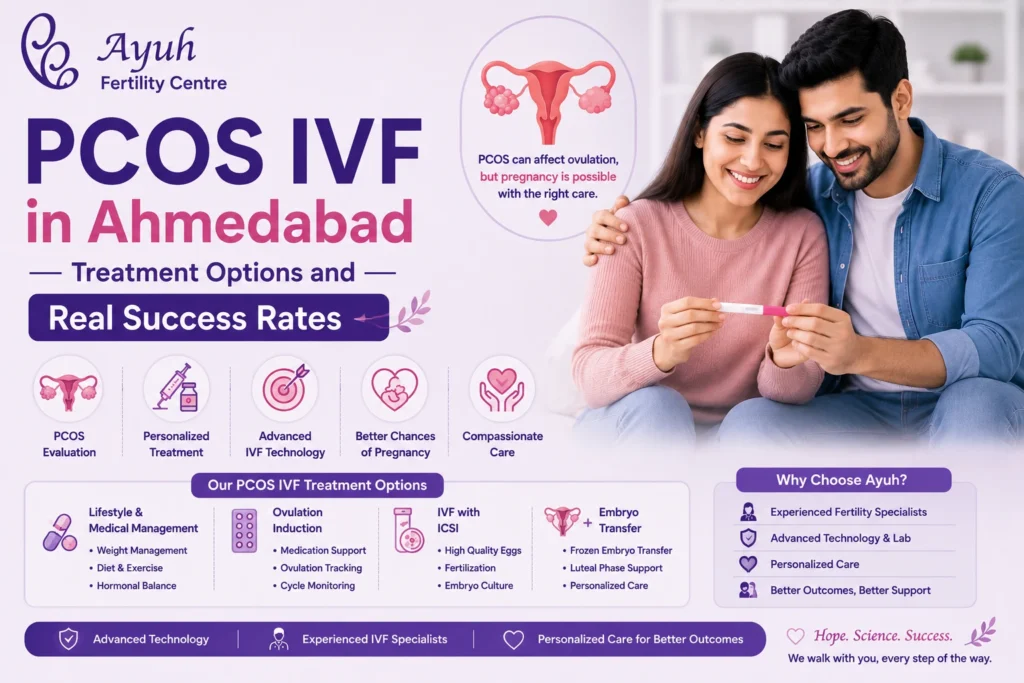
PCOS IVF in Ahmedabad searches often begin in the same quiet, painful place.If you have PCOS and you are trying to get pregnant, you already know that the journey can feel lonely, confusing, and frustrating in a way that is hard to put into words. Irregular periods that come and go without warning. Months of trying without success. Doctors who tell you to “lose weight and come back.” And a quiet fear that your body is somehow working against you.
For women across Ahmedabad and Gujarat searching for PCOS IVF Ahmedabad information, that fear deserves a real answer — not a dismissal, and not a false promise.
The truth is this: PCOS is the most common hormonal disorder affecting women of reproductive age. And it is also one of the most treatable causes of infertility. With the right diagnosis, the right treatment approach, and an experienced specialist, the vast majority of women with PCOS do go on to have successful pregnancies — naturally or with targeted fertility support.
Dr. Krupa A. Shah, founder of Ayuh Fertility Centre in Ahmedabad, has helped hundreds of women with PCOS navigate this journey. Her approach always begins with understanding — your individual hormonal picture, your body’s specific response pattern, and your emotional readiness — before any treatment decision is made.
This blog is written for you, wherever you are in that journey.
About the Author
Dr. Krupa A. Shah MBBS · MS (Obstetrics & Gynaecology) · Infertility Specialist Founder, Ayuh Fertility Centre, Ahmedabad
19+ Years of Experience in reproductive medicine, obstetrics, and gynaecology.
Dr. Krupa Shah completed her MBBS from Baroda Medical College (2006) and her MS in Obstetrics & Gynaecology from B.J. Medical College, Ahmedabad (2010). After 12 years of experience at leading clinics in Chennai — including Apollo Hospital and Iswarya Fertility Centre — she completed an Advanced IVF Fellowship at Ludwig Maximilians University, Munich, Germany, one of Europe’s most prestigious reproductive medicine institutions.
She is a member of the Ahmedabad Obstetrics and Gynaecology Society (AOGS), the Indian Society of Assisted Reproduction (ISAR), and the Federation of Obstetric and Gynaecological Societies of India (FOGSI).
IVF laboratory is ART National Board Certified.
🩺 Medically Reviewed By
This article is medically reviewed by Dr. Krupa A. Shah — fertility specialist with 19+ years of experience — ensuring accurate, compassionate, and clinically up-to-date PCOS fertility information.
What Is PCOS and How Does It Affect Fertility?
PCOS stands for Polycystic Ovary Syndrome — a hormonal condition that affects approximately 1 in 5 women of reproductive age in India. It is one of the most common reasons women struggle to conceive, and yet it is also one of the most misunderstood.
PCOS is not simply about having cysts on the ovaries. The name is a little misleading. What it really describes is a hormonal imbalance in which the ovaries produce excess androgens (male hormones like testosterone), which disrupts the normal follicle development process and prevents regular ovulation.
How PCOS affects fertility:
Irregular or Absent Ovulation In a healthy cycle, one follicle matures and releases an egg each month. In PCOS, multiple small follicles develop but none complete the maturation process. Without ovulation, there is no egg to fertilise — making natural conception significantly harder.
Hormonal Imbalance Elevated LH (Luteinising Hormone), lower FSH (Follicle Stimulating Hormone), and excess androgens create a hormonal environment that disrupts the ovarian cycle. This is why women with PCOS may have cycles that are 40, 60, or even 90+ days apart — or none at all for months.
Insulin Resistance Approximately 70% of women with PCOS have some degree of insulin resistance. Elevated insulin levels signal the ovaries to produce even more androgens, worsening the hormonal imbalance. Insulin resistance also affects egg quality and endometrial receptivity.
Endometrial Effects Irregular ovulation means the uterine lining does not shed regularly. Over time, this can cause the endometrium to become thicker than ideal — affecting implantation if and when conception occurs.
The critical message: PCOS makes conception harder — but it does not make it impossible. Not for most women. PCOS fertility treatment is one of the most well-developed areas in reproductive medicine, precisely because it is so common.
At Ayuh Fertility Centre, Dr. Krupa Shah offers comprehensive PCOS management — from hormonal evaluation and lifestyle counselling to ovulation induction and IVF with personalised PCOS-specific protocols.
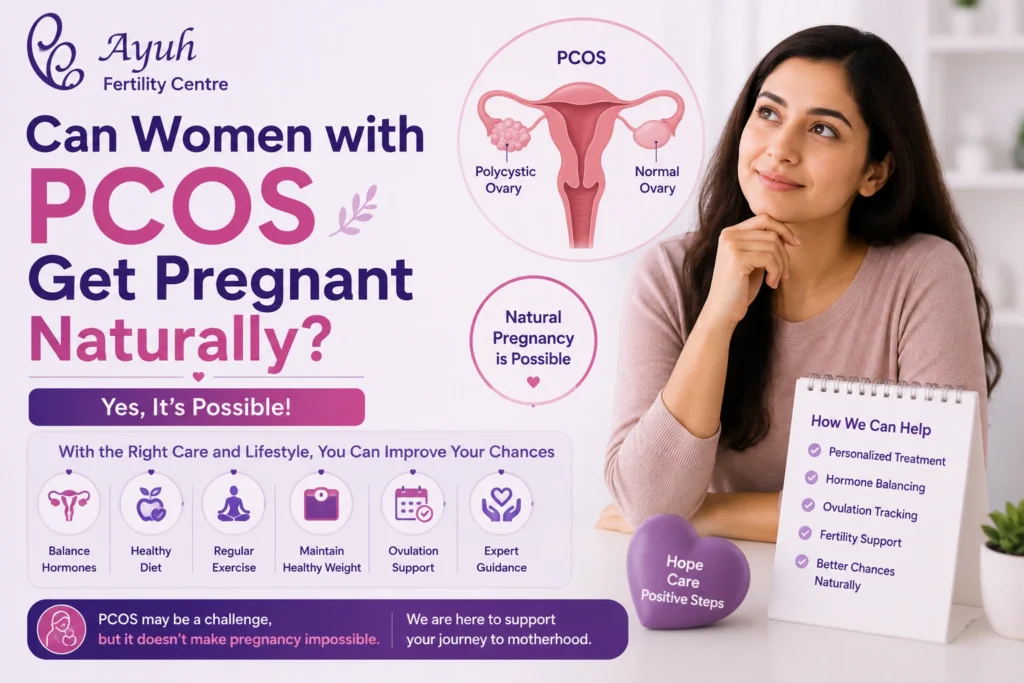
Can Women with PCOS Get Pregnant Naturally?
Yes — many can. And this is an important point that often gets lost in the fear and frustration of irregular cycles.
PCOS exists on a spectrum. Some women have mild hormonal imbalance with occasional ovulation — they may conceive naturally, just less predictably. Others have more severe hormonal disruption and rarely or never ovulate without medical support.
Factors that support natural conception in PCOS:
- Younger age (better egg quality, more time)
- Mild to moderate PCOS without severe insulin resistance
- Healthy or near-healthy BMI (obesity significantly worsens PCOS hormonal patterns)
- Partner with normal or near-normal semen parameters
- Relatively regular cycles — even if longer than average
When natural conception becomes unlikely:
- Cycles are absent (amenorrhea) or very infrequent (fewer than 4–6 per year)
- AMH is very high and androgens are severely elevated
- Insulin resistance is significant and unmanaged
- The couple has been trying for 12+ months without success (6+ months if above 35)
- There is an additional infertility factor (blocked tubes, male infertility)
The first step for any woman with PCOS who wants to conceive is a full hormonal and fertility evaluation — not a guess, and not a wait. Understanding the specific nature of your PCOS is the foundation of the right treatment plan.
When Is IVF Recommended for PCOS?
PCOS IVF Ahmedabad treatment is not the first recommendation for every woman with PCOS. It is a graduated process — starting from the least invasive and moving forward when needed.
IVF becomes the recommended approach in the following situations:
1. Failed Ovulation Induction If 3–6 cycles of oral ovulation induction medications (Clomiphene or Letrozole) have not resulted in pregnancy despite confirmed ovulation, the next step is usually IUI or IVF depending on other factors.
2. Failed IUI Cycles If 3–4 IUI (Intrauterine Insemination) cycles have not produced a pregnancy — even with confirmed ovulation and good sperm parameters — IVF gives a significantly higher per-cycle success rate.
3. Combination Infertility When PCOS is accompanied by other infertility factors — blocked fallopian tubes, significant male infertility, or low sperm motility requiring ICSI — IVF is often the recommended first active treatment.
4. Advanced Maternal Age For women with PCOS above 35–37, time is a genuine clinical consideration. Waiting through multiple cycles of ovulation induction or IUI may not be the most efficient strategy. IVF at this stage allows for embryo selection and, if needed, PGT genetic testing.
5. Long-Standing Infertility If a couple has been trying for 2+ years, including multiple treatment attempts, IVF is often the most appropriate next step — providing both the highest per-cycle success rate and the most diagnostic information.
6. Preference for Certainty Some couples — particularly those with a clear PCOS diagnosis and informed understanding of success rates — choose to proceed directly to IVF to maximise their chances efficiently. Dr. Krupa Shah supports informed patient choice and never pushes couples toward or away from any treatment.
How IVF Works for Women with PCOS
IVF (In Vitro Fertilisation) for PCOS patients follows the same basic steps as standard IVF — but with very important protocol modifications that PCOS-specific physiology demands.
Step 1 — Ovarian Stimulation Hormone injections stimulate the ovaries to develop multiple follicles. In PCOS patients, the ovaries often have a very high antral follicle count — meaning they can produce large numbers of follicles even with low stimulation doses. This is actually an advantage in terms of egg availability — but it also creates a specific risk.
Step 2 — Monitoring and Dose Adjustment PCOS patients require more intensive monitoring during stimulation — more frequent ultrasound scans and blood tests to watch follicle development and estrogen levels in real time. If estrogen rises too quickly, the dose is reduced. This is where the specialist’s experience makes a critical difference. An experienced PCOS IVF specialist like Dr. Krupa Shah adjusts doses based on daily response — not a fixed template.
Step 3 — The OHSS Risk and How It Is Managed OHSS (Ovarian Hyperstimulation Syndrome) is the most significant clinical concern in PCOS IVF. When ovaries produce too many follicles in response to stimulation, fluid can accumulate in the abdomen, causing bloating, pain, and in severe cases, serious complications. At Ayuh, OHSS prevention is built into every PCOS protocol:
- Low starting doses of gonadotropins
- GnRH antagonist protocol (which allows for a safer agonist trigger)
- GnRH agonist trigger (instead of hCG) in high-risk cases
- Freeze-all strategy — where all embryos are frozen and transferred in a later FET cycle, completely eliminating the risk of severe OHSS after transfer
Step 4 — Egg Retrieval (OPU) Mature eggs are collected under light sedation. PCOS patients often yield a higher number of eggs than average — sometimes 15–25 or more in a single retrieval. This is both a strength (more eggs = more embryos = more chances) and a responsibility (not all will be high quality).
Step 5 — Fertilisation and Embryo Culture Eggs are fertilised in Ayuh’s ART National Board Certified, ISO-certified embryology laboratory. For PCOS patients with male factor infertility, ICSI is used. Embryos are cultured to Day 5 (blastocyst stage) where possible — allowing natural selection of the most viable embryos.
Step 6 — Embryo Transfer The best-quality embryo is transferred into the uterus. In PCOS cases where a freeze-all strategy was used, this happens in a subsequent FET (Frozen Embryo Transfer) cycle — typically 4–6 weeks after egg retrieval.
PCOS IVF Success Rate — Realistic Expectations
The PCOS IVF success rate is actually quite encouraging compared to many other infertility diagnoses — and here is the clinical reason why.
PCOS patients typically have:
- High egg yield — many eggs retrieved per cycle
- Younger average age at diagnosis — meaning egg quality is often still good
- Normal uterine function — the uterus is typically not directly affected by PCOS
- Responsive ovaries — they respond well to stimulation when carefully managed
At Ayuh Fertility Centre, women with PCOS and no additional complicating factors can expect IVF success rates of:
- Under 35: 50–60% per cycle with good embryo development
- 35–38: 35–50% per cycle
- Above 38: 20–35% per cycle (egg quality becomes a more significant factor)
These are genuinely better odds than many other fertility diagnoses at the same age — which reflects the fundamental PCOS biology of abundant follicles in younger women.
What can reduce PCOS IVF success?
- Significant obesity (BMI above 30) — affects ovarian response, egg quality, and implantation
- Poorly controlled insulin resistance — affects embryo development
- Very high androgen levels — can impair egg maturity even when follicle numbers are high
- Age above 38 — egg quality becomes the limiting factor regardless of quantity
- Additional male infertility factors
What improves PCOS IVF success?
- Achieving a healthier BMI before starting
- Managing insulin resistance with medication and diet
- Personalised low-dose stimulation protocols
- Experienced specialist with specific PCOS IVF expertise
- ART National Board Certified laboratory with rigorous embryo culture standards
No treatment guarantees pregnancy. But PCOS, well-managed, gives real and meaningful hope.
PCOS Pregnancy Chances — What Affects Your Success?
PCOS pregnancy chances depend on a combination of factors — some medical, some lifestyle-related, and some within your control to improve before treatment begins.
Age The single most consistent predictor of IVF outcomes. Women with PCOS under 35 have excellent per-cycle chances. After 38, egg quality becomes the primary limitation regardless of the PCOS diagnosis.
BMI and Weight Excess weight — particularly visceral fat — worsens insulin resistance, raises androgen levels, and impairs both ovarian response and endometrial receptivity. Research consistently shows that a 5–10% reduction in body weight in overweight PCOS patients improves both natural conception rates and IVF outcomes. This does not mean you must reach an “ideal” weight before starting IVF — it means that meaningful improvement in BMI is worth the effort, because it genuinely changes the hormonal environment.
Insulin Resistance Management Metformin (an insulin-sensitising medication) is commonly prescribed alongside IVF for PCOS patients with significant insulin resistance. It helps lower LH, improve egg quality, and reduce OHSS risk. Its use is decided individually by Dr. Krupa Shah based on your specific hormonal profile.
Sperm Quality Male factor infertility affects 40–50% of all infertile couples — including those where the woman has PCOS. A thorough semen analysis before any fertility treatment is essential. If sperm parameters are reduced, ICSI within IVF significantly improves fertilisation rates.
Embryo Quality PCOS patients often retrieve many eggs — but egg quality is not always proportional to quantity. Blastocyst culture (Day 5) allows natural selection of the strongest embryos. PGT genetic testing can further identify chromosomally normal embryos if indicated.
Stress and Emotional State Chronic psychological stress elevates cortisol, which disrupts the hormonal axis involved in reproduction. Emotional wellbeing is not just a “nice to have” — it is a clinical factor that affects treatment outcomes.
Common Fertility Treatments Before IVF for PCOS
For most women with PCOS, IVF is not the first step. Here is the graduated PCOS fertility treatment pathway that Dr. Krupa Shah typically follows:
Step 1 — Lifestyle Optimisation For overweight women, a structured weight management plan — nutrition, exercise, sleep, and stress — is the first intervention. Even modest weight loss can restore spontaneous ovulation in some women with mild PCOS.
Step 2 — Ovulation Induction Oral medications — Letrozole (preferred for PCOS) or Clomiphene Citrate — stimulate the ovaries to produce and release a single egg. Timed intercourse or IUI is combined with ovulation induction for best results. This is typically tried for 3–6 cycles.
Step 3 — IUI (Intrauterine Insemination) If ovulation induction with timed intercourse has not produced a pregnancy, IUI at ₹6,000/cycle is the next step. Sperm is prepared and placed directly into the uterus around ovulation. IUI is a reasonable option for PCOS patients with at least one open fallopian tube and normal or near-normal sperm parameters.
Step 4 — IVF After 3–4 unsuccessful IUI cycles, or when other factors indicate IVF is more appropriate, a full IVF consultation is recommended. Dr. Krupa Shah explains the complete IVF process, expected outcomes, and personalised cost estimate at this consultation.
The pathway is never rigid. Some women — particularly those with additional infertility factors or above 35 — may appropriately skip earlier steps and proceed directly to IVF. Every decision is made based on your individual clinical picture.
Why Personalised IVF Treatment Matters in PCOS
This section matters more than most people realise.
PCOS is not a single condition with a single set of characteristics. Two women with a PCOS diagnosis can have completely different hormonal profiles, completely different AMH levels, completely different responses to stimulation — and therefore need completely different IVF protocols.
A 24-year-old with AMH of 8.5 ng/mL, high antral follicle count, and mild insulin resistance needs an extremely low-dose, carefully monitored stimulation protocol — because her ovaries can produce 30+ follicles if over-stimulated.
A 38-year-old with PCOS, AMH of 2.0 ng/mL, and partial insulin resistance needs a different approach entirely — one that balances the need for adequate stimulation against OHSS risk.
A standard, template-based IVF protocol applied to both patients will produce poor outcomes for at least one of them.
What personalised PCOS IVF means at Ayuh Fertility Centre:
- Starting stimulation doses based on your specific AMH, AFC, and BMI — not an average
- More frequent monitoring (every 1–2 days during stimulation) to catch over-response early
- Mid-cycle dose adjustments made by Dr. Krupa Shah based on real-time ultrasound data
- Pre-planned OHSS prevention strategy (antagonist protocol + GnRH agonist trigger where indicated)
- Freeze-all strategy for high-risk patients — protecting both your health and your embryos
- Post-retrieval review of egg maturity and fertilisation data to inform the next cycle if needed
Personalised care is not a marketing phrase at Ayuh. It is the clinical standard that makes outcomes better — and complications rarer.
The Emotional Challenges of PCOS and Infertility
PCOS does not just affect fertility. It affects how women feel about their bodies, their worth, and their future — often for years before they even begin fertility treatment.
Body Image and Weight Struggles Many women with PCOS carry weight in ways they cannot fully control despite significant effort. Being told repeatedly to “just lose weight” — without acknowledgement of the hormonal forces driving weight gain — is genuinely harmful and deeply discouraging.
Anxiety and Uncertainty Irregular cycles mean unpredictability. You cannot plan, cannot time, cannot be sure of anything from one month to the next. That uncertainty is exhausting.
Social Pressure Questions about “when are you trying” or “have you seen a doctor” — from family, colleagues, well-meaning friends — accumulate into an invisible weight that couples carry alone.
Grief After Failed Attempts Each failed ovulation induction, each negative IUI, each disappointment is a small loss. Multiple losses compound. Emotional exhaustion after repeated treatment cycles is real, clinically recognised, and deserves the same attention as any medical symptom.
What Helps At Ayuh Fertility Centre, Dr. Krupa Shah treats emotional wellbeing as part of clinical care — not a separate concern. Consultations are not rushed. Patients are never made to feel their questions are too small or their feelings are too much. The clinic’s spacious, naturally lit waiting area was designed intentionally to reduce anxiety — because Dr. Shah understands that how a patient feels before walking into a consultation room affects everything that follows.
If you are carrying the emotional weight of PCOS and infertility right now, you are not weak. You are human. And you deserve a care team that treats you that way.
Lifestyle Changes That May Improve IVF Success in PCOS
These recommendations are grounded in clinical evidence — not miracle claims or extreme advice.
1. Weight Management Even a 5–10% reduction in body weight improves insulin sensitivity, lowers androgen levels, and increases ovulation frequency in PCOS. At Ayuh, weight management is discussed as a clinical priority — with realistic, sustainable guidance, not shame.
2. Anti-Inflammatory Nutrition A diet based on low-glycaemic whole foods — vegetables, legumes, whole grains, healthy fats, lean protein — improves insulin sensitivity and reduces systemic inflammation. Reducing ultra-processed foods and refined carbohydrates is consistently associated with better hormonal balance in PCOS patients.
3. Regular Moderate Exercise 30–45 minutes of moderate exercise (brisk walking, yoga, swimming) most days of the week improves insulin sensitivity, reduces androgen levels, and supports healthy weight. Avoid extreme exercise, which can disrupt the HPA axis and worsen hormonal imbalance.
4. Blood Sugar Management If insulin resistance is present, Dr. Krupa Shah may recommend Metformin — which improves insulin sensitivity, helps regulate cycles, and reduces OHSS risk during IVF stimulation. This is a clinical decision made individually.
5. Sleep Quality Poor sleep worsens insulin resistance. Women with PCOS have a higher prevalence of sleep apnoea and disrupted sleep architecture. Improving sleep quality — consistent sleep times, limited screen exposure before bed, managing stress — directly improves hormonal balance.
6. Stress Reduction Chronic stress disrupts the hypothalamic-pituitary-ovarian (HPO) axis — the hormonal cascade that governs ovulation. Yoga, mindfulness, therapy, and simply having adequate emotional support during treatment are all clinically relevant strategies, not just lifestyle suggestions.
Common Myths About PCOS and IVF
Myth 1: Women with PCOS cannot get pregnant. False. PCOS is a treatable cause of infertility. The vast majority of women with PCOS — with appropriate treatment — do go on to have successful pregnancies. Many conceive naturally after lifestyle changes or ovulation induction.
Myth 2: IVF always works for PCOS on the first attempt. False. PCOS is not a guarantee of IVF success. While PCOS patients often have good egg numbers, egg quality, age, and individual biology all affect outcomes. Multiple cycles may be needed, as with any IVF indication.
Myth 3: Weight alone causes PCOS infertility. Partially false. While excess weight worsens PCOS significantly, weight is not the sole cause of PCOS infertility. Thin women can have PCOS too, and hormonal imbalance — not weight — is the primary fertility barrier.
Myth 4: Irregular periods always mean infertility. False. Irregular periods reflect irregular ovulation — but irregular does not mean never. Many women with PCOS do ovulate occasionally and conceive naturally. The key is understanding your specific ovulation pattern.
Myth 5: PCOS automatically means poor egg quality. False. PCOS is primarily a condition of excess eggs with hormonal disruption — not inherently poor egg quality. Younger women with PCOS often have excellent embryo development in IVF. Egg quality can be affected by obesity and insulin resistance, which are addressable factors.
Choosing the Right PCOS IVF Ahmedabad Clinic
Choosing the right PCOS IVF Ahmedabad clinic matters clinically — not just for emotional comfort, but for your outcome.
Here is what to look for:
PCOS-Specific Protocol Experience A clinic that treats all IVF patients with the same stimulation protocol has not adapted to PCOS physiology. Ask specifically: “How do you adjust your stimulation protocol for PCOS patients? What is your OHSS prevention strategy?”
OHSS Prevention as a Clinical Standard A good PCOS fertility clinic does not treat OHSS as a rare complication — it treats it as a predictable risk that is systematically prevented. Ask about antagonist protocols, GnRH agonist trigger use, and freeze-all strategies.
ART National Board Certified and ISO-Certified Lab Embryo development quality is directly tied to laboratory standards. Ayuh Fertility Centre’s ART National Board Certified, ISO-certified, ICMR-compliant lab ensures your embryos are handled in a certified, verified environment — not a cost-cut facility.
Honest Communication A good fertility specialist tells you what your personal success rate is likely to be — not just the clinic’s aggregate number. They explain OHSS risk before it becomes a problem. They give you written cost estimates before treatment begins. They answer your questions completely, not evasively.
Emotional Support as Part of Clinical Care PCOS is a long condition. The fertility journey for PCOS patients often spans months to years. A clinic that treats emotional wellbeing as an afterthought is not the right partner for this journey.
Dr. Krupa Shah meets all of these criteria — and has done so for 10,000+ couples across her 19+ years of clinical practice in Ahmedabad.
FAQs
1. Can women with PCOS get pregnant naturally?
Yes — many women with PCOS conceive naturally, particularly those with mild hormonal imbalance, healthy or near-healthy weight, and occasional spontaneous ovulation. Lifestyle changes — especially weight management and dietary improvements that reduce insulin resistance — can restore regular ovulation in some women without any medication. However, if you have been trying for 12 months without success (or 6 months if above 35), a formal fertility evaluation is important. PCOS is highly treatable, but the right treatment depends on understanding your specific hormonal picture — not just the diagnosis label.
2. Is IVF successful for PCOS patients?
Yes, generally well — particularly for younger women. PCOS patients typically produce more eggs per cycle than average, giving more embryos to select from. At Ayuh Fertility Centre, women with PCOS under 35 can realistically expect IVF success rates of 50–60% per cycle with well-managed protocols. The key is personalised stimulation — using the right dose for your specific AMH and follicle count — and OHSS prevention through careful monitoring and a freeze-all strategy where indicated. Dr. Krupa Shah specialises in exactly this approach.
3. Does PCOS affect egg quality during IVF?
Not necessarily — but it can. PCOS primarily affects the number and hormonal environment of eggs, not inherently their chromosomal quality. Younger women with PCOS often have very good egg quality and embryo development in IVF. However, unmanaged insulin resistance, obesity, and high androgen levels can impair egg maturation and fertilisation. This is why addressing metabolic factors — weight, blood sugar, insulin sensitivity — before starting IVF is not just lifestyle advice. It is clinical preparation that directly affects embryo quality and implantation success.
4. How many IVF cycles are usually needed for PCOS patients?
Many women with PCOS conceive on their first IVF cycle — particularly younger patients with good embryo development and no additional fertility factors. Others may need 2–3 cycles. The advantage PCOS patients often have is a higher egg yield per cycle, meaning more embryos may be frozen for future transfers after the first stimulation. This can reduce the total number of full stimulation cycles needed. Dr. Krupa Shah helps every couple plan their full treatment course at the first consultation — with transparent IVF cost guidance before treatment begins.
5. Is weight loss necessary before starting IVF for PCOS?
Weight loss is not always mandatory before IVF for PCOS — but it is strongly recommended when BMI is above 27–30. Here is why: excess weight worsens insulin resistance, raises androgen levels, and reduces endometrial receptivity. Even a 5–10% reduction in body weight before starting stimulation measurably improves ovarian response and implantation rates. Dr. Krupa Shah assesses each patient individually. For some, beginning IVF promptly (especially above 35) is more important than waiting for weight loss. For others, a structured 2–3 month preparation period makes a meaningful clinical difference. The decision is always personalised — never a blanket rule.
Conclusion
PCOS can feel like a barrier. But in experienced hands, with the right protocol and the right support, it is a highly manageable condition — and for the vast majority of women, it does not stand in the way of parenthood.
If you have been searching for PCOS IVF in Ahmedabad information, here is the summary that matters: PCOS patients have genuinely good fertility treatment outcomes. The challenge is not the diagnosis — it is finding a specialist who understands the PCOS-specific nuances of stimulation, OHSS prevention, and emotional care that make all the difference.
Dr. Krupa A. Shah has dedicated 19+ years to exactly this kind of care. Her Advanced IVF Diploma from the International School of Medicine, Kiel–Goettingen–Munich, Germany, her membership in ISAR, AOGS, and FOGSI, and her ART National Board Certified, ISO-Certified, ICMR-compliant laboratory at Ayuh Fertility Centre give every PCOS patient in Ahmedabad access to internationally trained, individually designed fertility care.
You deserve more than a standardised protocol and a rushed consultation. You deserve a doctor who sees your whole picture — your hormones, your history, your fears, and your hope.
The next step — whenever you are ready — starts with a consultation at Ayuh Fertility Centre.
Book your personalised cost consultation at Ayuh Fertility Centre today.
👉 Book your consultation with Ayuh Fertility Centre today
👉 Get expert guidance for PCOS and fertility treatment
👉 Start your journey toward a healthy and successful pregnancy
📍 Visit us in Ahmedabad
📞 Call now to schedule your appointment