
Introduction
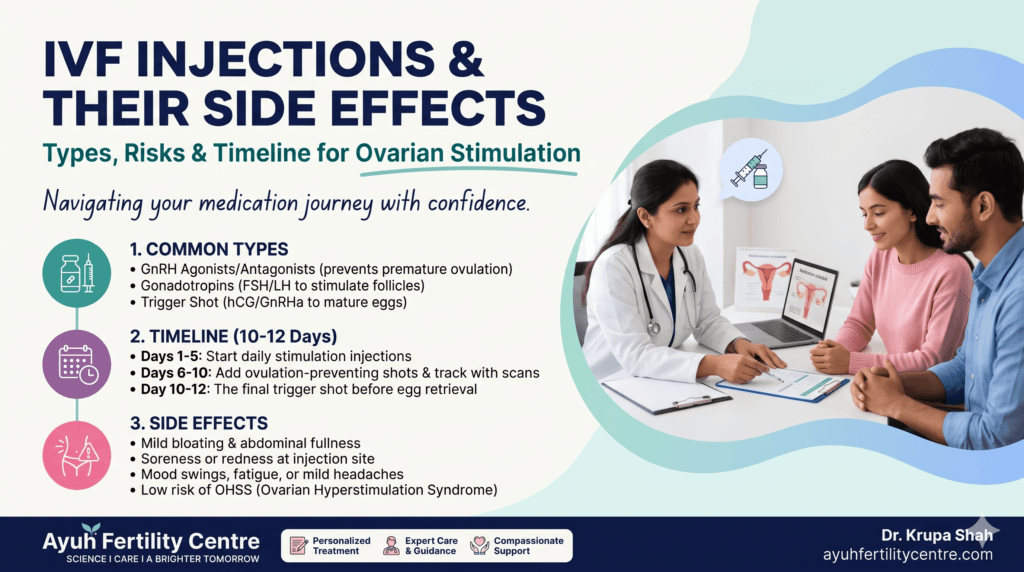
IVF injections and their side effects are among the most common concerns for couples preparing for in vitro fertilisation (IVF) treatment. These hormone-based medications play an important role in stimulating the ovaries, supporting egg development, preventing premature ovulation and preparing eggs for retrieval.
Understanding the different types of IVF injections, their schedule, possible side effects and precautions can help patients feel more confident throughout treatment. However, every IVF injection protocol is different and depends on factors such as age, ovarian reserve, hormone levels and individual medical history.
Some patients experience mild bloating, headaches or temporary mood changes, while others may have very few symptoms. Knowing what to expect can help patients prepare for each stage of their fertility journey.
In this guide, we explain the types of IVF injections, how the injection process works, common side effects and what happens after the final trigger injection.
Why Are IVF Injections Used During Treatment?
During a natural menstrual cycle, usually one follicle becomes dominant and releases an egg during ovulation. However, during IVF treatment, fertility specialists aim to stimulate multiple follicles to develop so that several eggs may be available for collection.
IVF hormone injections help control and support this process. The main purposes of IVF injections include:
- Stimulating egg development: Encouraging multiple ovarian follicles to grow during the treatment cycle.
- Preventing premature ovulation: Helping the fertility specialist control when eggs mature and are collected.
- Supporting final egg maturation: Preparing developing eggs for retrieval through a carefully timed trigger injection.
- Supporting the uterine lining: Certain medications, including progesterone, may help prepare and maintain the uterine lining for embryo transfer.
The medication and dosage are selected according to individual medical findings. Ultrasound scans and hormone blood tests help the fertility specialist monitor the ovarian response and make adjustments when necessary.
Types of IVF Injections and Their Uses
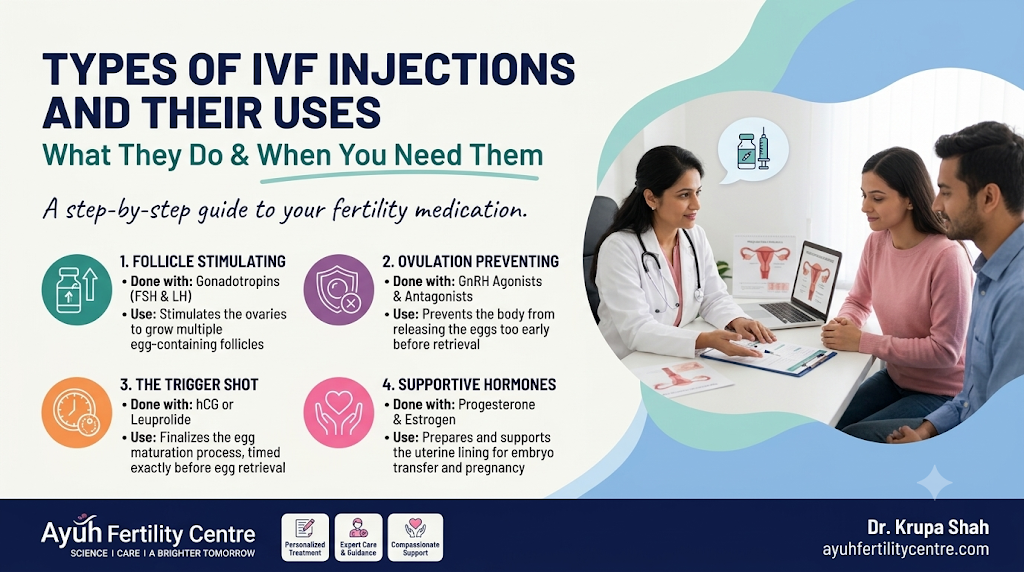
Different IVF injections are prescribed at different stages of treatment. Each medication has a specific purpose in supporting egg development and preparing for egg retrieval.
1. Follicle-Stimulating Hormone (FSH) Injections
FSH injections stimulate the ovaries to develop multiple follicles, which contain the developing eggs. They are commonly used during the initial ovarian stimulation phase of IVF treatment. The dosage depends on factors such as ovarian reserve, age and previous response to fertility medications.
2. LH and Combined Hormone Injections
Luteinising hormone (LH) supports follicular development and works alongside FSH. Some patients may receive LH-containing medications or combined FSH and LH injections when considered appropriate by their fertility specialist. These medications are not necessary for every IVF patient.
3. GnRH Antagonist Injections
GnRH antagonist injections help prevent premature ovulation during ovarian stimulation. Without appropriate control, an egg could be released before the scheduled egg retrieval procedure. These medications help fertility specialists manage the timing of egg maturation and collection.
4. Trigger Injections
A trigger injection is administered when the developing follicles are considered ready for final egg maturation. Depending on the treatment protocol, the trigger medication may contain human chorionic gonadotropin (hCG) or a GnRH agonist. Egg retrieval is generally scheduled approximately 34–36 hours after the trigger injection, depending on the prescribed protocol. Trigger injection timing is particularly important; patients should follow the exact time provided by their fertility clinic.
5. Progesterone Support
Progesterone supports the uterine lining and may be prescribed around embryo transfer. It can be administered through different routes, including vaginal medication, oral medication or injections. The appropriate form and duration depend on the embryo transfer protocol and the patient’s medical requirements.
IVF Injection Schedule: How Many Days Are Injections Needed?
One of the most frequently asked questions about IVF injections is how long the treatment takes. In many IVF stimulation protocols, injections begin early in the menstrual cycle and continue for approximately 8–12 days. However, the actual duration varies according to individual ovarian response and the treatment protocol.
A Typical IVF Injection Timeline
| Treatment Stage | What Happens |
| Initial assessment | Ultrasound scans and blood tests help assess ovarian readiness. |
| Ovarian stimulation | FSH-based injections encourage multiple follicles to develop. |
| Ovulation prevention | Additional medication may be introduced to prevent premature ovulation. |
| Follicle monitoring | Ultrasound scans and sometimes blood tests assess follicle growth. |
| Trigger injection | Medication supports the final maturation of eggs. |
| Egg retrieval | Eggs are collected approximately 34–36 hours after the trigger, depending on the protocol. |
| Embryo development | Suitable collected eggs are fertilised in the laboratory and embryos are monitored. |
This is a general overview, not a fixed schedule for every patient. The fertility specialist may adjust the medication dose, add medicines or modify the timing depending on scan findings and hormone levels. Patients should never follow another person’s IVF injection schedule.
How to Take IVF Injections Safely
Many IVF stimulation injections are administered under the skin, commonly in the abdominal area or thigh. However, the injection route depends on the prescribed medication. Patients who administer injections at home should first receive proper instructions from their fertility clinic.
- Wash and dry your hands before preparing the medication.
- Check the prescribed medicine, dose and expiry date.
- Follow the preparation and storage instructions.
- Use the injection technique demonstrated by your clinic.
- Rotate injection sites when advised.
- Dispose of used needles safely.
- Maintain a record of medication names, doses and administration times.
If you miss an injection, spill medication or are unsure whether the full dose was administered, contact your fertility specialist immediately. Do not automatically repeat the dose or double your next injection.
Common IVF Injections and Their Side Effects
IVF injections influence hormone levels and ovarian activity. As a result, some patients experience temporary physical or emotional changes during treatment. The type and severity of symptoms vary depending on the medication, dosage and individual response.
Common Side Effects of IVF Injections
| Side Effect | What Patients May Experience |
| Abdominal bloating | A feeling of fullness or swelling around the abdomen. |
| Injection-site reactions | Mild redness, bruising, itching or soreness. |
| Breast tenderness | Temporary sensitivity or discomfort in the breasts. |
| Headaches | Mild or occasional headaches during treatment. |
| Mood changes | Temporary irritability, emotional sensitivity or mood swings. |
| Fatigue | Feeling tired or experiencing reduced energy. |
| Nausea | Mild nausea or occasional digestive discomfort. |
Not everyone experiences these symptoms. Some side effects may improve after the stimulation phase, while others depend on the medication being used.
How to Manage Common IVF Injection Side Effects
Although some discomfort may occur during IVF treatment, a few practical steps can help patients manage everyday symptoms.
- For injection-site discomfort: Follow the injection technique demonstrated by your clinic and rotate injection sites when advised.
- For bloating: Avoid foods that personally trigger digestive discomfort and discuss persistent swelling with your doctor.
- For fatigue: Maintain a regular sleep schedule and allow time for rest.
- For headaches: Inform your fertility specialist before taking any pain-relief medication.
- For emotional changes: Seek support from your partner, family or fertility counsellor.
Always discuss persistent or worsening symptoms with your fertility team rather than trying to manage them independently.
Can IVF Injections Cause Ovarian Hyperstimulation Syndrome (OHSS)?
Ovarian Hyperstimulation Syndrome (OHSS) is a potential complication of ovarian stimulation. It occurs when the ovaries respond excessively to fertility medications, causing them to become enlarged. Fluid may also leak from blood vessels and accumulate in the abdomen and, in severe cases, around the lungs.
OHSS can range from mild to severe.
Common Symptoms of OHSS
- Increasing abdominal swelling or pain.
- Persistent nausea or vomiting.
- Rapid weight gain caused by fluid accumulation.
- Reduced urine output.
- Excessive thirst or signs of dehydration.
- Difficulty breathing.
Severe abdominal pain, breathing difficulties, chest pain or significantly reduced urine output require urgent medical assessment. Patients should contact their fertility clinic promptly if they experience symptoms that could indicate OHSS.
Who May Have a Higher Risk of OHSS?
- Polycystic ovary syndrome (PCOS).
- High ovarian reserve or elevated AMH levels.
- Previous history of OHSS.
- A strong response to ovarian stimulation medication.
Fertility specialists use individualised medication protocols, ultrasound monitoring and appropriate trigger strategies to help reduce the risk.
Why Is Monitoring Important During IVF Injections?
Regular monitoring is an essential part of the IVF injection process. Fertility specialists use ultrasound scans to evaluate the number and size of developing follicles. Hormone blood tests may also be recommended to assess the ovaries’ response to medication.
Based on these findings, the doctor may adjust the medication dosage, introduce additional injections, evaluate the risk of OHSS, decide when the follicles are ready for the trigger injection and determine the appropriate timing for egg retrieval.
Patients with PCOS, reduced ovarian reserve or a previous unusual response to stimulation may require particularly individualised treatment decisions. The goal is not simply to produce as many follicles as possible. It is to achieve an appropriate ovarian response while prioritising patient safety.
What Happens After the IVF Trigger Injection?
The trigger injection is an important step before egg retrieval. It supports the final maturation of developing eggs so that they can be collected at the appropriate time. Egg retrieval is generally performed approximately 34–36 hours after the trigger injection, depending on the medication and treatment protocol.
What Happens During Egg Retrieval?
The egg retrieval procedure is generally performed using ultrasound guidance. The fertility specialist uses a thin needle to collect eggs from the developed ovarian follicles.
After collection:
- The embryology team assesses the collected eggs.
- Suitable eggs are fertilised using the appropriate laboratory technique.
- The resulting embryos are monitored for development.
- The fertility team evaluates whether fresh embryo transfer or frozen embryo transfer is appropriate.
Progesterone support may also be prescribed depending on the treatment plan. IVF injections are therefore one important part of a connected fertility treatment process that includes ovarian stimulation, egg retrieval, fertilisation and embryo development.
Frequently Asked Questions About IVF Injections and Their Side Effects
1. Are IVF injections painful?
Most IVF injections are administered using relatively small needles and may cause brief stinging, soreness or mild discomfort. The experience varies between patients. Your fertility clinic can demonstrate the correct technique to make administration easier.
2. How many days are IVF injections given?
Ovarian stimulation injections commonly continue for approximately 8–12 days. However, the duration depends on follicle development, ovarian reserve and the patient’s response to medication.
3. Can IVF injections be taken at home?
Yes. Many IVF medications can be administered at home after proper training from the fertility clinic. A partner may also assist after learning the correct injection technique.
4. What time should IVF injections be taken?
Follow the timing prescribed by your fertility specialist. Some medications allow a degree of flexibility, while trigger injections require particularly precise timing.
5. Can IVF injections cause weight gain?
Some patients experience temporary bloating or fluid retention during ovarian stimulation. This does not necessarily indicate permanent weight gain. Sudden or rapid weight gain should be reported to the fertility team because it may indicate fluid accumulation associated with OHSS.
6. What should I do if I miss an IVF injection?
Contact your fertility clinic immediately for instructions. The correct response depends on the medication and how much time has passed. Do not double your next dose without medical advice.
7. Can I continue my normal routine during IVF injections?
Many patients can continue routine daily activities. However, strenuous exercise and activities that cause abdominal discomfort may need to be avoided as the ovaries enlarge. Follow your fertility specialist’s recommendations.
8. Are IVF injections necessary for every IVF patient?
Injectable hormone medications are commonly used during conventional IVF stimulation. However, treatment protocols vary, and some patients may be offered modified or alternative approaches depending on their medical circumstances.
9. Do IVF injections affect mood?
Hormonal changes, physical discomfort and the emotional demands of fertility treatment may contribute to temporary mood changes. Patients should discuss persistent emotional difficulties with their fertility team.
10. When should I contact my doctor after taking IVF injections?
Contact your fertility clinic if you experience increasing abdominal pain, significant bloating, persistent vomiting, reduced urine output or other unusual symptoms. Breathing difficulties and chest pain require emergency medical assessment.
When Should You Consult a Fertility Specialist?
IVF injections require appropriate medical supervision, regular monitoring and careful medication management. Although many patients experience only mild side effects, unusual or worsening symptoms should never be ignored.
Before beginning treatment, discuss which IVF injections are appropriate for your condition, your expected stimulation period, possible side effects, monitoring frequency, what to do if you miss an injection and precautions that may help reduce the risk of OHSS.
Having clear answers can help you understand your treatment plan and prepare for each stage of IVF.
Meet Our Fertility Specialists and Medical Team in Ahmedabad
Choosing the right fertility care team is an important step in your parenthood journey. At Ayuh Fertility Centre, Ahmedabad, our team focuses on understanding your fertility concerns and providing personalised guidance for IVF, IUI and other fertility treatments.
Get to know our fertility specialists and take the first step towards informed, compassionate fertility care at Ayuh Fertility Centre, Ahmedabad.