
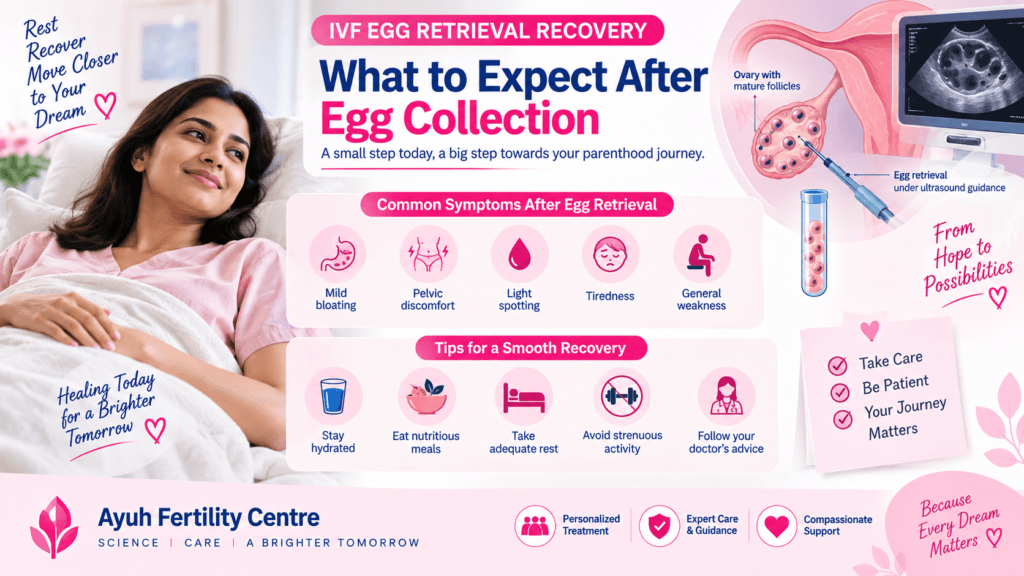
Egg retrieval is an important step in an IVF cycle. During this procedure, mature eggs are collected from the ovaries so they can be fertilized with sperm in the laboratory.
After the procedure, many patients have questions:
- How long does egg retrieval recovery take?
- Is pain normal after egg collection?
- Can I go to work?
- How much rest do I need?
- Can I exercise?
- What should I eat?
- Is bleeding normal?
- When should I contact my fertility doctor?
Mild discomfort, tiredness, bloating or light spotting can occur after egg retrieval. However, recovery can vary from person to person depending on the number of follicles retrieved, the ovarian response to stimulation, the procedure and individual health factors.
This guide explains what you can generally expect during IVF egg retrieval recovery and which symptoms should be discussed with your fertility team.
Important: Your own fertility clinic’s post-retrieval instructions should always take priority because your doctor knows your treatment protocol and medical history.
What Is Egg Retrieval in IVF?
Egg retrieval, also called oocyte retrieval, is the procedure used to collect eggs from the ovaries during an IVF cycle.
Before retrieval, ovarian stimulation medications encourage the development of multiple follicles. When the follicles are ready, a trigger medication is given according to the treatment plan.
The eggs are then collected using a needle under ultrasound guidance. Egg retrieval is performed with appropriate sedation or anesthesia according to the clinic’s protocol.
The retrieved eggs are then taken to the IVF laboratory, where they can be assessed for maturity and used for fertilization.
What Happens Immediately After Egg Retrieval?
After egg collection, you are usually observed in a recovery area until you are sufficiently recovered from the sedation or anesthesia.
You may feel:
- Sleepy or tired
- Mild pelvic discomfort
- Abdominal bloating
- Mild cramping
- Slight vaginal spotting
- General weakness or grogginess
Because sedation may temporarily affect alertness and coordination, patients are generally given specific discharge instructions by their clinic and may need someone to accompany them home.
The exact recovery process depends on the type of anesthesia or sedation used and your individual circumstances.
How Long Does IVF Egg Retrieval Recovery Take?
For many patients, the most noticeable discomfort improves within a short period after the procedure, but the exact recovery time varies.
Some people feel relatively comfortable the same day or the following day, while others may need additional rest.
Your recovery can be influenced by:
- Number of follicles developed
- Number of eggs retrieved
- Ovarian response to stimulation
- Type of anesthesia or sedation
- Individual pain sensitivity
- Risk of ovarian hyperstimulation syndrome (OHSS)
- Other medical factors
Therefore, there is no single recovery time that applies to every IVF patient.
Is Pain Normal After Egg Retrieval?
Some cramping or pelvic discomfort can occur after egg retrieval because the ovaries have been stimulated and the procedure involves collecting eggs from the follicles.
The discomfort may feel similar to:
- Menstrual cramps
- Pelvic heaviness
- Mild abdominal soreness
- Pressure or bloating
Your fertility clinic may recommend an appropriate pain-relief option based on your medical history.
Do not start or stop medication without checking with your fertility team, particularly during an active IVF cycle.
Is Bloating Normal After Egg Retrieval?
Yes, mild bloating or abdominal discomfort can occur after egg retrieval.
The ovaries may remain enlarged after ovarian stimulation, and some patients experience abdominal fullness or discomfort.
However, worsening abdominal swelling should not simply be assumed to be normal recovery.
Significant or increasing bloating, especially when accompanied by nausea, vomiting, breathing difficulty or reduced urination, should be discussed with your fertility clinic promptly because these can be warning signs of OHSS.
Can You Have Bleeding After Egg Retrieval?
Some light vaginal spotting can occur after egg retrieval.
However, heavy bleeding is not something you should ignore.
Contact your fertility clinic if you experience bleeding that is heavy, persistent or accompanied by significant pain, dizziness, weakness or other concerning symptoms.
Your fertility team can determine whether the bleeding is within the expected range or requires examination.
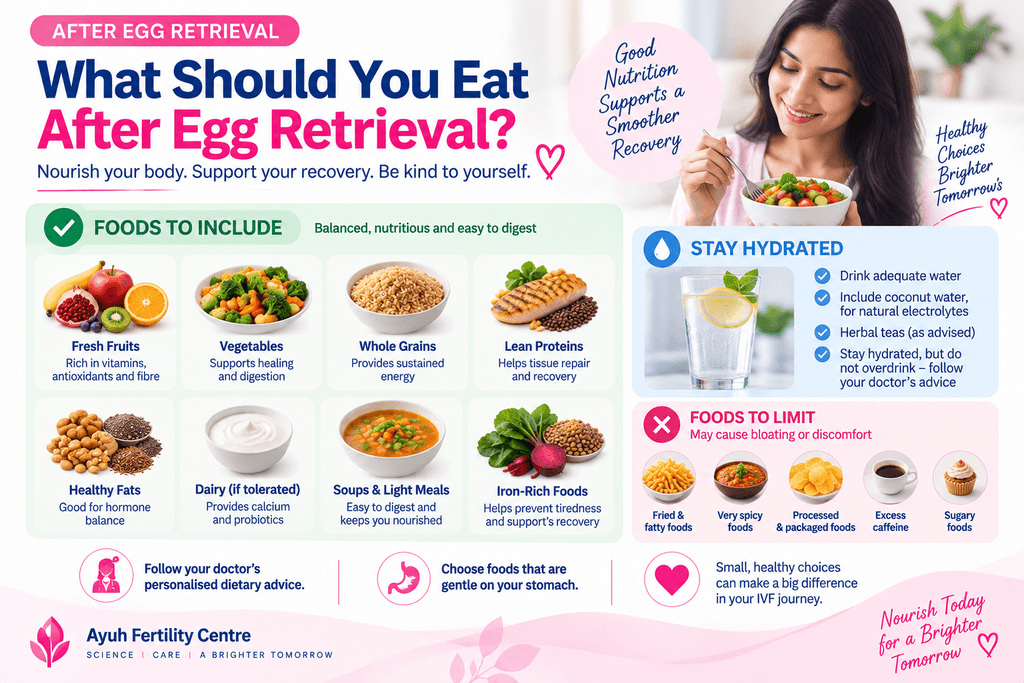
What Should You Eat After Egg Retrieval?
There is no single special diet that is required for every patient after egg retrieval.
Generally, focus on:
- Adequate fluids according to your clinic’s advice
- Balanced meals
- Protein-rich foods
- Fruits and vegetables
- Whole grains
- Easily digestible foods if you feel nauseated
If your fertility specialist has given you specific dietary instructions, follow those rather than relying on general internet advice.
What About Drinking Water?
Stay adequately hydrated, but do not force excessive amounts of water unless your medical team specifically advises it. In patients at risk of OHSS, fluid management should follow the clinic’s instructions.
Can You Work After Egg Retrieval?
Whether you can work after egg retrieval depends on how you feel and what type of work you do.
If your job involves:
- Heavy physical activity
- Long periods of standing
- Lifting
- Extensive travel
- Physically demanding tasks
you may need more time to rest.
If your work is mainly desk-based, you may feel ready to return sooner.
Because sedation can affect alertness, follow your clinic’s instructions regarding driving and returning to normal activities.
Can You Exercise After Egg Retrieval?
It is generally sensible to avoid strenuous physical activity immediately after egg retrieval and follow your fertility clinic’s specific instructions.
Activities that may need to be avoided temporarily include:
- Running
- Heavy weightlifting
- High-intensity workouts
- Jumping exercises
- Vigorous sports
The ovaries can remain enlarged after stimulation, so your doctor may recommend modified activity until recovery.
Do not restart intense exercise simply because you feel better. Follow the activity restrictions given by your fertility team.
What Activities Should You Avoid After Egg Retrieval?
During the initial recovery period, your clinic may advise avoiding strenuous activities.
Depending on your treatment and recovery, this may include:
- Heavy lifting
- Intense exercise
- Physically demanding work
- Activities that cause significant pelvic discomfort
- Driving while affected by sedation or medication
Your doctor may also provide specific instructions regarding sexual intercourse and other activities.
Because IVF protocols vary, follow your clinic’s personalised instructions.
What Symptoms Are Normal After Egg Retrieval?
Some mild and temporary symptoms can occur during IVF egg retrieval recovery. These symptoms are often related to ovarian stimulation, the egg collection procedure, and sedation or anesthesia. For many patients, they gradually improve as the body returns to its usual state.
Mild Abdominal Cramps
Mild cramping is relatively common after egg retrieval. It may feel similar to menstrual cramps or a mild pulling or aching sensation in the lower abdomen. This can happen because the ovaries have been stimulated and the follicles have been accessed during egg collection.
The discomfort should generally remain manageable and gradually improve. Follow your fertility clinic’s advice about pain relief rather than taking medicines on your own.
Mild Bloating
Mild bloating or abdominal fullness can occur during IVF egg retrieval recovery because the ovaries may remain enlarged after ovarian stimulation.
You may notice:
- A feeling of fullness in the abdomen
- Mild abdominal pressure
- Slight swelling
- Clothes feeling tighter around the waist
Mild bloating should generally improve with recovery. However, rapidly increasing or severe abdominal swelling should be reported to your fertility clinic.
Light Spotting
Small amounts of vaginal spotting may occur after the egg retrieval procedure. This can happen because the procedure involves passing a needle through the vaginal wall to reach the ovaries under ultrasound guidance.
Light spotting is usually different from heavy bleeding. If bleeding becomes heavy, persistent or is accompanied by severe pain, dizziness or weakness, contact your fertility clinic promptly.
Tiredness or Sleepiness
Feeling tired after egg retrieval is common for some patients. Sedation or anesthesia used during the procedure can contribute to temporary sleepiness or grogginess.
The overall IVF process can also be physically and emotionally demanding. During IVF egg retrieval recovery, give yourself adequate time to rest and avoid driving or activities requiring full alertness until your clinic confirms that it is safe.
Pelvic Heaviness or Pressure
Some patients experience a feeling of pressure, heaviness or fullness in the lower abdomen after egg collection.
This may be more noticeable when walking, changing position or moving around. It can occur while the ovaries are still enlarged following stimulation.
As recovery progresses, this sensation should generally become less noticeable. If pelvic pressure becomes severe or is accompanied by significant swelling or worsening pain, contact your doctor.
Mild Nausea
Some patients may experience temporary nausea after egg retrieval, particularly following sedation or anesthesia. The medications used during the procedure and the physical effects of treatment can contribute to this feeling.
Eating light, easily tolerated meals and following your clinic’s hydration advice may help. Persistent or severe vomiting, however, should not be ignored and should be reported to your fertility team.
General Weakness
You may feel slightly weak or less energetic immediately after the procedure. This can be related to sedation, the procedure itself, hormonal treatment and the emotional demands of an IVF cycle.
Rest, appropriate hydration and nutritious meals can support your general recovery. If weakness becomes severe, persistent or occurs with dizziness or fainting, contact your fertility clinic.
When Should These Symptoms Improve?
The duration of IVF egg retrieval recovery is different for every patient. Mild symptoms such as cramping, bloating, tiredness and pelvic discomfort should generally become less intense rather than progressively worse.
Your recovery can depend on factors such as:
- Number of follicles developed
- Number of eggs retrieved
- Your response to stimulation medicines
- Type of sedation or anesthesia
- Individual health factors
- Risk of ovarian hyperstimulation syndrome (OHSS)
When Are Symptoms Not Considered Normal?
Not every symptom after egg retrieval should be treated as part of normal recovery. Contact your fertility clinic promptly if you experience:
- Severe or worsening abdominal pain
- Significant or rapidly increasing abdominal swelling
- Heavy vaginal bleeding
- Persistent vomiting
- Difficulty breathing
- Fainting or severe dizziness
- Markedly reduced urination
- Fever or other signs of infection
- Any symptom that is rapidly getting worse
These symptoms may require medical assessment and should not be self-diagnosed.
Remember: Mild discomfort can be part of IVF egg retrieval recovery, but symptoms that become severe or progressively worsen should always be discussed with your fertility specialist.
When Should You Contact Your Fertility Doctor?
Contact your fertility clinic promptly if you develop symptoms that are severe, worsening or unusual for you.
Particularly important warning signs include:
- Severe or increasing abdominal pain
- Significant abdominal swelling
- Persistent vomiting
- Difficulty breathing
- Fainting or severe dizziness
- Heavy vaginal bleeding
- Markedly reduced urination
- Rapid worsening of symptoms
- Fever or other signs of infection
These symptoms can have different causes, including complications such as OHSS, bleeding or infection, and require medical assessment. OHSS can range from mild to severe and may cause abdominal swelling, discomfort, nausea, vomiting and fluid-related complications.
Do not wait for symptoms to become severe before contacting your fertility clinic.
What Is OHSS After Egg Retrieval?
Ovarian Hyperstimulation Syndrome (OHSS) is a complication associated with ovarian stimulation during fertility treatment.
It occurs when the ovaries respond excessively to stimulation.
Symptoms can include:
- Abdominal swelling
- Abdominal discomfort
- Nausea
- Vomiting
- Diarrhea
- Changes in urination
- Breathing difficulty in more serious cases
The risk can be higher in people with factors such as PCOS, high ovarian reserve or previous OHSS.
Modern IVF protocols include strategies to identify and reduce OHSS risk, but patients should still understand the warning signs.
What Happens to the Eggs After Retrieval?
Egg retrieval is not the end of the laboratory process.
After collection, the eggs are assessed in the IVF laboratory.
Depending on the treatment plan:
Egg retrieval → Egg maturity assessment → Fertilization → Embryo development → Embryo grading → Transfer or freezing
Fertilization may be performed using conventional IVF or ICSI, depending on the clinical situation.
The embryos may then be cultured for several days before an appropriate embryo is selected for transfer or cryopreservation.
ASRM laboratory guidance describes oocyte retrieval, fertilization, embryo culture, embryo grading, transfer and cryopreservation as distinct stages requiring validated laboratory processes.
Does Egg Retrieval Affect Your Next Period?
Your next menstrual period may not occur exactly when you expect.
Hormonal medications used during IVF can influence the timing and characteristics of your cycle.
You may notice:
- A different timing than usual
- Changes in flow
- Different cramping
- Temporary cycle changes
If your period is significantly delayed or you develop unusual symptoms, discuss this with your fertility specialist.
Can You Get Pregnant Immediately After Egg Retrieval?
This depends on the IVF treatment plan.
Egg retrieval itself is part of the IVF process, and whether an embryo is transferred in the same cycle or frozen for a later transfer depends on factors such as embryo development, medical considerations and the clinic’s treatment strategy.
In some situations, a fresh embryo transfer may be planned. In others, embryos may be frozen and transferred during a later cycle.
Your fertility specialist will determine the safest and most appropriate approach for you.
How Can You Make IVF Egg Retrieval Recovery More Comfortable?
You can support your recovery by following your fertility clinic’s instructions carefully.
Helpful recovery habits include:
1. Rest when you feel tired
Give your body time to recover from the procedure.
2. Stay appropriately hydrated
Follow your clinic’s advice regarding fluids.
3. Eat balanced meals
Choose nutritious foods that you tolerate well.
4. Avoid strenuous activity initially
Return to exercise according to your doctor’s recommendations.
5. Take prescribed medications correctly
Follow the exact dose and timing given by your medical team.
6. Monitor your symptoms
Pay attention to whether symptoms are improving or worsening.
7. Keep your clinic’s contact details available
If you are concerned about a symptom, contact your fertility team rather than trying to diagnose yourself.
FAQ | IVF Egg Retrieval Recovery
1. How long does IVF egg retrieval recovery take?
IVF egg retrieval recovery time varies from person to person. Many patients experience mild cramping, bloating, tiredness or pelvic discomfort after the procedure, and these symptoms may improve as the body recovers. Some patients feel comfortable returning to light daily activities relatively soon, while others may need additional rest.
The exact IVF egg retrieval recovery period can depend on factors such as the number of follicles developed, the number of eggs retrieved, the response to stimulation medicines, the type of sedation used and your individual health. Your fertility specialist will provide specific instructions about rest, medications and returning to normal activities.
2. Is pain normal during IVF egg retrieval recovery?
Mild pelvic cramping or abdominal discomfort can be common during IVF egg retrieval recovery. Some women describe the sensation as similar to menstrual cramps or mild pelvic pressure. Temporary soreness may occur because the ovaries have been stimulated and the eggs have been collected during the procedure.
Pain should generally be manageable and should not progressively become severe. If you experience intense, persistent or worsening abdominal or pelvic pain during IVF egg retrieval recovery, contact your fertility clinic promptly so your doctor can determine whether further assessment is needed.
3. How many days should I rest after egg retrieval?
There is no fixed number of rest days that applies to every patient. IVF egg retrieval recovery depends on your individual response to the procedure and how you feel afterward. Some patients may feel ready for light routine activities relatively quickly, while others may prefer additional rest because of tiredness, bloating or pelvic discomfort.
During the initial recovery period, it is generally sensible to avoid strenuous physical activities and heavy lifting until your fertility specialist advises that it is safe to resume them. Always follow the personalised post-retrieval instructions provided by your IVF clinic.
4. Can I go to work the day after egg retrieval?
Whether you can return to work the day after egg retrieval depends on your recovery and the type of work you do. Patients with desk-based jobs may feel comfortable returning to normal activities sooner, while physically demanding jobs involving lifting, prolonged standing or strenuous movement may require more recovery time.
As part of IVF egg retrieval recovery, listen to your body and avoid pushing yourself if you are experiencing significant discomfort or fatigue. If sedation or anesthesia was used, follow your clinic’s instructions regarding driving and other activities that require alertness.
5. Can I exercise during IVF egg retrieval recovery?
During IVF egg retrieval recovery, strenuous exercise is generally something you should avoid until your fertility specialist says it is appropriate. Activities such as running, heavy weightlifting, jumping and high-intensity workouts may place additional stress on the body while the ovaries are still enlarged following stimulation.
Your doctor can advise when you can gradually return to your normal exercise routine. Do not assume that feeling better immediately means that intense exercise is safe. Following your clinic’s activity restrictions can help support a smoother recovery.
6. Is bloating normal after egg retrieval?
Mild bloating can occur during IVF egg retrieval recovery, particularly because the ovaries may remain enlarged following ovarian stimulation and egg collection. You may experience abdominal fullness, pressure or mild discomfort for some time after the procedure.
However, severe or rapidly increasing abdominal swelling should not be ignored. If bloating becomes significant or occurs together with persistent vomiting, difficulty breathing, reduced urination or rapidly worsening discomfort, contact your fertility clinic promptly. These symptoms can sometimes be associated with ovarian hyperstimulation syndrome (OHSS).
7. Is spotting normal after egg retrieval?
Light vaginal spotting can occur after egg retrieval and may be temporary. During IVF egg retrieval recovery, some patients may also experience mild pelvic cramping along with light spotting.
However, heavy, persistent or unusual vaginal bleeding should be reported to your fertility clinic. If bleeding occurs together with severe abdominal pain, dizziness, weakness or fainting, seek medical advice promptly rather than assuming it is a normal part of IVF egg retrieval recovery.
Final Takeaway
IVF egg retrieval recovery is different for every patient. Mild cramping, bloating, tiredness or light spotting may occur, but symptoms should generally be monitored carefully.
The most important part of recovery is to follow your fertility clinic’s individual instructions, avoid activities your doctor has restricted and report concerning or worsening symptoms promptly.
Egg retrieval is only one stage of IVF. After collection, the eggs are assessed and may proceed through fertilization and embryo development before transfer or freezing.
If you are planning IVF in Ahmedabad and want to understand what to expect before and after egg retrieval, discussing your individual treatment plan with a fertility specialist can help you prepare with greater confidence.
About the Author / Medical Reviewer
Dr. Krupa A. Shah
Fertility Specialist & Founder
Ayuh Fertility Centre, Ahmedabad
Medical Disclaimer
This article is intended for general educational purposes and does not replace personalised medical advice, diagnosis or treatment. Recovery after egg retrieval can vary between patients. Always follow the instructions provided by your fertility specialist and contact your IVF clinic if you experience concerning or worsening symptoms.